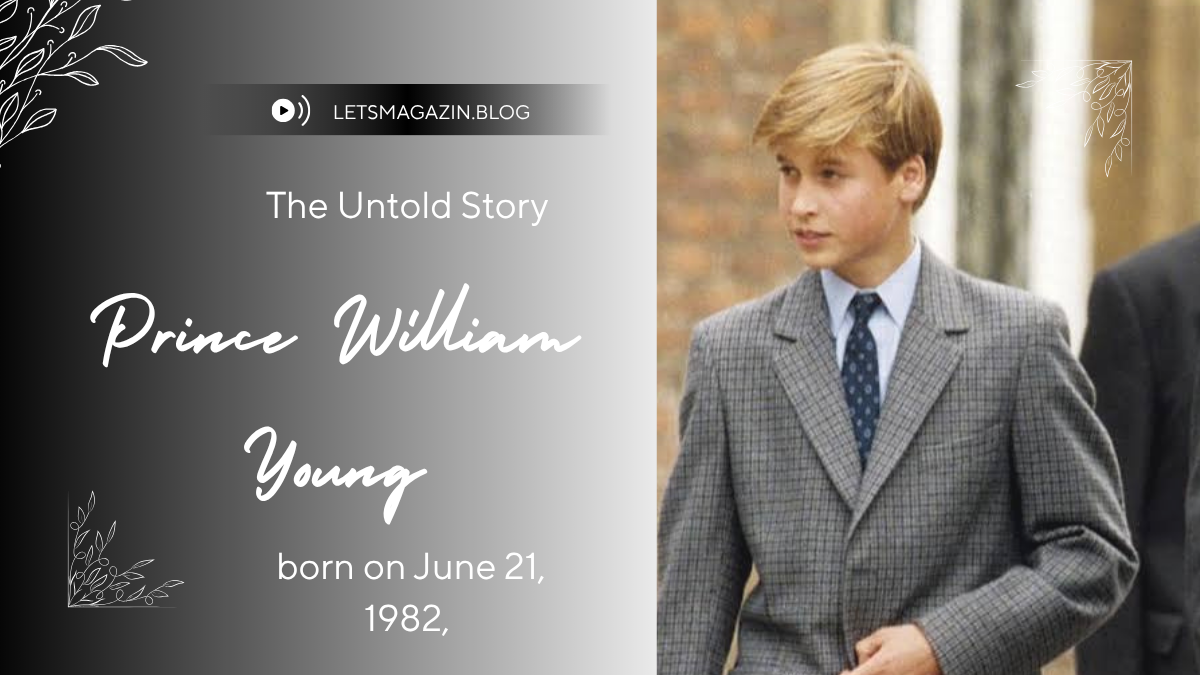

Long before he became the Prince of Wales, the world watched prince William young, growing up under the intense glare of royal expectation and public curiosity. Born into one of the most scrutinized families on earth, his early years were shaped by a rare combination of privilege, tragedy, and an unusually grounded upbringing that his parents fought hard to protect. People across the globe have always been fascinated by his formative years, wondering how a boy destined for the throne learned to navigate ordinary friendships, schoolyard routines, and the extraordinary demands of being second in line to the British Crown.
This article takes a deep, human look at the journey of a young royal figure, exploring everything from his early childhood at Kensington Palace to his university days at St Andrews, where he famously met his future wife. We will examine the schools that shaped him, the personal losses that defined his character, and the quiet moments of normalcy his parents tried to preserve amid constant media attention. Along the way, we will also explore how these formative experiences continue to influence the way he leads today, offering readers a complete and thoughtful picture of one of the most recognizable public figures of our time.
Understanding this period of his life matters for more than simple curiosity. It offers a lens into how modern monarchy has evolved, how public figures cope with grief and scrutiny at a young age, and how the values instilled in childhood can shape decades of public service. This piece draws on well-documented biographical accounts, school histories, and the broader public record to paint a thorough, engaging picture of his youth, written for readers who want more than a surface-level summary.
Early Childhood and Family Background
Prince William was born on June 21, 1982, at St Mary’s Hospital in London, to Charles, then Prince of Wales, and Diana, Princess of Wales. From the very beginning, his birth was treated as a national event, with crowds gathering outside the hospital and newspapers dedicating entire front pages to the arrival of the future king. Unlike previous generations of royal children, he was raised with a deliberate effort from his mother to give him as normal a childhood as possible, despite the weight of his position. Diana insisted on taking him to amusement parks, fast food restaurants, and ordinary public outings that had rarely, if ever, been part of a royal child’s routine.
This unconventional approach to parenting set the tone for much of his upbringing. Diana believed strongly that her sons needed exposure to everyday life if they were ever going to understand and relate to the people they would one day serve. She took William and his younger brother Harry to homeless shelters, hospitals, and schools for children with disabilities, ensuring that their world extended far beyond palace walls. These early lessons in empathy and humility became defining traits of his character, and many royal historians point to this period as the foundation for the more approachable, modern style of monarchy that he would later come to represent.
Life at Kensington Palace during these years was a strange blend of formality and warmth. Staff who worked in the household during the early 1980s have described a nursery filled with toys typical of any middle-class British home, alongside the unmistakable trappings of royal life, from security details to formal portraits. Diana was known to personally handle much of the day to day care rather than delegating entirely to nannies, a choice that distinguished her parenting style from that of previous royal generations and left a lasting impression on how William would later approach fatherhood with his own children.
Life at Nursery and Early Schooling
Before entering formal primary school, young William attended Mrs. Mynors’ Nursery School in Notting Hill, marking the first time a future monarch had been sent to a private nursery rather than being educated entirely at home by tutors. This decision, again driven largely by Diana, reflected a broader shift in how the royal family approached education for its youngest members. The move allowed him to interact with other children his age in a relatively unstructured environment, giving him early social skills that would serve him well throughout his life.
Following nursery, he moved on to Wetherby School, a preparatory school in London known for its rigorous academic standards and its history of educating boys from prominent families. Teachers who worked with him during this period often described him as a diligent, well mannered student who took his responsibilities seriously even at a young age. Reports from this era suggest that while he enjoyed sports and outdoor activities immensely, he also displayed an early sense of duty, understanding on some level that his life would eventually be different from that of his classmates, even if he could not yet fully grasp what that meant.
Classmates and teachers from Wetherby recalled a boy who was eager to please and quick to make friends, traits that stood out given the unusual level of attention that followed him even at such a young age. School photographs and press coverage from this period show a child who, despite the cameras waiting outside the gates each morning, appeared to genuinely enjoy the everyday rhythms of classroom life, from art projects to playground games. This grounding in ordinary childhood experiences, even if brief, would later be cited by biographers as an important counterbalance to the extraordinary circumstances surrounding his upbringing.
Ludgrove School and the Boarding Experience
At age eight, William was sent to Ludgrove School, a boarding preparatory school in Berkshire, marking his first extended time away from his parents. This transition can be difficult for any child, but for a young prince navigating both public scrutiny and the growing tension in his parents’ marriage, it came with additional complexity. Despite these challenges, Ludgrove provided him with a structured environment where he could participate in sports like football, rugby, and swimming, activities that allowed him to build friendships based on shared interests rather than his royal status.
Classmates from this period have described him as competitive but fair, someone who wanted to win but never at the expense of treating others poorly. Boarding school life also taught him independence in ways that palace life never could, from managing his own schedule to navigating the ordinary conflicts and camaraderie of communal living. Many royal biographers argue that these years at Ludgrove were crucial in shaping his resilience, as he learned to separate his identity as a student and friend from his identity as a future king, a duality he would need to manage for the rest of his life.
Life at Ludgrove also introduced him to the British boarding school tradition of dormitory living, communal meals, and a tightly scheduled day built around academics, sport, and supervised free time. Former staff members have noted that the school made deliberate efforts to treat him like any other pupil, enforcing the same rules around bedtime, homework, and discipline that applied to his classmates. This consistency, while occasionally challenging for a child accustomed to a household of staff and formality, ultimately helped normalize much of his day-to-day experience during a critical stage of his development.
The Loss of Princess Diana and Its Lasting Impact
Perhaps no single event shaped his character more profoundly than the death of his mother in August 1997. He was just fifteen years old when Diana died in a car accident in Paris, and the loss sent shockwaves not only through the royal family but through the entire world. William was attending Eton College at the time, and the sudden, public nature of his grief, played out in front of millions during her funeral procession, remains one of the most emotionally raw moments in modern royal history.
In the years since, William has spoken publicly, though sparingly, about how this loss shaped his views on mental health, parenting, and the importance of emotional openness. He has credited his mother’s influence for his willingness to discuss grief and vulnerability in ways that previous generations of royals rarely did. This tragedy, arriving during such a formative period of adolescence, undoubtedly accelerated his maturity and gave him a perspective on loss and resilience that would inform his approach to both his personal relationships and his public duties for decades to come.
The immediate aftermath of Diana’s death placed enormous pressure on the teenage prince, who was expected to walk behind his mother’s coffin during the funeral procession watched by an estimated worldwide television audience in the hundreds of millions. Royal aides and family friends have since acknowledged that this moment, while handled with dignity, was an extraordinary burden to place on a grieving child. In later interviews, William has reflected on how the experience left him wary of unchecked media intrusion and deeply committed to shielding his own children from similar exposure whenever possible.
Eton College and the Teenage Years
Following his time at Ludgrove, William enrolled at Eton College, one of the most prestigious boarding schools in the world and an institution with a long tradition of educating British royalty and aristocracy. During his years there, the young prince pursued a broad academic curriculum while also excelling in sports, particularly swimming, water polo, and rugby. Teachers and peers alike noted that despite his status, he made deliberate efforts to blend in with his classmates, often downplaying his royal identity in casual conversation.
Eton’s environment, with its emphasis on tradition, discipline, and academic excellence, provided a structured backdrop during some of the most turbulent years of his young life, including the aftermath of his parents’ divorce and his mother’s death. He eventually earned A-levels in geography, biology, and art history, subjects that reflected his genuine interests rather than simply following a path dictated by royal expectation. His time at Eton is often cited as the period when he began to develop the quiet, measured public persona that would come to define his adult life, balancing personal interests with an increasing awareness of his future responsibilities.
House staff and fellow students from Eton have described a young man who took pride in his coursework and approached his studies with genuine seriousness, even as he juggled the demands of extracurricular sport and an unusually public profile. He served in the school’s Combined Cadet Force, an experience that some biographers suggest planted early seeds of interest in the military career he would later pursue. By the time he left Eton, those close to him noted a marked shift from the shy schoolboy who first arrived to a more self-possessed young man preparing to step into the wider world.
Gap Year Adventures Before University
Before heading to university, William took a gap year, a tradition increasingly common among British students seeking real-world experience before committing to higher education. During this time, he traveled to Chile, where he participated in a program with the organization Raleigh International, engaging in community service projects that included building infrastructure in rural areas and teaching local children. This experience exposed him to a level of poverty and hardship far removed from his upbringing, offering perspective that would later inform his charitable work.
He also spent time in Africa during his gap year, working on conservation projects in Kenya and Tanzania that sparked a lifelong passion for wildlife preservation and environmental causes. These experiences abroad were significant not only for the skills and knowledge he gained but for the anonymity they briefly afforded him, allowing him to live and work alongside people who, in some cases, had little awareness of his royal background. Many who observed him during this period noted a visible shift in his confidence and worldview, as the gap year experiences helped bridge the gap between his sheltered upbringing and the responsibilities that awaited him.
In addition to his conservation and volunteer work, William spent time on a British Army training exercise designed to give young people a taste of military discipline and teamwork, an experience that reportedly influenced his later decision to attend Sandhurst. He also briefly worked on a dairy farm in the United Kingdom, an assignment arranged in part to give him hands-on exposure to agricultural life and rural economic challenges. Taken together, these varied experiences during his gap year formed a kind of informal education in leadership, humility, and cultural awareness that would prove invaluable in his later public role.
University Life at St Andrews
In 2001, William enrolled at the University of St Andrews in Scotland, choosing to study art history before later switching to geography, a decision that surprised some but reflected his genuine academic interests. His time at university marked a significant turning point, as he sought to establish an identity somewhat independent from the royal spotlight while still being one of the most recognizable students on campus. The university and press agreed to an arrangement that limited intrusive coverage of his daily life, allowing him a degree of privacy rarely afforded to royals of his stature.
St Andrews became particularly significant not only for his academic growth but because it was there that he met Catherine Middleton, a fellow student who would eventually become his wife. Their friendship developed gradually over shared classes and social circles before evolving into a romantic relationship, one that would famously survive years of public scrutiny before culminating in marriage. His time at university is often remembered as one of the more carefree periods of his life, a rare stretch of years where he could pursue friendships, academic interests, and a budding romance with relatively less formal duty weighing on his daily schedule.
Beyond his studies and social life, William became involved in various university clubs and societies, including the water polo team, and lived for a time in university halls before moving into shared accommodation with friends, an experience that mirrored the typical student lifestyle enjoyed by his peers. Faculty members who taught him during this period have noted his genuine engagement with coursework, particularly in geography modules focused on glaciology and environmental science, subjects that would later inform his environmental advocacy work as an adult. His graduation in 2005 with a 2:1 degree marked a significant personal achievement, one he has described as being among the proudest moments of his early life.
Meeting Kate Middleton and Building a Relationship
The relationship between William and Kate Middleton began organically at St Andrews, reportedly sparked further by their shared living arrangements and mutual friend groups during their university years. Unlike many royal courtships of the past, which were often arranged or heavily influenced by family expectation, this relationship developed at a pace and manner more typical of ordinary young couples. He was reportedly drawn to Kate’s down-to-earth personality and the fact that she treated him as a peer rather than as a future monarch.
Their relationship, much like the earlier chapters of prince William young, faced its share of challenges, including a highly publicized breakup in 2007 that fueled intense media speculation before the couple eventually reconciled. Throughout this period, both William and Kate managed to shield much of their private life from public view, a skill that would serve them well in the years following their eventual engagement and marriage in 2011. Royal commentators often point to this relationship as evidence of William’s determination to build a family life grounded in genuine partnership, a value he has carried into his approach to fatherhood and his public role as a working royal.
Friends from their university years have described the couple’s early dynamic as easygoing and largely free of the formality that typically surrounded William’s public interactions. They were often seen at the same social gatherings, participated in the same charity fashion show that reportedly caught William’s attention, and shared a circle of close friends who helped protect their privacy during the early stages of dating. This foundation of genuine friendship before romance is frequently cited by royal historians as a key factor in the long-term stability of their marriage.
Balancing Royal Duties with Personal Freedom
Throughout his teenage and young adult years, the young royal faced the unique challenge of balancing the desire for personal freedom with the ever-present expectations of royal duty. Unlike many of his peers, he could never fully escape public attention, even during moments meant to be private, such as university nights out or family holidays. This tension shaped much of his early adulthood, as he learned to navigate a world where seemingly minor decisions, from his choice of university to his romantic relationships, were treated as matters of national interest.
Despite these pressures, William made conscious efforts to carve out spaces of normalcy wherever possible, whether through his participation in team sports, his friendships formed outside of royal circles, or his commitment to completing his education like any other student. These efforts reflected a broader philosophy that would come to define his adult approach to royal life, one that prioritizes authenticity and relatability alongside the formal responsibilities of his position. Observers often note that this balance, cultivated during his youth, has helped him connect with younger generations in ways that previous royals sometimes struggled to achieve.
This balancing act extended into how he handled early public engagements, which began gradually during his teenage years and increased in frequency after he completed his education. Palace aides from this period have described a careful, incremental approach to introducing him to formal royal duties, allowing him time to mature into the role rather than thrusting him into the full weight of public life all at once. This measured pacing, quite different from the experience of some royals in earlier generations, gave him room to develop his own voice and priorities before stepping fully into the public eye.
Media Attention and the Pressures of Public Life
From the moment of his birth, prince William young existed under a level of media scrutiny that few children, royal or otherwise, have ever experienced. Photographers and journalists documented nearly every public appearance, from his first day of school to his teenage outings, creating a constant tension between his family’s desire for privacy and the public’s seemingly insatiable curiosity about his life. This intense coverage only intensified following his mother’s death, as the press’s role in the events leading up to the crash became a subject of national reflection and, at times, criticism.
In response, both William and the royal institution worked to establish clearer boundaries around media access, particularly during his school and university years, in an effort to allow him space to mature without constant intrusion. These negotiated agreements, while imperfect, offered him periods of relative normalcy that shaped his more cautious and measured approach to public engagement as an adult. Many analysts believe that his firsthand experience with the pressures of tabloid culture during his youth directly informs his continued advocacy for mental health awareness and his protective stance toward his own children’s privacy today.
The agreements struck with British newspaper editors during his school years, often coordinated through the Press Complaints Commission, represented one of the more successful examples of cooperation between the royal family and the media in modern history. Editors largely honored requests to avoid photographing him in everyday settings such as shops or restaurants near his schools, in exchange for periodic official photo opportunities that satisfied public interest without constant surveillance. This arrangement, while not perfect, gave him a rare buffer during some of the most vulnerable years of his adolescence.
Interests, Hobbies, and Personality Development
Beyond academics and royal duty, the young prince developed a wide range of interests during his formative years that continue to shape his public identity. He showed a genuine passion for sports, particularly football, having supported Aston Villa from a young age, as well as skiing, a pastime he enjoyed frequently with his family during school holidays. His love of the outdoors, cultivated through both his gap year experiences and his time at boarding school, also translated into a lasting commitment to conservation and environmental causes.
The personality of prince William young was often described by teachers, friends, and royal observers as thoughtful, occasionally shy, but possessing a quiet confidence that grew steadily with age. Unlike some public figures who seek the spotlight, William has generally been characterized as someone who prefers substance over showmanship, a trait that became increasingly evident as he transitioned from a reserved teenager into a more self-assured young adult. This combination of humility and quiet determination has remained a defining feature of his public persona well into his adult royal career.
Music and popular culture also played a role in his youth, with reports from friends indicating he enjoyed contemporary rock music and, like many of his generation, followed popular films and television shows of the era. He was known among close friends for a self-deprecating sense of humor, often poking fun at his own royal status rather than taking himself too seriously, a trait that helped him form genuine friendships throughout school and university. This lighter side of his personality, rarely visible in official public appearances, offered a glimpse into the more relatable young man behind the formal royal image.
Transition into Military Training and Early Adult Responsibilities
Following the completion of his university studies, William began a period of military training, enrolling at the Royal Military Academy Sandhurst in 2006. This decision reflected both personal interest and a long-standing royal tradition of military service, and it marked a significant step in the transition of prince William young into a more fully formed adult figure of public duty. His time at Sandhurst was notably rigorous, involving physical training, leadership exercises, and academic coursework designed to prepare officers for real-world military responsibility.
This period also served as an important bridge between his relatively sheltered university years and the full weight of his future public duties. Training alongside ordinary recruits, many of whom had no connection to royal or aristocratic backgrounds, gave him yet another opportunity to build relationships based on merit and mutual respect rather than status. Military historians and royal biographers alike often cite this stage of his life as instrumental in developing the discipline, leadership skills, and sense of service that would later define his approach to his official royal responsibilities.
After completing his officer training, William went on to serve with the Blues and Royals regiment and later trained as a helicopter pilot, eventually working as a search and rescue pilot with the Royal Air Force. This hands-on operational experience, involving real emergency rescue missions across the United Kingdom, gave him a practical understanding of public service that few members of the royal family had experienced so directly. Colleagues from this period have described him as a committed, hardworking member of the team who insisted on being treated the same as any other pilot on duty.
Conclusion
The journey from a curious toddler at Kensington Palace to a young man navigating the pressures of university, romance, and eventual military service offers a compelling look at how one of the world’s most recognizable public figures came to be. His upbringing was shaped by a rare blend of privilege and hardship, structured tradition and deliberate normalcy, all set against a backdrop of relentless public attention that few could imagine navigating with grace. Each stage of his youth, from Ludgrove to Eton, from his gap year abroad to his years at St Andrews, contributed to the formation of a leader who values authenticity, empathy, and quiet resilience.
Understanding these formative years offers valuable insight into why William approaches his current role the way he does, prioritizing mental health awareness, environmental stewardship, and a more relatable style of monarchy. His story serves as a reminder that even those born into extraordinary circumstances must still navigate the universal challenges of growing up, forming relationships, and finding their own sense of purpose. As he continues to take on greater responsibilities within the royal family, the lessons learned during his youth remain a visible and guiding thread throughout his public life, and the story of prince William young continues to inform how the public understands the man he has become.
You may read this Blog Kate Middleton Wedding Dress
FAQs
What was Prince William like as a young child?
As a young child, Prince William was described by those close to him as curious, energetic, and unusually grounded for someone of his status, largely due to his mother Diana’s deliberate efforts to expose him to everyday experiences outside palace life.
Which schools did Prince William attend growing up?
He attended Mrs. Mynors’ Nursery School, Wetherby School, Ludgrove School, and later Eton College, before completing his higher education at the University of St Andrews in Scotland.
How did Princess Diana’s death affect young Prince William?
Diana’s death in 1997, when William was just fifteen, had a profound emotional impact on him, shaping his lifelong advocacy for mental health awareness and influencing his more open approach to discussing grief and emotional wellbeing.
Where did Prince William meet Kate Middleton?
Prince William met Kate Middleton while they were both students at the University of St Andrews, where their friendship gradually evolved into a romantic relationship over several years.
What did Prince William do during his gap year?
During his gap year, William participated in community service projects in Chile through Raleigh International and worked on wildlife conservation efforts in Kenya and Tanzania, experiences that broadened his worldview significantly.
Did Prince William serve in the military? Yes, following university, William attended the Royal Military Academy Sandhurst starting in 2006, undergoing rigorous officer training before later serving as a helicopter search and rescue pilot with the Royal Air Force.
How did media attention affect Prince William’s youth?
Intense media scrutiny followed him from birth, prompting negotiated agreements between the royal family and press to protect his privacy during school and university, which helped shape his cautious, measured approach to public life as an adult.