
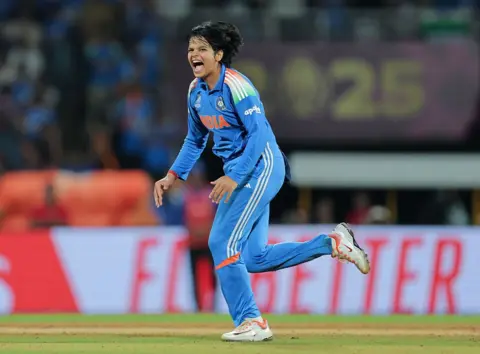

Cricket fans searching for the women’s cricket world cup schedule are often looking for more than just dates on a calendar. They want to understand how the tournament is structured, which nations are competing, where the marquee matches are being played, and how the entire event builds toward a grand final. Women’s cricket has grown from a niche pursuit into one of the most closely watched segments of the global sport, and the fixture calendar itself has become a story of expansion, ambition, and record-breaking crowds. From the traditional fifty-over format to the fast-paced Twenty20 spectacle, every edition brings its own rhythm of league matches, knockout drama, and unforgettable finals that keep fans glued to their screens for weeks at a time.
This guide walks through everything a fan, journalist, or casual follower needs to know about the tournament calendar, blending historical context with the most recent editions of the competition. It covers the structure of the event, the venues that have hosted iconic matches, the teams shaping the sport’s biggest rivalries, and the direction women’s cricket is heading as it prepares for further expansion in the years ahead. Whether the goal is planning viewing time around live fixtures or simply understanding how the modern game has evolved from modest beginnings into a genuine global spectacle, this article offers a complete and reliable reference point built on verified tournament history, confirmed results, and the latest announcements from cricket’s governing body.
Readers will also find practical guidance here, from how group stages translate into knockout brackets to where broadcasts can be followed live, so that nothing about a busy global tournament feels confusing. By the end, anyone unfamiliar with the sport’s competition structure should feel equipped to follow along confidently, understand why certain matches carry extra weight, and appreciate how far the women’s game has come in such a relatively short span of time.
Understanding the Two Formats of the Global Tournament
The phrase women’s cricket world cup schedule can refer to two distinct global events organized by the International Cricket Council, and understanding the difference is essential before diving into specific fixtures. The first is the Women’s Cricket World Cup, played in the fifty-over One Day International format, which has existed since 1973 and is widely regarded as the sport’s oldest global tournament, predating even the men’s edition by two years. The second is the Women’s T20 World Cup, a shorter and more explosive format introduced in 2009, designed to bring faster-paced action and broader television appeal to a growing global audience of fans who prefer quicker results, aggressive batting, and matches that comfortably fit into a single evening of viewing.
Both tournaments follow a broadly similar competition blueprint, featuring a group or league stage followed by semi-finals and a final, yet they differ significantly in duration, squad rotation, and strategic approach. The ODI World Cup traditionally spans several weeks and tests a team’s depth and endurance across fifty-over innings, rewarding sides with strong bowling reserves and batting resilience, while the T20 World Cup compresses that intensity into a tighter window, often lasting less than a month and placing a premium on explosive hitting and disciplined death bowling. Fans tracking the tournament calendar need to identify which format they are following, since venues, host nations, participating teams, and even broadcast partners can vary considerably between the two competitions in any given cycle.
It is also worth noting that qualification pathways differ between the two formats, with regional qualifying tournaments feeding into a global qualifier that determines the final spots for smaller cricketing nations. This layered qualification system means that by the time the main event begins, every participating side has already proven itself through months, sometimes years, of competitive cricket, adding extra context and meaning to matches that might otherwise appear to be routine group-stage fixtures on paper.
A Look Back: How the Tournament Calendar Has Evolved
The very first edition of the tournament was modest by modern standards, contested in England in 1973 with just seven teams competing in a round robin format without a formal knockout stage at the conclusion of the league phase. For decades afterward, the tournament remained a relatively low-profile affair, often overshadowed by the men’s game in terms of broadcast coverage, prize money, and stadium attendance, with many matches played in front of sparse crowds at outer grounds rather than flagship venues. Editions in the 1980s and 1990s were played across Australia, New Zealand, and England, gradually introducing more structured formats, though scheduling remained inconsistent compared to the polished calendars fans see today.
The turning point came in the 2000s and accelerated dramatically after 2017, when England hosted a sold-out final between England and India at Lord’s Cricket Ground, a moment widely credited with reshaping public perception of the women’s game almost overnight. That tournament demonstrated that a well-organized global fixture list, complete with prime-time fixtures and marquee venues, could draw genuine mainstream attention rather than being treated as a secondary sporting curiosity. Subsequent editions built on that momentum, with broadcasters investing more heavily, sponsors increasing prize pools, and host boards prioritizing iconic stadiums rather than secondary grounds, setting the stage for the record-breaking tournaments seen in 2025 and 2026.
This steady climb in production quality and public interest has also changed how players themselves approach the tournament. Where earlier generations often balanced international duty with amateur or semi-professional careers, today’s competitors benefit from central contracts, franchise league experience, and dedicated performance staff, all of which have raised the overall standard of cricket on display during every recent edition of the competition.
The 2025 ICC Women s ODI Cricket World Cup Recap
The most recent edition of the fifty-over tournament, the 2025 ICC Women’s Cricket World Cup, was jointly hosted by India and Sri Lanka, running from late September through early November 2025 and featuring eight qualified teams competing across multiple venues in both countries. The competition schedule included a lengthy league phase where every team faced the others before the top four progressed to the semi-final stage, a format designed to reward consistency over the course of a demanding, multi-week campaign that tested squad depth, injury management, and tactical adaptability across varying pitch conditions in different cities.
India’s campaign became the defining storyline of the entire event, culminating in a dramatic five-wicket semi-final chase of 339 runs against defending champions Australia, powered by an unbeaten century from Jemimah Rodrigues that is already considered among the finest individual innings in the tournament’s long history. In the final, played at the DY Patil Stadium in Navi Mumbai on November 2, hosts India defeated South Africa by 52 runs to claim their maiden Women’s Cricket World Cup title, with Shafali Verma’s composed 87 and Deepti Sharma’s five-wicket haul proving decisive in front of a capacity home crowd.
The tournament drew nearly three hundred thousand spectators in stadiums and close to five hundred million television viewers in India alone, numbers that reinforced just how much attention a well-promoted global tournament can command when paired with home success and a compelling underdog-turned-champion narrative. Following the historic win, the International Cricket Council confirmed that the 2029 edition would expand from eight to ten teams, a decision directly influenced by the record-breaking engagement generated by the 2025 campaign.
The 2026 ICC Women’s T20 World Cup Fixture List in Detail
Following directly on from the ODI tournament’s success, the 2026 ICC Women’s T20 World Cup schedule marked the biggest edition of the shorter format in its history, hosted by England and Wales from June 12 to July 5, 2026. Twelve teams competed, an increase from the previous ten-team format, split into two groups of six for a round-robin group stage before the top two sides from each group advanced to the semi-finals, giving qualifying nations a genuine chance to test themselves against established powerhouses over multiple matches rather than a single knockout tie.
The expanded field included four qualifiers, Bangladesh, the Netherlands, Ireland, and Scotland, who earned their places through a competitive global qualifying tournament held in Nepal earlier in the year, with the Netherlands securing their maiden appearance at a global event through a tense rain-affected chase against the United States. The tournament opened with hosts England defeating Sri Lanka by 87 runs in Birmingham and progressed through thirty-three fixtures across twenty-four days, spanning seven different host venues and generating consistently strong attendance figures throughout the group stage.
The competition culminated in a sold-out final at Lord’s Cricket Ground on July 5, where Australia, who had entered the tournament as six-time champions, delivered a dominant, unbeaten campaign throughout the group and knockout stages before defeating hosts England by seven wickets in the summit clash. Chasing a target of 151, Australia raced home with seventeen balls to spare thanks to a match-defining century partnership between Beth Mooney, who finished unbeaten on 64, and Phoebe Litchfield, whose 48 laid the platform for victory. The result extended Australia’s record to a remarkable seven Women’s T20 World Cup titles, cementing their status as the most successful side in the tournament’s history and giving the global calendar one of its most emphatic finishes yet.
Venues and Host Nations Shaping the Competition Calendar
Host selection plays a defining role in shaping any global tournament calendar, since venue capacity, pitch conditions, and local fan enthusiasm all influence how matches unfold and how memorable the overall event becomes for players and spectators alike. The 2026 T20 World Cup utilized seven venues across England and Wales, including the historic Lord’s Cricket Ground, Old Trafford in Manchester, Headingley in Leeds, Edgbaston in Birmingham, the Utilita Bowl in Southampton, The Oval in London, and Bristol’s county ground, giving fans access to matches in multiple regions rather than concentrating fixtures in a single city or metropolitan area.
This distribution strategy has become increasingly common, allowing organizers to build local excitement in several cities simultaneously while easing logistical pressure on any one stadium and its surrounding transport infrastructure. Similarly, the 2025 ODI World Cup spread its fixtures across venues in India and Sri Lanka, including Guwahati, Indore, Visakhapatnam, Colombo, and the two Mumbai-area stadiums that hosted the semi-final and final, ensuring that fans across a wide geographic footprint had the opportunity to attend live matches without extensive travel.
Choosing venues with strong local cricketing cultures, such as Navi Mumbai for the ODI final, has proven effective at generating record attendance figures and creating an electric atmosphere that translates well on broadcast. As the sport continues expanding, future editions of the competition calendar are expected to rot ate among established cricketing nations while occasionally exploring newer markets, balancing tradition with the broader goal of growing the game’s global footprint into regions where women’s cricket has historically received less investment and exposure.
How the Group Stage and Knockout Schedule Works
For fans trying to make sense of a busy tournament calendar, understanding the structural logic behind the fixture list makes the entire experience easier to follow from the opening match through to the final whistle. In the T20 format, twelve teams are divided into two balanced groups, and each side plays every other team in its group once during the round-robin phase, accumulating points based on wins, losses, and results affected by weather, with two points typically awarded for a win and none for a defeat, though abandoned matches split the points evenly between both sides.
The top two teams from each group then progress to the semi-finals, where the winner of one group faces the runner-up of the other, ensuring that only the strongest performers reach the business end of the tournament while still allowing for occasional upsets during the group phase. The ODI World Cup follows a comparable philosophy but on a larger scale, with eight teams playing a longer league phase before the top four advance to knockout semi-finals, a structure that rewards depth and consistency rather than a single moment of brilliance.
This format places significant importance on net run rate, which frequently becomes a decisive tiebreaker when points are level heading into the final rounds of the group stage, adding another layer of tension to matches that might otherwise appear to be dead rubbers late in the competition. Coaches and analysts spend considerable time calculating required run rates and margin scenarios in the closing matches of any given group, since a single boundary or dropped catch can dramatically shift a team’s net run rate and, by extension, their qualification hopes.
Weather also plays an underrated role in how the knockout stages unfold, since rain-affected matches can trigger revised targets under the Duckworth-Lewis-Stern method, occasionally producing results that feel abrupt compared to a match played to its natural conclusion. Tournament organizers typically build reserve days into the knockout schedule for exactly this reason, ensuring that semi-finals and finals are rarely decided purely by weather, though group matches earlier in the competition do not always receive the same buffer, which can add controversy to an otherwise straightforward qualification race.
Toss decisions have also become a talking point in recent editions, with captains increasingly choosing to field first under lights or in overcast conditions that favor swing and seam bowling early in an innings. This tactical trend was visible throughout the 2026 T20 World Cup, where several matches, including the final itself, were shaped significantly by the team that won the toss and elected to bowl, underlining just how much pre-match strategy can influence the flow of a knockout fixture.
Key Teams and Rivalries to Watch on the Schedule
No discussion of the sport’s biggest tournament would be complete without examining the rivalries that give the competition its emotional core and keep fans returning year after year. Australia and England share one of the sport’s fiercest historical rivalries, intensified by their multi-format Ashes series and repeated meetings in global finals, including the dramatic 2026 T20 World Cup final at Lord’s where Australia extended their unbeaten record against England in world final matches, a statistic that continues to weigh heavily on English hopes of a first global crown since 2017.
India’s rise has added a compelling new dimension to the sport, with home crowds embracing Harmanpreet Kaur’s squad during their historic 2025 ODI title run, an achievement that has inspired a new generation of players and fans across South Asia and significantly boosted domestic participation numbers in the months that followed. South Africa has also emerged as a consistent contender, reaching multiple recent finals despite falling short each time, a narrative of heartbreak and resilience under captain Laura Wolvaardt that has captured neutral fans’ sympathy and respect across the cricketing world.
New Zealand’s White Ferns, who won the 2024 T20 World Cup in Dubai before their title defense in England, showcased the kind of veteran leadership that keeps established programs competitive even as newer nations close the gap on the traditional powerhouses. Meanwhile, qualifying nations like Bangladesh, Scotland, Ireland, and the Netherlands add unpredictability and grassroots inspiration to every edition of the competition, proving that expanded formats genuinely widen opportunity rather than simply adding filler fixtures to a bloated calendar.
Individual player rivalries have also become a major storyline within the broader team narrative, with fans closely tracking head-to-head duels between elite bowlers and the world’s best batters every time two contending nations meet. Spin duels in particular have defined many recent tournaments, as slow bowlers from India, Australia, and England have repeatedly proven capable of controlling the middle overs even against aggressive, power-hitting top orders, turning what looks like a batting-friendly fixture into a tense, low-scoring thriller.
Captaincy battles add yet another layer of intrigue, since tactical decisions around field placements, bowling changes, and batting order can swing a tight contest in either direction. Leaders such as Harmanpreet Kaur, Sophie Molineux, Nat Sciver-Brunt, and Laura Wolvaardt have each shaped their team’s identity through distinct captaincy styles, and analysts frequently credit sharp in-game decision-making, as much as individual brilliance, for several of the most memorable results across recent tournaments.
Broadcast, Streaming and How Fans Can Follow the Matches
Modern fans expect seamless access to every fixture, and broadcasters have responded by treating the tournament calendar with the same production values once reserved almost exclusively for men’s tournaments. Matches from recent editions have been broadcast through major regional partners, including dedicated sports networks in host countries alongside international streaming platforms that allow global audiences to follow live scores, ball-by-ball commentary, and highlight packages regardless of time zone or geographic location, a shift that has meaningfully widened the sport’s reach beyond its traditional core markets.
This expanded distribution has been a significant factor behind the record viewership figures reported during the 2025 ODI World Cup in India, where nearly five hundred million viewers tuned in across television and digital platforms combined, a figure unmatched by any previous women’s cricket event anywhere in the world. Official tournament websites and cricket board platforms typically publish fixture lists well ahead of the opening match, including start times adjusted for multiple time zones, venue details, and squad announcements, allowing fans to plan their viewing schedules weeks or even months in advance of the opening ceremony.
Fans planning around a live schedule are advised to check official sources close to match day, since rain delays, floodlight schedules, and occasional venue changes can shift start times even after the initial calendar has been published and widely circulated across social media. Mobile apps from governing bodies now also send push notifications for toss updates, innings breaks, and close finishes, making it easier than ever to stay connected to a tournament unfolding across several weeks without needing to keep a television or laptop constantly switched on.
What’s Next: Upcoming Editions and the Road to 2028 and 2029
Looking ahead, the International Cricket Council has already confirmed significant expansion plans that will reshape the future tournament calendar for years to come. The 2029 ODI World Cup will grow from eight to ten participating teams, increasing the total number of matches from thirty-one to forty-eight, a decision announced shortly after India’s historic 2025 title win and driven directly by the record attendance and viewership figures that tournament generated across both stadium crowds and broadcast audiences.
Beyond the traditional World Cup formats, women’s cricket is also set to make its long-awaited return to the Olympic Games at Los Angeles in 2028, featuring six national teams competing in a Twenty20 format across a purpose-built venue located roughly fifty kilometres outside the host city, with matches scheduled to begin in mid-July. Qualification for the six available spots will be determined through top regional rankings across Africa, the Americas, Asia, Europe, and Oceania, alongside an automatic berth for the host nation, with a dedicated qualifying event set to determine the sixth and final participating team.
This milestone, combined with the continued growth of domestic franchise leagues feeding talent into international squads, suggests that the tournament calendar of the coming decade will only become more expansive, more competitive, and more central to the global sporting landscape than ever before. Cricket administrators have repeatedly emphasized that Olympic inclusion could unlock new government funding streams and grassroots development programs in countries where cricket has traditionally struggled to compete with more established Olympic sports for attention and resources.
Why the Tournament Schedule Matters for the Growth of the Game
Beyond the raw excitement of live matches, the structure and promotion of the tournament calendar carries real significance for the sport’s long-term development at every level, from grassroots participation to elite professional pathways. Every well-attended fixture, every record television audience, and every viral highlight from a knockout match strengthens the commercial case for continued investment in women’s domestic leagues, youth pathways, and coaching infrastructure across participating nations, creating a positive feedback loop that benefits the entire sport.
Tournaments that once struggled for basic broadcast coverage now command prime-time slots on major networks, a shift that directly benefits players through improved prize money, sponsorship deals, and professional contracts that were simply unavailable to earlier generations of competitors. The schedule also functions as a powerful visibility tool for smaller cricketing nations, giving teams like Ireland, Scotland, and the Netherlands a genuine platform to inspire participation back home after qualifying for a global event that receives worldwide media coverage.
When young players in non-traditional cricketing countries watch their national team compete on the same stage as Australia or India, it creates tangible role models and measurable increases in grassroots interest, often reflected in rising junior registration numbers in the months following a major tournament. In this sense, understanding and following the global fixture list is not simply about tracking matches, but about witnessing the ongoing transformation of a sport that continues to break attendance and viewership records with every passing edition, one host nation and one champion at a time.
Conclusion
The women’s cricket world cup schedule has traveled a remarkable distance from its modest beginnings in 1973 to the sold-out stadiums and record-breaking broadcasts seen in the 2025 ODI World Cup and the 2026 T20 World Cup. Understanding how the tournament is structured, from group-stage round robins through knockout semi-finals to a single decisive final, helps fans appreciate both the strategic depth and the raw drama that define these events. India’s maiden ODI triumph on home soil and Australia’s record seventh T20 title in England stand as two of the most significant chapters in the sport’s recent history, each shaped by carefully planned schedules that balanced competitive fairness with maximum fan engagement across multiple host cities.
Looking forward, expansion plans for 2028 and 2029, including Olympic inclusion and a larger ten team ODI field, confirm that the global tournament calendar will continue evolving in scope and ambition well beyond its current form. Fans who follow these competitions closely are not just watching sport unfold, they are witnessing a genuine cultural shift in how women’s cricket is valued, broadcast, and celebrated around the world by administrators, sponsors, and everyday supporters alike. Staying informed about upcoming fixtures, host venues, and qualifying pathways ensures no one misses the next milestone in this fast-growing global competition, one that shows no signs of slowing its remarkable momentum anytime soon.
FAQs
What is the women’s cricket world cup schedule for the most recent tournament?
The most recent completed edition was the 2026 ICC Women’s T20 World Cup, hosted by England and Wales from June 12 to July 5, 2026, featuring thirty-three matches across seven venues and concluding with Australia defeating England in the final at Lord’s Cricket Ground.
How often is the Women’s Cricket World Cup held?
The fifty-over Women’s Cricket World Cup is typically held every four years, while the Women’s T20 World Cup has generally followed a roughly two-year cycle since its introduction in 2009, though exact timing can shift based on ICC scheduling decisions and the broader global cricket calendar.
Who won the most recent Women’s ODI Cricket World Cup?
India won the 2025 ICC Women’s Cricket World Cup, their first-ever title in the format, defeating South Africa by 52 runs in the final held at the DY Patil Stadium in Navi Mumbai on November 2, 2025, in front of a capacity home crowd.
How many teams compete in the Women’s T20 World Cup?
The 2026 edition featured twelve teams, an increase from the previous ten-team format, divided into two groups of six for the round-robin group stage before the top two teams from each group advanced to the semi-finals.
Where can fans check the official schedule and fixture list?
Fans should check the official ICC website and the host nation’s cricket board platform, both of which publish confirmed fixture lists, venue details, and match timings, along with regular updates in case of rain delays or scheduling adjustments closer to match day.
Which team has won the most Women’s T20 World Cup titles?
Australia holds the record with seven Women’s T20 World Cup titles, most recently claiming the trophy in 2026 with a seven-wicket win over hosts England, extending their dominance as the most successful side in the tournament’s history.
What is next for the women’s cricket world cup schedule after 2026?
The ICC has confirmed that the 2029 Women’s ODI World Cup will expand to ten teams and forty-eight matches, while women’s cricket is also set to debut at the Los Angeles 2028 Olympic Games, marking further growth for the sport’s global tournament calendar.