
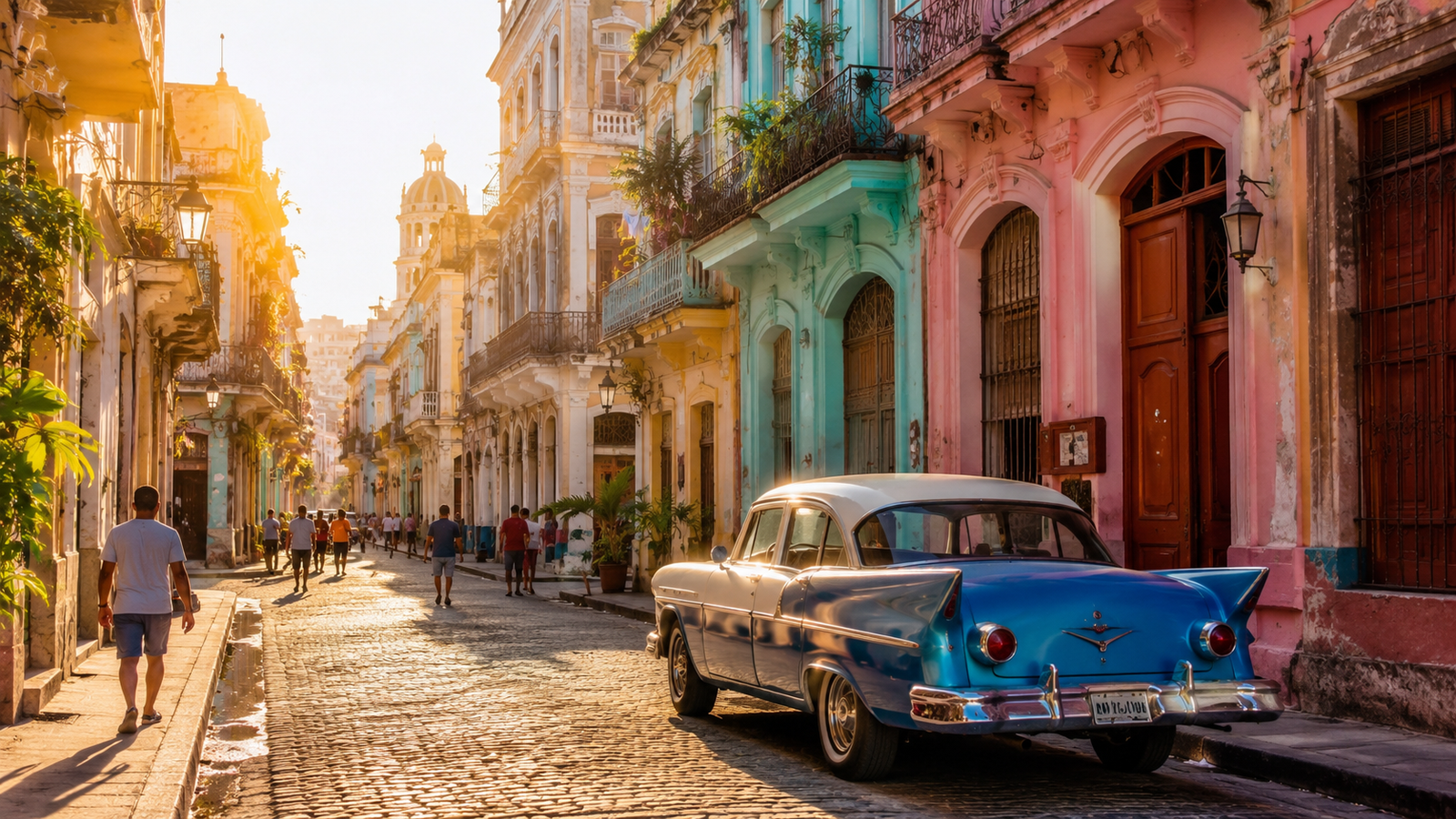

Just ninety miles off the coast of Florida sits an island that has puzzled American travelers for more than six decades. Colorful, complicated, and wrapped in political history, Cuba remains one of the most searched and misunderstood travel destinations for U.S. citizens. So can Americans travel to Cuba? The short answer is yes, but the full answer involves a maze of federal regulations, authorized categories, and paperwork that most travel destinations simply do not require.
This confusion matters because getting it wrong is not a small mistake. Traveling to Cuba outside the legally approved framework can expose American citizens to real financial penalties from the U.S. government, since Cuba travel is governed by sanctions law rather than ordinary customs rules. At the same time, thousands of Americans legally visit Cuba every year, drawn by its music, architecture, cuisine, and the chance to experience a culture that has been isolated from mainstream American life for generations. This guide breaks down exactly what the law allows, what has changed recently, and how to plan a trip that keeps you fully compliant while still getting the most out of the experience.
Understanding Why Cuba Travel Is Different
To understand why this question even needs an explainer, it helps to look at the history behind it. The United States has maintained an economic embargo against Cuba since the early 1960s, following the Cuban Revolution and the nationalization of American-owned businesses on the island. That embargo, enforced through the Cuban Assets Control Regulations administered by the Treasury Department’s Office of Foreign Assets Control, restricts Americans from spending money in Cuba unless their trip fits into a specific, government-approved purpose.
This is fundamentally different from how the U.S. treats travel to almost any other country. Americans do not need special justification to vacation in Mexico, France, or Japan. Cuba is treated as an exception because the embargo was designed to limit the flow of U.S. dollars to the Cuban government, particularly its military and security apparatus. Over the decades, different presidential administrations have loosened or tightened these rules, which is exactly why the regulations feel like a moving target and why so many people search for updated guidance before booking a flight.
So, Can Americans Travel to Cuba Right Now?
Yes, Americans can travel to Cuba in 2026, but general vacationing or pure recreational tourism is not a legally recognized reason for the trip. Every American traveler must be able to honestly say their visit falls under one of twelve categories authorized by the Treasury Department. This is often described as a self-certification system, meaning travelers do not apply for advance permission from the government for most categories, but they must be prepared to prove their trip qualified if ever asked.
In practice, this system is far more flexible than it sounds. Many travelers structure ordinary sightseeing trips around one of the broader categories, most commonly the “Support for the Cuban People” license, which allows for a wide range of everyday activities as long as the traveler’s spending and itinerary genuinely benefit private Cuban businesses and citizens rather than state-run enterprises. This means a trip filled with visits to local restaurants, independent guides, and family-run guesthouses can be entirely legal, even though it looks and feels like a typical vacation.
The Twelve Authorized Travel Categories Explained
The Cuban Assets Control Regulations lay out twelve categories under which American travel to Cuba is permitted. These include family visits, official government business, journalism, professional research and meetings, educational activities, religious activities, public performances and athletic or artistic exhibitions, support for the Cuban people, humanitarian projects, activities of private foundations or research institutes, exportation of certain information materials, and specific authorized export transactions. Each category has its own requirements regarding documentation and the type of activity that qualifies.
Not every category is realistic for the average traveler. Journalism requires an actual journalistic assignment, and official government business is limited to diplomats and government employees. For most independent American travelers, three categories tend to dominate: support for the Cuban people, educational activities structured as organized programs rather than casual sightseeing, and family visits for those with relatives on the island. Understanding which category genuinely fits your trip is the first and most important step in planning legal travel to Cuba.
Support for the Cuban People: The Most Popular Route
Among the twelve categories, “Support for the Cuban People” has become the go-to option for independent travelers because it is broad enough to accommodate a genuinely enjoyable trip while still meeting legal requirements. To qualify, your full-time schedule must involve activities that directly support Cuban civil society or private entrepreneurs, commonly referred to as MIPYMES, rather than businesses tied to the Cuban state or military.
In practical terms, this means staying in privately owned casas particulares instead of large state-run hotels, eating at privately owned paladares rather than government restaurants, hiring independent local guides, and shopping at small businesses instead of state shops. Many tour companies now design their entire Cuba itineraries specifically around this category, which is part of why so many Americans describe the process as far easier than the political headlines suggest, provided travelers keep their spending aligned with private, non-government entities throughout the trip.
What Documents You Actually Need
Beyond choosing the right travel category, American travelers need a handful of practical documents to enter Cuba legally. Most travelers need a Cuban tourist card, sometimes called a tarjeta de turista, which functions similarly to a visa. Airlines operating direct flights between the U.S. and Cuba typically sell these cards at the airport or include them as part of the ticket purchase process, and the color of the card can vary depending on whether you are flying directly from the U.S. or connecting through a third country.
In addition to the tourist card, Cuba requires all incoming travelers, including U.S. citizens, to complete an online entry form known as D’Viajeros before arrival. This digital customs and health declaration has replaced older paper forms and generates a QR code that travelers must present to immigration officials upon arrival. Travelers should also carry proof of travel medical insurance valid in Cuba, since local authorities can request evidence of coverage, and many American health insurance policies do not extend coverage to the island, making Cuban-issued travel insurance a common backup option purchased on arrival.
Money Matters: Cash, Cards, and Cuba’s Economy
One of the biggest adjustments for American travelers heading to Cuba involves money. U.S.-issued credit and debit cards generally do not work on the island because of the ongoing sanctions framework, which means travelers need to bring enough cash to cover their entire trip. Currency can typically be exchanged at airports, hotels, and official exchange houses once you arrive, though exchange rates and fees can vary depending on where you convert your money.
This cash-based reality connects directly to the broader economic situation many travelers encounter once they land. Cuba has been experiencing significant economic strain in recent years, including shortages of fuel, food, and medicine that have contributed to frequent power outages in parts of the country. Travelers who plan ahead by bringing sufficient cash, flexible expectations, and a willingness to adapt their itinerary around occasional blackouts or shortages tend to have a much smoother experience than those expecting the infrastructure of a typical resort destination.
Recent Policy Changes Worth Knowing About
Cuba travel rules have shifted again under the current administration, and staying updated matters if you want to avoid unknowingly stepping outside the legal framework. The White House reissued a Cuba-focused presidential memorandum that reinstated a stricter enforcement approach first introduced during the earlier Trump administration, emphasizing tighter oversight of how American travelers spend money on the island. As part of this shift, the government restored and expanded the Cuba Restricted List, which identifies hotels, businesses, and entities connected to the Cuban military and security services that Americans are prohibited from patronizing.
Enforcement has also become more rigorous, with American travelers now expected to maintain records of their Cuba-related transactions and itineraries for a period of several years in case of a government audit. This does not mean ordinary travelers are being closely monitored on a trip-by-trip basis, but it does mean documentation matters more than it once did. Keeping receipts, itineraries, and notes on which businesses you supported throughout your trip is a simple habit that protects you if your compliance is ever questioned later.
Understanding the Cuba Restricted List
The Cuba Restricted List deserves its own explanation because it directly affects where you can legally stay and spend money. This list identifies specific hotels, resorts, marinas, and other businesses controlled by or benefiting the Cuban military, intelligence services, or security forces, most notably a powerful conglomerate that owns a large share of the island’s hotel industry. American travelers are barred from conducting financial transactions with any entity on this list, regardless of which of the twelve travel categories their trip falls under.
Because this list is updated periodically, travelers should check the U.S. State Department’s current version before finalizing hotel reservations, since a property that was acceptable a year ago could have been added to the restricted list since then. Many independent travel platforms and tour operators now build compliance checks directly into their booking process, cross-referencing accommodations against the current list automatically, which takes some of the guesswork out of planning for travelers who prefer not to research every property manually.
Getting There: Flights and Entry Points
Despite the regulatory complexity, physically getting to Cuba from the United States has become relatively straightforward. Direct commercial flights operate from several major American cities, including Miami, Houston, New York, and Newark, with carriers such as American Airlines, JetBlue, Southwest, and United offering regular scheduled service to Havana and other Cuban cities. This is a significant change from earlier decades when charter flights were the only viable option for most travelers.
Booking a flight, however, does not automatically make your trip legal. Airlines generally require passengers to select the travel category under which they are visiting Cuba during the booking process, but this self-declaration does not replace the traveler’s own responsibility to ensure their actual itinerary matches that category once they arrive. Treating the category selection as a genuine commitment, rather than a formality to get through checkout, is what actually keeps a trip compliant with federal law.
Staying Safe and Informed While in Cuba
Beyond the legal framework, practical safety considerations matter for anyone planning a trip to Cuba in the current environment. Political and economic tensions on the island, combined with ongoing fuel shortages, have occasionally led to demonstrations, particularly in Havana, along with temporary business closures and unpredictable traffic disruptions. Travelers who structure their itinerary to spend more time outside the capital, or who stay flexible about adjusting plans on short notice, tend to navigate these disruptions more smoothly than those with rigid schedules.
Registering with the U.S. Embassy in Havana before or during your trip is a simple step that can provide real-time updates on safety, health, and weather conditions throughout your stay. It is also worth monitoring official State Department travel advisories in the weeks leading up to your departure, since conditions on the island, including fuel availability and infrastructure reliability, can change relatively quickly given the broader economic pressures the country continues to face.
Common Mistakes Americans Make When Planning This Trip
A surprising number of compliance issues stem from simple planning mistakes rather than intentional rule-breaking. One common error is booking accommodations without checking whether the property appears on the Cuba Restricted List, particularly among travelers drawn to well-known international hotel chains that turn out to have ties to restricted Cuban entities. Another frequent mistake involves assuming that selecting a travel category during flight booking is enough, without actually structuring the trip’s activities to match that category once on the ground.
Underestimating cash needs is another recurring issue, since travelers accustomed to card-based spending in most destinations sometimes arrive without enough currency to comfortably cover meals, transportation, and incidentals for their full stay. Finally, many first-time visitors overlook the importance of travel insurance that is explicitly valid in Cuba, only to discover at the airport that their existing domestic policy does not apply, forcing a last-minute purchase of local coverage before they can proceed through immigration.
What a Typical Compliant Trip Looks Like
Putting all of this together, a realistic and fully compliant American trip to Cuba often looks something like this. A traveler books a direct flight from Miami or Houston, selects the “Support for the Cuban People” category during booking, and arrives with a completed D’Viajeros entry form and proof of Cuba-valid travel insurance. Throughout the stay, they book a private casa particular instead of a large hotel, eat primarily at family-run paladares, hire independent local guides for excursions, and keep receipts documenting where their money went.
This kind of trip allows for genuine cultural immersion, from wandering through Old Havana’s colorful streets to exploring the Viñales Valley’s tobacco farms, all while remaining squarely within the legal framework the U.S. government requires. It is a far cry from the rigid, government-organized tour groups that once defined American travel to Cuba, and it explains why so many recent visitors describe the experience as more accessible and rewarding than they initially expected once they understood the actual rules involved.
Frequently Asked Questions
Can Americans travel to Cuba for pure tourism or vacation?
No. Recreational tourism by itself is not one of the twelve authorized categories. Every American trip to Cuba must fall under an approved purpose, such as support for the Cuban people or educational activities, even if the trip includes plenty of sightseeing and leisure time along the way.
Do Americans need a visa to enter Cuba?
Americans generally need a Cuban tourist card rather than a traditional visa, along with a completed D’Viajeros online entry form before arrival. The tourist card is often sold by the airline operating your flight or included in the price of your ticket.
Can Americans use credit cards in Cuba?
Typically no. U.S.-issued credit and debit cards generally do not work in Cuba due to the ongoing sanctions framework, so travelers need to bring sufficient cash for their entire trip and exchange currency locally at airports, hotels, or exchange houses.
What happens if an American breaks the Cuba travel rules?
Violating the Cuban Assets Control Regulations can expose a traveler to civil penalties from the Treasury Department’s Office of Foreign Assets Control. This is why choosing an accurate travel category and keeping documentation of your itinerary and spending is so important.
Is it safe for Americans to travel to Cuba right now?
Cuba remains a generally welcoming destination for American visitors, though ongoing fuel shortages, power outages, and occasional demonstrations, particularly in Havana, mean travelers should stay flexible and monitor official State Department advisories before and during their trip.
How do Americans get to Cuba?
Direct commercial flights operate from several U.S. cities, including Miami, Houston, New York, and Newark, on airlines such as American Airlines, JetBlue, Southwest, and United, making the trip logistically straightforward despite the regulatory requirements involved.
Can Cuban-Americans visit family in Cuba more easily than other travelers?
Yes. Family visits are one of the twelve authorized categories, and travelers visiting close relatives in Cuba generally have a clearly defined legal basis for their trip, separate from categories like support for the Cuban people that apply to travelers without family ties on the island.
Conclusion
So, can Americans travel to Cuba? Absolutely, as long as the trip is genuinely built around one of the twelve government-approved categories, supported by proper documentation, and mindful of the Cuba Restricted List when choosing accommodations and activities. The regulatory framework may look intimidating at first glance, but in practice, thousands of American travelers navigate it successfully every year by leaning on categories like support for the Cuban people, staying in privately owned guesthouses, and keeping simple records of their spending along the way. With the political landscape continuing to evolve, staying updated on current rules before you book is the single best way to ensure your Cuba adventure remains both legal and unforgettable.