
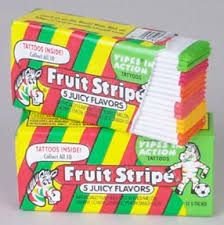

If you grew up anywhere near a corner store checkout counter in the 1970s, 80s, or 90s, chances are you remember tearing open a colorful, zebra striped wrapper and popping a stick of tangy, fruity gum into your mouth. That gum is widely known as zebra gum, a nostalgic candy that captured the hearts of kids for generations thanks to its bold packaging, quirky mascot, and burst of five distinct fruit flavors in a single stick. Officially called Fruit Stripe Gum, this candy earned its nickname simply because its wrapper looked like it belonged on the back of an actual zebra.
What makes zebra gum worth revisiting today isn’t just nostalgia, though. It’s a genuinely interesting story about branding, changing consumer habits, and how even the most beloved products can eventually fade from store shelves. In this article, we’ll walk through the full history of zebra gum, explain what made it so memorable, explore why it eventually disappeared, and answer the most common questions people search for when they think back on this striped childhood classic.
What Is Zebra Gum Exactly?
Zebra gum is the popular nickname for Fruit Stripe Gum, a chewing gum brand recognized instantly by its bright, zebra-patterned wrapper and its mascot, a cartoon zebra. The gum itself came in individually wrapped sticks, each one striped in different colors to represent a different fruit flavor packed into a single five-flavor stick. Unlike single-flavor gums that dominated the market, Fruit Stripe offered a layered flavor experience, giving kids a quick punch of cherry, orange, lemon, lime, and mixed fruit all rolled into one chewy stick.
The name zebra gum stuck so firmly in popular memory that many longtime fans don’t even realize the official product name was Fruit Stripe. This is a common pattern in branding history, where a distinctive visual element becomes more memorable than the actual product name itself. The zebra stripes weren’t just decoration either, they became the entire identity of the brand, appearing on the wrapper, the packaging box, and eventually on the mascot that would represent the gum for decades to come.
The Origins of Zebra Gum: How It All Began
The story of zebra gum begins in the early 1960s, when the Beech-Nut company introduced what was originally marketed as a “Five Flavor Gum.” The gum was invented by James Parker and first sold in 1960, at a time when the chewing gum aisle was largely dominated by simple, single-flavor products. Beech-Nut’s decision to pack five distinct fruit flavors into one stick of gum was a genuinely creative departure from the norm, and it gave the brand an immediate point of difference that helped it stand out on crowded candy shelves.
What truly set the product apart, however, wasn’t just the flavor combination but the packaging itself. The individual sticks of gum were striped to visually represent each flavor, and the outer wrapper adopted the same bold striped pattern reminiscent of a zebra’s coat. This visual branding decision turned out to be remarkably prescient, since it gave the product an instantly recognizable identity that required no reading or translation, a valuable asset for a candy marketed heavily toward children who were still developing their reading skills.
The Inventor Behind the Stripes
James Parker’s creation of Fruit Stripe Gum reflected a broader trend in mid-century candy innovation, where manufacturers experimented with combining multiple sensory experiences into single products. While detailed public records about Parker’s personal background remain limited, his contribution to candy history is undeniable, since the five-flavor gum concept he helped develop went on to become one of the most recognizable chewing gum brands of the twentieth century, entertaining multiple generations of children long after its initial launch.
The Zebra-Striped Packaging and Its Iconic Mascot
Branding experts often point to Fruit Stripe as a textbook example of how visual identity can outlast even the product name itself. The zebra stripe pattern wasn’t chosen arbitrarily, it created an immediate association between the gum’s colorful, multi-flavor nature and the visually striking pattern of a zebra’s coat. This kind of intuitive, symbolic branding made the product easy for children to spot and easy for parents to remember when restocking their kids’ favorite treats during grocery runs.
Over the decades, the packaging evolved slightly in terms of colors and typography, but the core zebra stripe concept remained remarkably consistent. This consistency is actually one of the underappreciated reasons zebra gum built such lasting brand recognition. In a candy market where products frequently rebrand, redesign, or disappear entirely, maintaining a recognizable visual identity for well over fifty years is a rare achievement that speaks to how effective the original design concept truly was.
Meet Yipes the Zebra
At various points, the brand used several mascots, including an early character known as the Fruit Stripe Gum Man and a group of characters called the Stripe Family Animals, which included a zebra, a tiger, an elephant, and a mouse. Eventually, the zebra character outlasted all the others and became the brand’s sole enduring mascot, later named Yipes. Yipes appeared prominently on packaging for decades, often paired with the catchy advertising slogan encouraging kids to unwrap the stripes and discover the flavor inside.
Yipes became such an effective mascot precisely because a cartoon zebra naturally reinforced the product’s visual identity without requiring any additional explanation. Children who couldn’t yet read packaging text could still recognize the character and associate him with the fun, colorful gum they enjoyed. This kind of character-driven marketing became a cornerstone strategy for candy brands throughout the latter half of the twentieth century, and Yipes remains one of the more memorable examples within that broader marketing tradition.
The Five Original Flavors of Zebra Gum
Part of what made zebra gum so appealing was its unusual approach to flavor. Rather than offering a single taste experience, each stick contained five separate flavor stripes, originally cherry, orange, lemon, lime, and mixed fruit. This gave chewers a rotating flavor sensation as they worked through the stick, something that felt novel and exciting compared to the single-note gums that made up most of the market at the time.
Over the years, the specific flavor lineup shifted somewhat as the brand changed ownership and adjusted to evolving consumer tastes. Later versions of the product experimented with combinations that included flavors like watermelon, wet and wild melon, peach, and grape, while maintaining the same core concept of packing multiple fruity flavors into a single chewing experience. This willingness to update flavors while preserving the brand’s signature format helped keep the product feeling fresh across different eras, even as the overall chewing gum market itself began to shift.
Temporary Tattoos: A Genius Marketing Move
One of the cleverest and most memorable aspects of zebra gum wasn’t the gum itself but what came wrapped around it. Each individual stick was wrapped in paper that doubled as a temporary tattoo, something kids could wet and press onto their skin after finishing their gum. This simple addition transformed a basic piece of candy packaging into a collectible, interactive experience that extended the fun well beyond the actual chewing.
This tattoo feature became such a defining part of the brand experience that many people who grew up with zebra gum remember the tattoos just as vividly as the flavor itself. It’s a great example of how a relatively small design decision can dramatically increase a product’s perceived value and emotional resonance, particularly among younger audiences who valued novelty and playfulness as much as taste. Trading and comparing tattoo designs among friends also added a social element that helped the brand spread through word of mouth in school hallways and playgrounds.
Ownership Changes Through the Decades
Like many long-running candy brands, zebra gum passed through several corporate hands over its lifetime, a journey that reflects broader consolidation trends within the American confectionery industry. After its original launch under Beech-Nut, the brand became part of a larger corporate transition when Beech-Nut Life Savers’s candy division was acquired by E.R. Squibb in the late 1960s. This was just the beginning of a long chain of ownership changes that would continue for decades.
In 1981, Nabisco acquired the Fruit Stripe brand through its purchase of the relevant candy line, folding zebra gum into its much larger portfolio of snack and candy products. The brand later moved to The Hershey Company in 1999, before being sold again to Farley’s & Sathers Candy Company in 2003. Finally, in 2012, Farley’s & Sathers merged with Ferrara Pan Candy to form what is now known as the Ferrara Candy Company, which held the brand until its eventual discontinuation. Each of these transitions reflects how iconic, nostalgic products often survive not because a single company champions them forever, but because their brand equity remains valuable enough for successive owners to keep manufacturing them.
Why Was Zebra Gum Discontinued?
For longtime fans, one of the most common questions is simply why zebra gum disappeared from shelves after so many decades of availability. Ferrara Candy Company made the decision to sunset Fruit Stripe Gum, describing it as a difficult choice given the brand’s long history dating back to the 1960s. According to reporting at the time, production had actually been quietly halted a couple of years before the official discontinuation was publicly acknowledged, meaning many consumers noticed the gum disappearing from stores well before the company confirmed the news.
The company’s public statement noted that while Fruit Stripe Gum was being sunset, consumers might still find remaining stock at select retailers nationwide for a period of time. This kind of gradual phase-out is common in the candy industry, where companies often deplete existing inventory rather than abruptly pulling every product simultaneously. For many nostalgic fans, the news still landed as a genuine loss, marking the end of an era for a product that had been a fixture of candy aisles for well over fifty years.
The Decline of Chewing Gum Culture
The discontinuation of zebra gum didn’t happen in isolation, it reflected a broader, well-documented decline in chewing gum consumption across the United States over the past decade or so. Reporting on the industry has pointed to a significant drop in overall gum sales, with some estimates suggesting sales fell by roughly a third since the late 2010s. Several factors have contributed to this shift, including changing snacking habits, increased awareness around sugar consumption, and a general move away from gum as a casual, everyday habit among younger consumers.
Smartphones and constant digital distraction have also been cited as a contributing factor, since chewing gum was traditionally used as a way to occupy idle hands and mouths during moments of boredom, something increasingly filled by scrolling through a phone instead. As gum sales declined across the board, legacy brands with smaller market share, like Fruit Stripe, became more vulnerable to discontinuation as companies focused resources on their strongest-performing products. This broader industry context helps explain why a beloved, long-running brand could still ultimately be phased out despite its cultural significance.
Where Can You Still Find Zebra Gum Today?
Even though Ferrara Candy Company has officially discontinued zebra gum, remaining inventory occasionally surfaces at specialty candy retailers, nostalgic candy shops, and online marketplaces that specialize in discontinued or hard-to-find snacks. Shoppers looking for a taste of childhood nostalgia sometimes find leftover stock listed on major online retail platforms, though availability tends to be inconsistent and prices can vary significantly depending on how scarce remaining supplies have become.
Specialty retro candy shops, both physical stores and dedicated online sellers, have historically been reliable places to check for discontinued treats like zebra gum, since these businesses often stockpile inventory specifically to serve nostalgic customers. It’s worth noting that because production has stopped, any remaining stock is essentially a finite resource, so prices may continue climbing as supply diminishes over time. Collectors and nostalgic fans should expect that finding zebra gum going forward will likely become progressively more difficult and, in some cases, more expensive.
Zebra Gum in Pop Culture and Nostalgia
Beyond its role as a simple piece of candy, zebra gum has taken on a broader cultural significance as a symbol of childhood nostalgia for people who grew up in the latter decades of the twentieth century. The distinctive zebra-striped packaging and the character of Yipes have become recognizable shorthand for a specific era of American candy culture, frequently referenced in online discussions, nostalgic listicles, and social media posts dedicated to memorable snacks from decades past.
This kind of lasting cultural resonance is relatively rare among discontinued candy brands, many of which fade from public memory entirely once they leave store shelves. Zebra gum’s continued presence in nostalgic conversations demonstrates just how effective its original branding strategy truly was, proving that a strong, simple visual identity paired with a genuinely novel product concept can create lasting emotional connections that persist for decades, even after the product itself is no longer readily available.
Is Zebra Gum Coming Back?
As of now, there has been no official announcement from Ferrara Candy Company regarding plans to revive or relaunch zebra gum in its original form. Companies do occasionally bring back discontinued nostalgic products in response to strong consumer demand, sometimes as limited-edition releases tied to anniversaries or nostalgia-driven marketing campaigns, but no such plans have been publicly confirmed for this particular brand at this time. Fans hoping for a comeback should treat any unofficial claims or rumors with appropriate skepticism until an official statement is made.
That said, the broader candy industry has shown genuine willingness to resurrect beloved discontinued products when public interest remains strong enough, particularly as social media makes it easier for nostalgic communities to organize and voice demand. Whether zebra gum eventually returns will likely depend on factors like consumer petitions, broader trends in the gum category, and whether Ferrara Candy Company sees sufficient commercial incentive to bring the brand back into active production rather than leaving it as a fondly remembered relic of candy history.
FAQs
What is zebra gum actually called?
Zebra gum is the popular nickname for Fruit Stripe Gum, a chewing gum brand known for its zebra-striped packaging. The nickname became so widely used that many people are more familiar with it than the official product name.
When was zebra gum first introduced?
Zebra gum, officially known as Fruit Stripe Gum, was first introduced in 1960 by the Beech-Nut company. It was originally marketed as a Five Flavor Gum before becoming widely recognized by its striped, zebra-inspired packaging.
Why did zebra gum have temporary tattoos?
The gum wrappers were designed to double as temporary tattoos as a marketing feature that added extra fun and collectability beyond the gum itself. This creative packaging choice became one of the brand’s most memorable features among longtime fans.
Is zebra gum still being made?
No, Ferrara Candy Company officially discontinued Fruit Stripe Gum, with production quietly halted a couple of years before the announcement became public. Some remaining stock may still be found at select retailers or specialty candy shops.
What flavors were in the original zebra gum?
The original Fruit Stripe Gum contained five flavors in a single stick: cherry, orange, lemon, lime, and mixed fruit. Later versions of the product experimented with additional flavor combinations over the years.
Who is Yipes the zebra?
Yipes is the cartoon zebra mascot that became the enduring face of Fruit Stripe Gum after outlasting several earlier mascot characters used by the brand. Yipes appeared prominently on packaging and advertising for decades.
Can I still buy zebra gum online?
Occasionally, remaining stock appears on major online retail platforms and specialty nostalgic candy websites, though availability is inconsistent since the product is no longer in active production. Prices may also be higher than the original retail cost due to limited remaining supply.
Will zebra gum ever come back?
There has been no official confirmation from Ferrara Candy Company about relaunching the brand, so any revival remains speculative at this time. The broader candy industry has occasionally revived nostalgic products in the past, so a future comeback isn’t impossible.
Conclusion
Zebra gum will always hold a special place in candy history, not just because of its unique five-flavor concept, but because of how effectively its zebra-striped branding and Yipes the mascot created a lasting emotional connection with generations of chewers. From its origins under Beech Nut in 1960 through multiple ownership changes and its eventual discontinuation by Ferrara Candy Company, the story of zebra gum reflects both the creativity of mid-century candy branding and the broader shifts reshaping the chewing gum industry today.
While the product itself may no longer be in active production, its legacy lives on through nostalgic memories, occasional remaining stock at specialty retailers, and its ongoing presence in conversations about the most memorable candies of the past. Whether or not zebra gum ever makes an official comeback, its striped wrapper and fruity burst of flavor remain a cherished piece of candy aisle history for anyone who grew up unwrapping its colorful stripes.