
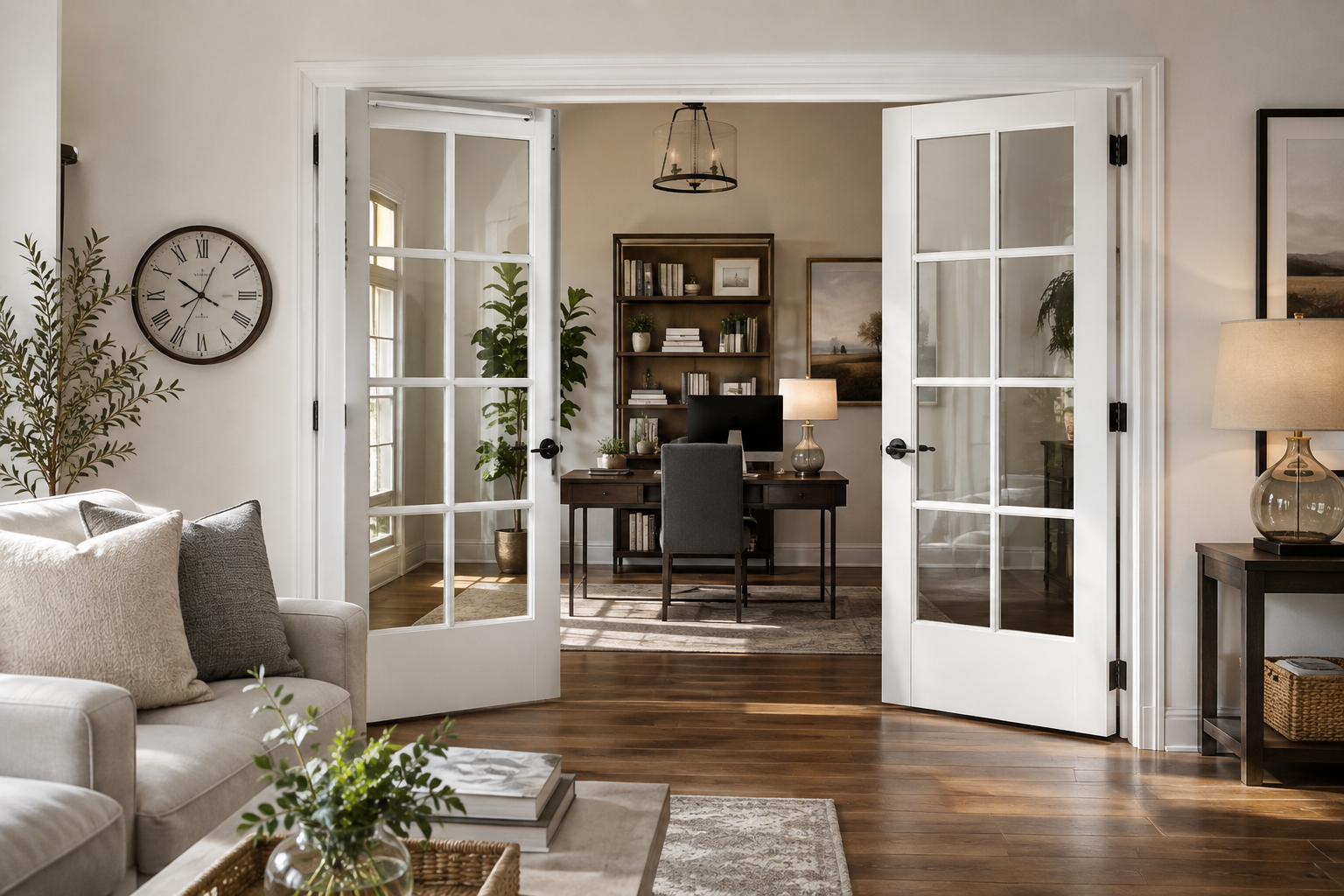

Few design elements can transform the feel of a home as instantly as french doors interior installations do. Walk into a house with a set of glazed double doors separating the living room from a home office or dining area, and the space immediately feels brighter, more open, and more intentional. It is no coincidence that interior designers keep returning to this classic architectural feature, decade after decade, regardless of shifting trends in paint colors or furniture styles.
What makes french doors interior applications so enduring is their unique ability to solve a very common problem in modern homes: how do you create separation between rooms without sacrificing light, openness, or a sense of connection? Solid doors close off a space entirely, while fully open floor plans can feel noisy and lack privacy when you need it most. French doors sit comfortably in the middle, offering flexible division that can be opened wide for entertaining or closed for quiet, focused work, all while letting natural light travel freely between rooms.
This guide walks through everything you need to know before choosing interior french doors for your own home, from the different styles and materials available to the rooms where they work best, the costs involved, and the small details that separate a beautiful installation from a mediocre one. Whether you are renovating an older property or planning a brand-new build, understanding how these doors function within a broader interior design plan will help you make a choice you will be happy with for years to come.
What Are Interior French Doors, Exactly?
Interior french doors are a pair of hinged doors, typically featuring large glass panels framed by wood, composite, or metal, designed to be installed between two indoor spaces rather than leading to an exterior patio or garden. Unlike a traditional solid door, the defining characteristic of a french door is the amount of visible glass it contains, which can range from a single large pane to a classic grid of smaller panes divided by decorative muntins. This glazing is what gives the doors their signature light, airy appearance.
Historically, the term originates from French architecture of the seventeenth century, where these doors were used extensively to connect grand rooms to gardens and terraces, allowing light and air to move freely through elegant estates. Over time, homeowners and designers recognized that the same qualities that made these doors so appealing outdoors, namely their openness and elegance, worked just as well indoors. Today, interior versions are manufactured specifically for use between rooms such as living areas, studies, dining rooms, and even bedrooms, adapted with appropriate hardware and glass types suited to indoor use.
Why French Doors Are So Popular in Interior Design
The enduring popularity of french doors interior installations comes down to a combination of practical benefits and aesthetic appeal that few other door styles can match simultaneously. On the practical side, these doors allow homeowners to define separate zones within an open floor plan without permanently closing off a room. A home office behind french doors, for instance, gains acoustic and visual separation from the rest of the house while still feeling connected to the family living space, which many people find far less isolating than a solid door closing off the room entirely.
From a design perspective, french doors add a level of architectural detail and sophistication that plain doors simply cannot replicate. The glass panels catch and reflect light throughout the day, creating subtle visual interest even when the doors are closed. This quality makes them particularly valuable in homes where certain rooms lack sufficient natural light, since the doors effectively borrow illumination from adjacent, brighter spaces. Real estate agents and home stagers frequently point to interior french doors as a feature that increases perceived home value, precisely because buyers associate them with quality craftsmanship and thoughtful design.
There is also a psychological dimension worth mentioning. Interior designers often note that fully enclosed rooms can feel confining in smaller homes, while french doors create what designers call visual continuity, meaning the eye can travel through the glass even when physical access is restricted. This effect makes homes feel larger and more expansive than their actual square footage would suggest, which is one of the primary reasons this door style has remained relevant across so many decades of shifting interior trends.
Types of Interior French Doors to Consider
Traditional Hinged French Doors
The classic configuration remains the most recognizable style: two doors hinged on opposite sides of a frame that swing open toward the center or away from each other, meeting in the middle when closed. This traditional layout works best in spaces with adequate floor clearance on both sides, since the doors need room to swing without colliding with furniture. Many homeowners choose this style specifically for its timeless look, particularly in period homes or spaces designed with classic architectural details in mind.
Sliding and Pocket French Door Styles
For homes where floor space is limited, sliding or pocket-style french doors offer the same glazed aesthetic without requiring swing clearance. Pocket doors slide directly into a cavity built within the adjoining wall, disappearing almost completely when open, while sliding barn-style french doors mount on a track along the wall’s exterior surface. These options have become increasingly popular in smaller apartments and homes where every square foot of usable floor space matters, proving that the french door look does not have to be limited to traditional hinged configurations.
French Doors With Sidelights and Transoms
Some interior installations extend beyond the standard two-door configuration to include fixed glass sidelights on one or both sides, or a transom window above the door frame. This approach works particularly well in taller rooms or entryways where additional glazing can dramatically increase the amount of light passing between spaces. While this style typically costs more due to the additional glass and framing required, many homeowners find the extra investment worthwhile for the grand, elegant impression it creates, especially in formal dining rooms or main entry hallways.
Frosted and Textured Glass Options
Not every interior application calls for fully transparent glass, and manufacturers now offer a wide range of frosted, textured, and etched glass options that provide privacy while still allowing light transmission. These are particularly popular for bathrooms, bedrooms, and home offices where full visibility into the room is not desirable but complete darkness is also unnecessary. Reeded glass, rain glass, and frosted acrylic panels have all become common choices, each offering a slightly different level of obscurity and visual texture.
Best Rooms for Interior French Doors
Living Rooms and Open-Concept Spaces
Living rooms remain one of the most popular locations for interior french doors, particularly in homes attempting to balance open-concept living with the occasional need for separation. A pair of french doors between a living room and a formal dining area, for example, allows the space to function as one large room during everyday use while offering the option to close things off for a dinner party or holiday gathering. This flexibility has made living room installations a consistently requested feature among homeowners working with interior designers and contractors.
Home Offices and Study Rooms
The shift toward remote and hybrid work has significantly increased demand for home office installations featuring french doors. Unlike a solid door, which can make a converted bedroom or den feel disconnected from the rest of the household, glazed doors allow a degree of visual connection while still providing the acoustic buffer needed for video calls and focused work. Many homeowners specifically request frosted or partially obscured glass for office installations, striking a balance between openness and the privacy needed for professional tasks.
Bedrooms and Private Retreats
While less common than living area applications, interior french doors are increasingly used for primary bedroom suites, particularly as an elegant transition between a sleeping area and an adjoining sitting room, nursery, or walk-in closet. Frosted or curtained glass panels are typically preferred in this setting to maintain appropriate privacy, but the added architectural interest can elevate what might otherwise be a fairly plain interior doorway into a genuine design feature within the room.
Kitchens, Pantries, and Dining Areas
Kitchens present a particularly practical use case for french doors, especially between the main cooking area and a butler’s pantry or formal dining room. The glass allows cooks to maintain visual contact with guests or family members in adjoining spaces while containing cooking odors, noise, and mess within the kitchen itself when the doors are closed. This application has grown especially popular in larger homes where the kitchen serves both everyday family use and more formal entertaining needs.
Benefits of Choosing Interior French Doors
The most immediately obvious benefit of installing french doors interior fixtures is the increase in natural light distribution throughout a home. Interior rooms without direct access to windows, a common challenge in many home layouts, can benefit enormously from borrowed light transmitted through adjacent glazed doors. This effect reduces dependence on artificial lighting during daytime hours and creates a noticeably brighter, more welcoming atmosphere throughout connected spaces.
Beyond the lighting advantages, these doors offer genuine functional flexibility that solid doors cannot match. Homeowners can fully open french doors to merge two rooms into one expansive space for entertaining, then close them again for privacy, noise reduction, or temperature control between zones. This adaptability has become particularly valuable as more households juggle competing needs within the same square footage, from remote work requirements to multigenerational living arrangements that demand flexible, adjustable spaces rather than fixed, single-purpose rooms.
There is also a resale value consideration that should not be overlooked. Homes featuring architectural details such as quality interior french doors often photograph better for real estate listings and tend to leave stronger impressions during in-person showings. While door installation alone will not dramatically increase a home’s sale price, it contributes to an overall impression of quality and attention to detail that buyers frequently associate with well-maintained, thoughtfully designed properties.
Popular Design Styles That Incorporate French Doors
Farmhouse and Modern Farmhouse Interiors
The farmhouse design movement has embraced french doors enthusiastically, often pairing them with black or dark bronze hardware and simple, clean-lined frames that complement the style’s characteristic mix of rustic and contemporary elements. Sliding barn-door variations, in particular, have become closely associated with farmhouse aesthetics, offering the glazed benefits of french doors combined with the exposed hardware and industrial-inspired track systems that define this popular design language.
Traditional and Classic Interiors
For homeowners working within traditional or colonial-inspired design schemes, french doors with multiple small panes divided by decorative muntins remain the preferred choice. This configuration echoes historical architectural precedent and pairs naturally with crown molding, wainscoting, and other classic trim details commonly found in traditional interiors. White or cream-painted frames tend to dominate this category, reinforcing the timeless, elegant character these homes typically aim to achieve.
Modern and Minimalist Spaces
Contemporary interior design has adapted the french door concept to fit cleaner, more minimalist sensibilities, typically favoring large single panes of glass rather than multiple divided sections, paired with slim black or matte metal frames. This modern interpretation, sometimes called a steel-frame or industrial-style french door, has become particularly popular in loft conversions and newly constructed homes that emphasize open sightlines and understated detailing over ornate historical references.
Material Options for Interior French Doors
Solid wood remains one of the most popular material choices for interior french doors, prized for its durability, natural warmth, and the ability to be stained or painted to match virtually any interior color scheme. Species such as oak, pine, and mahogany each offer distinct grain patterns and price points, allowing homeowners to select an option that fits both their budget and their desired aesthetic. Wood doors do require periodic maintenance, including occasional refinishing, but their longevity and classic appeal make them a favorite among homeowners investing in long-term architectural upgrades.
Composite and engineered wood options, often constructed from medium-density fiberboard with a wood veneer finish, have become increasingly popular as a more budget-friendly alternative that still delivers a similar visual result. These materials resist warping better than solid wood in humid environments, making them a practical choice for bathrooms or kitchen applications where moisture exposure is a genuine concern. Metal-framed french doors, typically constructed from steel or aluminum, represent the third major category, favored primarily in modern and industrial-style interiors for their slim profiles and contemporary black or bronze finishes.
Cost Considerations for Interior French Doors
Pricing for interior french doors varies considerably depending on material, glass type, size, and whether the installation requires structural modifications to the existing wall opening. Composite or MDF options tend to represent the most budget-friendly entry point, while solid hardwood doors with custom glass detailing sit at the higher end of the price spectrum. Homeowners should also factor in hardware costs, since quality hinges, handles, and locking mechanisms can meaningfully affect both the final price and the long-term performance of the doors.
Installation labor represents another significant portion of total project cost, particularly if the existing doorway opening needs to be resized or if the wall requires structural reinforcement to support a wider double-door frame. Homeowners working with a fixed renovation budget often find it helpful to get multiple quotes from local contractors, since labor pricing can vary substantially based on regional market rates and the complexity of the specific installation. Choosing pre-hung door units, which arrive already mounted within their frame, can sometimes reduce installation time and labor costs compared to installing doors and frames as separate components.
How to Choose the Right Interior French Doors for Your Home
Selecting the right french doors interior option starts with an honest assessment of the specific room and its function. A home office that will host frequent video calls might benefit most from frosted or textured glass that provides visual privacy without sacrificing the light-enhancing qualities of the door style, while a living room connecting to a bright, well-windowed dining area might work perfectly well with fully clear glass panels that maximize light transfer between the two spaces.
Available floor space and traffic patterns should also factor heavily into the decision, particularly when choosing between traditional hinged doors and sliding alternatives. Rooms with limited clearance on either side of the doorway, or spaces where furniture placement leaves little room for door swing, are generally better suited to sliding or pocket-style installations rather than traditional hinged configurations. Measuring the actual usable space carefully before finalizing a purchase can prevent the frustrating scenario of doors that look beautiful but function poorly within the practical constraints of daily use.
Finally, coordinating the door style, frame color, and hardware finish with the broader interior design scheme of the home ensures the new installation feels intentional rather than mismatched. Many homeowners find it helpful to bring paint swatches, flooring samples, or photographs of existing hardware finishes when shopping for doors, ensuring the final selection integrates seamlessly with the rest of the home’s established design language rather than standing out as an obviously separate renovation project.
Installation Tips: Professional Help vs DIY
While experienced do-it-yourself homeowners can sometimes handle straightforward french door installations, particularly when replacing an existing door within an already properly sized opening, most projects benefit significantly from professional installation. Getting the frame perfectly level and square is critical for both the doors’ appearance and their long-term functionality, since even slight misalignment can cause doors to stick, fail to latch properly, or develop uneven gaps that undermine the polished look the installation was meant to achieve.
Projects that involve widening an existing doorway or removing a section of wall to accommodate a double-door frame typically require professional contractors, particularly if the wall in question is load-bearing and requires structural assessment before any modifications begin. Attempting this type of structural work without proper expertise carries genuine safety risks and can lead to costly repairs if mistakes compromise the integrity of the surrounding wall. For homeowners uncertain about the scope of their specific project, consulting with a contractor for an initial assessment before committing to a DIY approach is generally a wise and cost-effective precaution.
Maintenance and Long-Term Care
Interior french doors generally require less maintenance than their exterior counterparts, since they are not exposed to weather elements, but regular care still helps preserve their appearance and functionality over time. Glass panels should be cleaned periodically with a standard glass cleaner to prevent buildup of dust and fingerprints, particularly in high-traffic areas where the doors are opened and closed frequently throughout the day. Wood frames may benefit from occasional dusting and, depending on the finish, periodic polishing to maintain their original luster.
Hinges and hardware deserve particular attention over time, since frequent use can gradually loosen screws or cause hinges to squeak. A simple routine of checking hardware tightness every few months and applying lubricant to hinges as needed can prevent more significant issues from developing and extend the functional lifespan of the doors considerably. Homeowners in humid climates should also periodically inspect wood doors for any signs of swelling or warping, addressing minor issues promptly before they affect the doors’ ability to close and latch properly.
Common Mistakes to Avoid When Installing French Doors
One of the most frequent mistakes homeowners make is underestimating the space required for door swing when choosing traditional hinged french doors, resulting in doors that collide with furniture or block walkways when fully opened. Careful measurement and planning before purchase, ideally accounting for furniture placement in the finished room, can prevent this frustrating and often expensive oversight from occurring after installation is already complete.
Another common error involves choosing glass types without considering the specific privacy needs of the room in question. Installing fully transparent glass between a home office and a busy living area, for example, might seem visually appealing during the selection process but can prove impractical once the space is in daily use and video calls or focused work require more visual separation than clear glass provides. Taking time to genuinely consider how a room will function day to day, rather than focusing exclusively on aesthetic appeal, leads to far more satisfying long-term results.
Frequently Asked Questions
What is the difference between interior and exterior french doors?
Interior french doors are designed to connect two indoor spaces and typically feature lighter construction since they are not exposed to weather, while exterior versions require weatherproofing, insulation, and more durable materials to withstand outdoor conditions and provide proper energy efficiency for the home.
Do interior french doors provide good sound insulation?
Standard glass french doors generally provide less sound insulation than solid wood doors, since glass tends to transmit more noise than dense wood panels. Homeowners prioritizing acoustic privacy can look into laminated or double-pane glass options, which offer improved sound dampening compared to standard single-pane glazing.
Can french doors be installed in any interior doorway?
In most cases, yes, though the doorway may need to be widened to accommodate a standard double-door configuration, since these installations are typically wider than a single traditional door. A contractor can assess the existing opening and advise whether structural modifications are needed before installation.
Are frosted glass french doors a good choice for privacy?
Frosted glass offers a practical middle ground between complete privacy and the light-enhancing benefits of clear glass, making it a popular choice for bathrooms, bedrooms, and home offices where full visibility is not desirable but complete opacity would eliminate the door style’s core advantages.
How much does it typically cost to install interior french doors?
Costs vary significantly based on material, glass type, and whether structural modifications are needed, with composite options generally representing the most affordable choice and solid wood or custom glass configurations sitting at the higher end of the pricing spectrum. Getting a detailed quote from a local contractor is the most reliable way to understand costs for a specific project.
Do french doors work well in small homes or apartments?
Yes, particularly sliding or pocket-style variations that eliminate the need for swing clearance, making them a practical option for smaller spaces where traditional hinged doors would be impractical. These configurations allow homeowners to enjoy the light and openness of french doors without sacrificing valuable floor space.
What hardware finishes pair well with interior french doors? Hardware finish largely depends on the overall design style of the home, with matte black and bronze finishes popular in farmhouse and industrial interiors, brushed nickel or chrome suited to modern and transitional spaces, and brass finishes commonly chosen for traditional or classic interior schemes.
Conclusion
Choosing french doors interior for your home is ultimately about more than following a passing design trend, it is an investment in flexibility, light, and architectural character that continues paying dividends long after installation. From open-concept living rooms to private home offices, these doors solve a genuine design challenge by allowing spaces to feel both connected and separate, depending on the moment’s needs.
By carefully considering the room’s function, available space, glass privacy requirements, and material options outlined throughout this guide, homeowners can select a french door style that not only looks beautiful but performs well within the practical realities of daily life. Whether you are drawn to the timeless elegance of traditional multi-pane designs or the sleek simplicity of modern steel-framed alternatives, interior french doors remain one of the most versatile and rewarding upgrades available for enhancing both the function and the visual appeal of a home.