
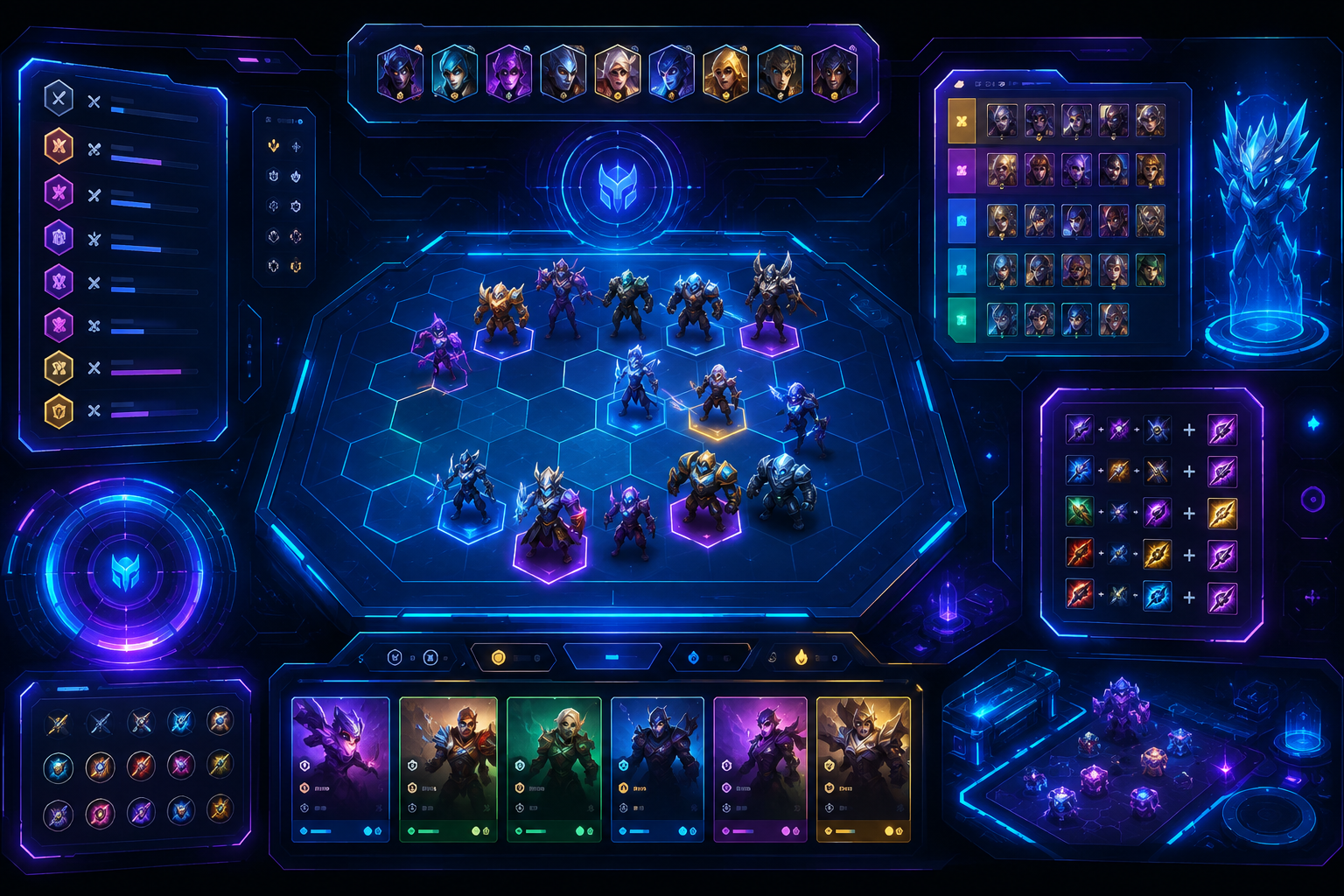

If you have spent any time climbing the ranked ladder in Teamfight Tactics, chances are you have already heard players mention TFT Academy in Discord servers, YouTube comments, or Reddit threads. What started as a strategy website has grown into one of the most talked-about resources in the TFT community, and for good reason. Teamfight Tactics is a game built on constantly shifting metas, patch changes, and complex itemization decisions, which means even experienced players regularly need reliable, up-to-date guidance to keep winning.
This is exactly the gap that TFT Academy was built to fill. Created by two well-known figures in the competitive TFT scene, the platform has grown from a simple tier list site into a full ecosystem of tools including an in-game overlay, a desktop companion app, and even a sponsored esports team. In this article, we will break down exactly what TFT Academy is, who built it, what tools it offers, how it compares to other TFT resources, and how you can use it to genuinely improve your gameplay rather than just copy comps blindly. Whether you are a newer player trying to understand the basics or a Diamond plus grinder looking for an edge, understanding what TFT Academy offers can meaningfully change how you approach every match.
What Is TFT Academy?
TFT Academy is a strategy and utility website built specifically for Teamfight Tactics players who want to improve their understanding of the game’s ever changing meta. At its core, the site provides tier lists, team comps, and patch specific guides that are updated regularly to reflect balance changes made by Riot Games. Instead of relying on outdated guides or scattered community knowledge, players can visit one central hub to see which compositions are currently strong, which champions are worth prioritizing, and how to itemize effectively for the current patch.
What sets TFT Academy apart from many generic strategy blogs is that its content is not written by anonymous contributors chasing search traffic. The site positions itself as being curated by recognized, high level TFT players, which gives its recommendations a level of credibility that resonates with a community that is often skeptical of low-effort content farms. Importantly, the website makes clear that it is not officially affiliated with or endorsed by Riot Games, a distinction worth keeping in mind since TFT Academy operates as an independent, community-driven project rather than an official Riot product.
Who Created TFT Academy
TFT Academy was founded by Dishsoap and Frodan, two names that carry significant weight within the Teamfight Tactics competitive community. Dishsoap is a two time TFT World Champion, giving him direct, high level insight into what actually wins games at the highest level of competitive play rather than theoretical strategy that sounds good but falls apart in real matches. Frodan, meanwhile, has built a reputation as a Challenger level coach, someone who has spent years helping other players understand not just what to play, but why certain decisions matter in specific game states.
This combination of a proven champion and an experienced coach is central to how TFT Academy markets itself and it is a meaningful distinction in a genre where strategy content can vary wildly in quality. Many TFT resources are built by enthusiastic players without competitive pedigree, which does not necessarily make their advice wrong, but it does make it harder for readers to gauge reliability. By building the platform around two publicly recognized figures with verifiable competitive results, TFT Academy has positioned itself as a resource with genuine expertise behind its recommendations rather than generic, crowd-sourced guesswork.
Key Features of TFT Academy
Tier Lists and Team Comps
The foundation of TFT Academy remains its tier lists and comp guides, which are updated to reflect the current patch and meta shifts. These lists typically rank team compositions by strength, consistency, and difficulty to execute, giving players a quick reference point when deciding what to build during a match. Rather than presenting a single best comp, the site generally breaks down multiple viable strategies, since Teamfight Tactics rewards flexibility based on what is open in a given lobby rather than forcing one fixed playstyle every game.
Beyond simple rankings, the comp guides typically include itemization priorities, positioning advice, and notes on how a composition should be played depending on the stage of the game. This level of detail matters because two players following the “same” comp can have wildly different results if one understands proper item allocation and augment synergies while the other does not. Good comp guides teach decision-making frameworks, not just static blueprints to memorize, which is part of what makes TFT Academy useful for players trying to genuinely improve rather than just copy a build for one game and forget it.
The TFT Academy Overlay
One of the more advanced tools offered by the platform is the TFT Academy Overlay, an in game and post game assistant designed to give players real-time insights without needing to alt-tab out of their match. The overlay reportedly offers optimized comp suggestions, item guidance, and performance breakdowns that update based on what is happening in your current game, which is a significant step up from static web guides that require constant tab-switching to reference.
This kind of real-time tool reflects a broader trend in competitive gaming, where players increasingly expect strategy resources to integrate directly into their gameplay experience rather than existing as separate reference material. For a game as fast paced as Teamfight Tactics, where decisions often need to be made within seconds during a carousel round or combat phase, having guidance available without breaking focus can be a genuine practical advantage, particularly for players still building the pattern recognition that experienced players develop over hundreds of games.
The Desktop App
TFT Academy also offers a desktop application, distributed through the Overwolf platform, which functions as an all-in-one companion for in-game and post-game analysis. According to its listing, the app includes a smart team planner, a replay system, and pro-backed recommendations designed to help players review their own gameplay decisions after matches rather than only relying on comp suggestions during live games.
This replay and review functionality is particularly valuable because it addresses a common weakness in how players typically try to improve. Many players focus exclusively on what comp to play next, without ever going back to analyze why a previous game went wrong. By building in tools that support post-game reflection, TFT Academy is not just handing players a fish, so to speak, but attempting to teach a repeatable process for identifying mistakes, whether those mistakes involve poor positioning, incorrect itemization, or misjudging when to pivot away from a contested comp.
How TFT Academy Helps Players Improve
The most immediate benefit TFT Academy offers is time savings. Teamfight Tactics patches can shift the meta significantly, sometimes making a dominant comp from one week nearly unplayable the next. Rather than spending hours testing different strategies through trial and error, players can consult updated tier lists to quickly understand what changed and adjust their approach accordingly. This is especially valuable for players who do not have unlimited time to grind ranked games and want to make the most of each session.
Beyond raw time savings, the platform’s emphasis on being built by proven competitive players adds an educational layer that generic guides often lack. Understanding why a comp is strong, what its win conditions are, and how to pivot when it becomes contested teaches transferable skills that carry over even after the meta shifts again with the next patch. This distinction between memorizing a comp and actually understanding the underlying decision-making is often what separates players who plateau in the ranked ladder from those who continue climbing over time, and it is a gap that well-designed educational content can genuinely help close.
The Academy Esports Team
Beyond its content and tools, TFT Academy has also expanded into competitive esports by sponsoring its own team, simply named Academy. The organization began sponsoring players starting with a roster addition around the TFT Paris Open, and it has since grown to include multiple competitive players under its banner. This move mirrors a pattern seen across many gaming content brands, where a successful strategy platform eventually transitions into directly supporting competitive talent, both to build brand visibility and to give back to the scene the platform depends on for credibility.
Sponsoring a competitive roster also creates a useful feedback loop for the platform itself. Having active competitive players under the same brand allows TFT Academy to stay closely connected to the bleeding edge of strategy development, since professional players are often the first to discover new comp innovations or itemization tricks before they become widely known. This connection between content creation and active competition helps explain why the platform’s guides tend to reflect current high-level thinking rather than lagging behind the meta by several patches.
Understanding the Academy Trait in TFT
It is worth clarifying an important distinction for readers who may be searching for information about “academy” in a slightly different context. Within Teamfight Tactics itself, Academy has also existed as an actual trait or synergy in certain sets, tied to specific champions and playstyles rather than the website. This in-game trait, when it has appeared in past sets, typically rewarded players for building around particular champion combinations with unique bonus effects tied to abilities and itemization.
This trait-based meaning is separate from TFT Academy the website, though the naming overlap can occasionally cause confusion for players searching online. If you encountered the term “academy” through in-game trait tooltips rather than through strategy content, you were likely looking at a champion synergy tied to a specific set rather than the external resource platform discussed throughout this article. Since Teamfight Tactics reworks its traits and mechanics with nearly every new set, it is always worth checking current in-game trait descriptions directly, since older explanations can quickly become outdated as Riot introduces new content.
How to Use TFT Academy Effectively
Simply opening a tier list and copying whatever sits at the top is rarely the best way to actually improve at Teamfight Tactics, even with a reliable resource like TFT Academy. A more effective approach involves treating the platform’s comp guides as a starting framework rather than a rigid script. Pay close attention to the reasoning behind why a comp is ranked highly, including its ideal augments, itemization priorities, and matchup strengths, since this contextual understanding is what allows you to adapt when your specific lobby does not cooperate with your first-choice plan.
It also helps to combine tier list research with active reflection on your own games, ideally using tools like the replay or performance breakdown features if available. Ask yourself honest questions after a loss: did you commit to a comp too early, misjudge your itemization, or fail to pivot when the lobby became contested? Pairing external strategy resources with genuine self-review tends to produce far faster improvement than passively consuming guides alone, since it builds the pattern recognition and decision-making instincts that ultimately matter more than memorizing any single comp.
TFT Academy vs Other TFT Resources
The Teamfight Tactics community is not short on strategy resources, and players often wonder how TFT Academy compares to alternatives such as Mobalytics, Metasrc, or Tactics Tools. Generally speaking, most of these platforms offer similar core functionality, including tier lists, comp guides, and statistical breakdowns pulled from ranked match data. The meaningful differences tend to show up in presentation style, update frequency, and the specific voice or philosophy behind the content, which is where TFT Academy’s positioning around named, competitively proven creators stands out.
Rather than treating these platforms as strictly competing options, many experienced players actually use multiple resources in tandem, cross-referencing tier lists across sites to identify comps that consistently appear strong across different data sources. This approach helps filter out potential bias or small-sample-size noise that can sometimes skew a single site’s rankings, especially early in a patch cycle before enough ranked data has accumulated. Ultimately, the “best” resource often comes down to personal preference regarding interface design, tool availability, and whether a player values statistical data or curated expert opinion more heavily in their decision-making process.
Tips for Getting the Most Out of TFT Academy
New users often benefit from spending their first few sessions simply exploring the available tools rather than immediately trying to apply everything at once. Start by reviewing the current tier list to understand the broad shape of the meta, then pick two or three comps that align with your preferred playstyle, whether that means fast-eight reroll strategies, standard four-cost carries, or flexible econ-focused approaches. Trying to master every top comp simultaneously tends to slow down learning rather than accelerate it.
If you decide to use the overlay or desktop app, take time to understand how its recommendations adjust based on your current game state rather than treating every suggestion as an absolute instruction. Real-time tools are most valuable when used to confirm or challenge your own read of the lobby, not as a replacement for developing your own game sense over time. Combining consistent tier list research, honest post-game review, and gradual comp mastery tends to produce steadier rank improvement than any single tool used in isolation.
Frequently Asked Questions
Is TFT Academy officially affiliated with Riot Games?
No. TFT Academy operates as an independent, community-built platform and explicitly states that it is not endorsed by Riot Games or officially affiliated with the company that develops Teamfight Tactics.
Who created TFT Academy?
The platform was created by Dishsoap, a two-time TFT World Champion, and Frodan, a Challenger-level coach, both well-known figures within the competitive Teamfight Tactics community.
Is TFT Academy free to use?
The core website, including tier lists and comp guides, is generally accessible to players without cost. Additional tools such as the desktop app have been noted to include advertising as part of their revenue model.
What is the TFT Academy Overlay?
The TFT Academy Overlay is an in-game and post-game companion tool that provides real-time comp suggestions, item guidance, and performance insights while you play, without requiring you to leave the game window.
Does TFT Academy have its own esports team?
Yes. TFT Academy sponsors a competitive team known simply as Academy, which has fielded multiple players in tournaments including the TFT Paris Open.
Is the “Academy” trait in Teamfight Tactics the same as TFT Academy the website?
No. The Academy trait that has appeared in certain TFT sets refers to an in-game champion synergy, while TFT Academy is a separate, external strategy website and toolset unrelated to that specific gameplay mechanic.
How often is TFT Academy updated?
The platform is generally updated in line with Teamfight Tactics patches, since balance changes can significantly shift which comps and champions are considered strong from one patch to the next.
Can beginners use TFT Academy, or is it only for high-level players?
TFT Academy is designed to be useful across skill levels. Beginners can use its tier lists to understand basic comp structures, while more experienced players can dig deeper into itemization details and matchup-specific strategy.
Conclusion
TFT Academy has established itself as a genuinely useful resource within the Teamfight Tactics community by combining accessible tier lists with tools built and endorsed by proven competitive players. From its origins as a strategy website founded by Dishsoap and Frodan, the platform has expanded into real-time overlays, a desktop companion app, and even a sponsored esports team, reflecting how seriously the creators have invested in supporting the broader TFT ecosystem. For players looking to climb the ranked ladder more efficiently, understanding what TFT Academy offers, and how to use its tools thoughtfully rather than passively, can make a meaningful difference in how quickly genuine improvement happens.
As Teamfight Tactics continues evolving with new sets and patches, resources like TFT Academy are likely to remain a valuable reference point for players who want to stay ahead of the ever-shifting meta.