
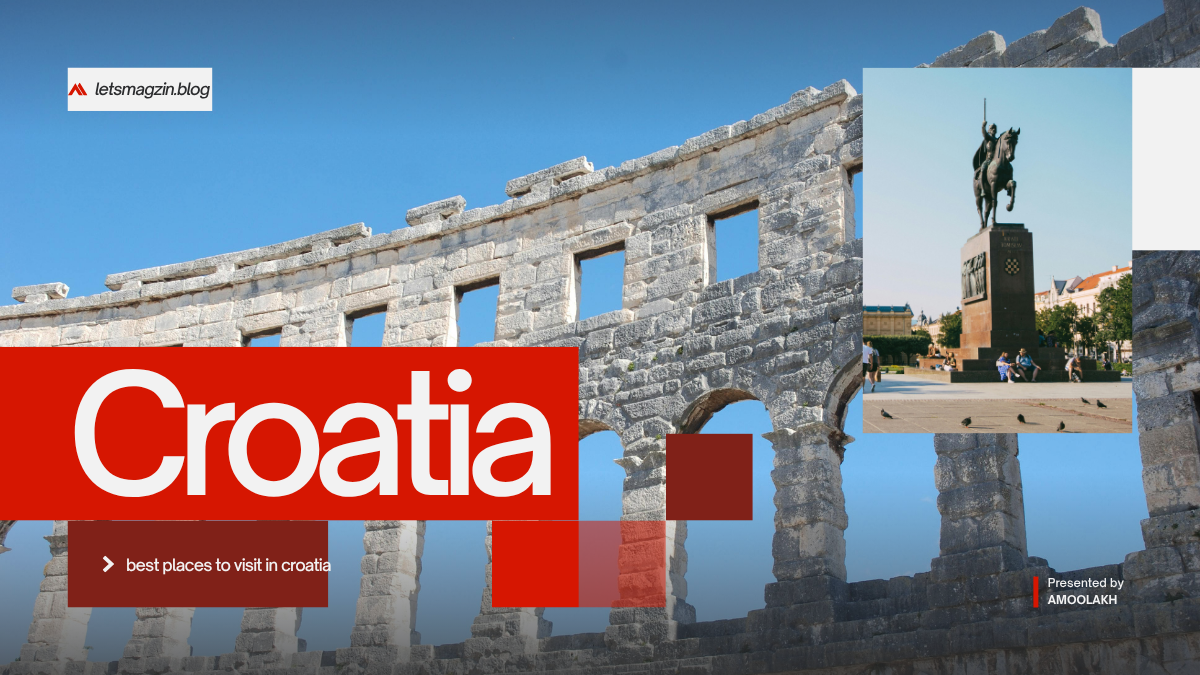

Croatia has quietly transformed from a lesser known European destination into one of the most talked about travel spots on the planet, and it is easy to understand why. With a coastline that stretches along the sparkling Adriatic Sea, a history that spans Roman emperors, Venetian traders, and Austro-Hungarian nobility, and a landscape that shifts effortlessly from limestone cliffs to emerald waterfalls, this small country manages to pack an astonishing variety of experiences into a relatively compact geography. Travelers searching for the best places to visit in Croatia are often surprised to discover just how diverse the country truly is, offering everything from medieval walled cities to untouched national parks.
This guide was written to walk you through the country the way a well-traveled local friend might, sharing not just the postcard-famous locations but also the quieter corners that make Croatia so rewarding to explore. Whether you are drawn by the idea of sailing between hundreds of islands, wandering ancient stone streets, or swimming in impossibly clear turquoise water, you will find a curated selection of destinations here that reflect both popularity and authenticity. By the end of this article, you should have a clear, practical, and inspiring roadmap for planning your own Croatian adventure, along with insider tips that go beyond what a typical travel brochure would tell you.
Why Croatia Deserves a Spot on Your Travel Bucket List
Croatia sits at a fascinating crossroads of Mediterranean and Central European cultures, which means visitors get to experience the laid-back charm of coastal Italy alongside the architectural grandeur associated with Vienna or Budapest. This blend of influences shows up in the food, the language, the music, and even the pace of daily life, making the country feel simultaneously familiar and completely unique. Unlike destinations that specialize in a single type of experience, Croatia rewards travelers who want variety within one trip, since a two-week itinerary can realistically include mountain hiking, island hopping, historic city touring, and beach relaxation without ever crossing a border.
Beyond the obvious natural beauty, Croatia has become a favorite among savvy travelers because it still offers relatively good value compared to Western European hotspots, even as its popularity continues to climb. Infrastructure has improved dramatically over the past decade, with well-maintained highways, reliable ferry systems connecting the islands, and an increasing number of direct flights from major cities in the United States and elsewhere. When people ask about the best places to visit in Croatia, they are often really asking how to balance iconic must-see attractions with hidden gems, and thankfully this country makes that balance remarkably achievable for travelers of nearly any budget or interest.
Dubrovnik: The Pearl of the Adriatic
No conversation about Croatia would be complete without starting in Dubrovnik, a city so visually striking that it has become one of the most photographed places in all of Europe. Encircled by massive stone walls that have stood since medieval times, the Old Town is a labyrinth of marble streets, baroque churches, and terracotta rooftops that glow amber at sunset. Walking the ancient city walls offers sweeping views of the sea on one side and the tightly packed historic center on the other, giving visitors a genuine sense of what life was like when Dubrovnik was an independent maritime republic rivaling Venice in wealth and influence.
Dubrovnik gained international fame partly through its appearance as a filming location for a popular fantasy television series, and this exposure has understandably increased tourist traffic, especially during peak summer months. Despite the crowds, the city rewards those who explore beyond Stradun, the main limestone-paved thoroughfare, by wandering into quieter alleyways where local cafes and artisan shops still thrive. Just outside the city, a short cable car ride up Mount Srđ delivers panoramic views that make the climb entirely worthwhile, and nearby beaches like Banje offer a refreshing swim with the Old Town as a dramatic backdrop.
Split: Where Roman History Meets Coastal Charm
Split holds the unusual distinction of being a modern, bustling city built quite literally inside the walls of an ancient Roman palace. Diocletian’s Palace, constructed as a retirement residence for a Roman emperor in the fourth century, now houses restaurants, shops, and apartments within its ancient stone corridors, creating a living archaeological site unlike anything else in Europe. Visitors can wander through underground cellars that once supported the palace above, browse a lively open-air market just steps from Roman columns, and sip coffee in squares that have witnessed nearly two thousand years of continuous human activity.
As the second-largest city in Croatia, Split also functions as the primary gateway to many of the country’s most beloved islands, making it a natural hub for travelers planning to explore further afield. Ferries depart regularly for Hvar, Brač, and Vis, which means many visitors use Split as a base for a few nights before island hopping across the Adriatic. The city’s waterfront promenade, known locally as the Riva, comes alive in the evenings with families strolling, street musicians performing, and the gentle clinking of glasses from seaside cafes, offering a relaxed introduction to Dalmatian coastal life that balances history with genuine everyday charm.
Plitvice Lakes National Park: Nature’s Masterpiece
Among the best places to visit in Croatia for nature lovers, Plitvice Lakes National Park stands in a category entirely its own. This UNESCO World Heritage site features sixteen terraced lakes connected by cascading waterfalls, all linked together by wooden footbridges that allow visitors to walk directly over and alongside the impossibly clear, mineral-rich water. The colors shift dramatically depending on the angle of sunlight and the mineral content of the water, ranging from deep turquoise to emerald green, creating a scene that often feels more like a painting than a real landscape.
Visiting Plitvice requires a bit more planning than a typical coastal day trip, since the park is located inland and involves several hours of driving from either Zagreb or Zadar, but the effort is consistently rated among the most memorable experiences travelers have in the entire country. Wooden trails wind through beech and fir forests before opening up to reveal waterfalls of varying sizes, some thundering and powerful, others delicate and quiet. Wildlife including deer, wolves, and brown bears inhabit the surrounding forest, though sightings are rare, and the park’s electric boats and shuttle buses make it possible to cover significant ground even for visitors who prefer a more relaxed pace.
Hvar Island: Sunshine, Lavender, and Nightlife
Hvar has earned a reputation as one of the sunniest islands in Europe, and this reputation is well deserved given its consistently clear skies throughout the summer season. Rolling fields of lavender blanket the island’s interior during the early summer months, filling the air with fragrance and creating a striking contrast against the deep blue of the surrounding sea. The main town, also called Hvar, features a grand central square, a fortified hilltop offering panoramic views, and a harbor lined with yachts that hints at the island’s reputation as a favorite among the international jet set.
Beyond its glamorous reputation, Hvar offers something for nearly every type of traveler, from those seeking lively beach clubs and late-night entertainment to those hoping for quiet coves and traditional stone villages. The interior town of Stari Grad, one of the oldest towns in Europe, provides a slower-paced alternative to the busier main port, with ancient Greek ruins and ivy-covered stone houses that feel worlds away from the nightlife scene. Nearby, the Pakleni Islands offer a short boat ride to secluded beaches and crystal-clear swimming spots, making Hvar an island where both relaxation and celebration coexist comfortably.
Zadar: The City of Sunsets and Sea Organs
Zadar often gets overshadowed by Dubrovnik and Split, yet many travelers who make the effort to visit come away insisting it deserves equal recognition among the best places to visit in Croatia. The city’s most famous attraction, the Sea Organ, is a set of stone steps built into the waterfront with underwater pipes that transform the motion of the waves into haunting musical tones. Alfred Hitchcock reportedly once called the Zadar sunset the most beautiful in the world, and standing along the promenade as the sky turns shades of orange and pink makes it easy to understand that sentiment.
Adjacent to the Sea Organ sits the Greeting to the Sun installation, a circular solar-powered light display that comes alive after dark, creating a mesmerizing dance of color synchronized with the day’s stored sunlight. Zadar’s Old Town itself blends Roman ruins, including a well-preserved forum, with medieval churches and narrow marble streets that see far fewer crowds than the more famous coastal cities. The nearby Kornati Islands archipelago, a national park consisting of nearly ninety islands and islets, offers boat excursions for travelers seeking dramatic rocky landscapes and pristine snorkeling conditions away from the mainland crowds.
Istria: Croatia’s Hidden Culinary Paradise
The Istrian Peninsula, located in the northwestern corner of Croatia, feels distinctly different from the rest of the country, drawing comparisons to Tuscany thanks to its rolling hills, vineyards, and hilltop medieval towns. Truffle hunting has become one of the region’s signature experiences, with the forests around the town of Motovun producing some of the most prized white truffles in the world. Food lovers exploring Istria will find a culinary scene that rivals many parts of Italy, featuring fresh seafood, olive oil production, and rustic konoba restaurants serving hearty regional specialties passed down through generations.
Coastal towns like Rovinj and Poreč offer their own charm within Istria, combining Venetian architectural influences with a slower, more relaxed pace than the busier southern coast. Inland, hilltop villages such as Grožnjan and Motovun feel almost untouched by mass tourism, with cobblestone streets, artist studios, and panoramic countryside views that make them ideal for a leisurely day trip. Wine enthusiasts will also appreciate Istria’s growing reputation for quality Malvazija whites and Teran reds, produced by small family-run wineries scattered throughout the peninsula’s fertile red soil, often called terra rossa.
Zagreb: The Underrated Capital
Zagreb rarely tops the list when people first think about the best places to visit in Croatia, yet the capital city offers a compelling mix of culture, history, and everyday charm that deserves more attention than it typically receives. The Upper Town, known as Gornji Grad, features cobblestone streets, colorful rooftops, and landmarks like St. Mark’s Church with its distinctive tiled roof depicting the coats of arms of Croatia and Zagreb. A funicular railway, one of the shortest and oldest in the world, connects the Upper Town to the bustling Lower Town below in less than a minute.
Zagreb’s cafe culture rivals that of Vienna, with locals spending unhurried hours at outdoor tables along Tkalčićeva Street, chatting over coffee regardless of the time of day. The city also hosts an impressive collection of quirky and world-class museums, including the Museum of Broken Relationships, which displays donated objects and stories from failed romances in a way that manages to be both humorous and genuinely moving. Because Zagreb sits inland and experiences a continental climate rather than a Mediterranean one, it makes an excellent year-round destination, particularly appealing during the winter months when its Advent market transforms the city into a festive wonderland.
Korčula: The Birthplace of Marco Polo
Korčula Island often gets described as a smaller, quieter alternative to Dubrovnik, and the comparison makes sense given its similarly walled Old Town perched on a peninsula jutting into the sea. Local legend claims the island as the birthplace of the famous explorer Marco Polo, and visitors can tour a house said to have belonged to his family, though historians continue to debate the claim’s accuracy. Regardless of the historical debate, the island’s dense pine forests, vineyards, and pebbled coves make it a rewarding stop for travelers looking to slow down after the busier southern cities.
The island is also known for producing excellent white wines, particularly the indigenous Pošip and Grk varieties, which pair beautifully with the fresh seafood served throughout the coastal restaurants. Traditional sword dances called Moreška, performed in period costume to commemorate historical battles, still take place in the summer months, offering visitors a genuine glimpse into local folklore and cultural pride. With regular ferry connections to both Split and Dubrovnik, Korčula fits naturally into a broader Dalmatian coast itinerary, rewarding travelers who choose to include it with a noticeably more relaxed atmosphere than its more famous neighbors.
Krka National Park: Waterfalls and Swimming Spots
Krka National Park often gets compared to Plitvice, but it holds its own distinct appeal, particularly because it historically allowed swimming near its stunning Skradinski Buk waterfall, drawing visitors who want to combine natural beauty with an actual dip in the water. Wooden boardwalks wind through lush forest, past smaller cascades, before opening onto a wide basin where the main waterfall thunders down in tiered layers, creating a scene that feels almost tropical despite being firmly within the Mediterranean climate zone. The park’s relatively compact size makes it accessible as a half-day or full-day trip from Split, Zadar, or Šibenik.
Beyond the main waterfall area, Krka offers boat excursions to Visovac Island, home to a Franciscan monastery that has stood since the fifteenth century, surrounded by tranquil waters that feel worlds apart from the busier coastal towns. History enthusiasts will also appreciate the nearby remains of medieval fortresses, including Trošenj and Nečven, which cling to the cliffs above the Krka River canyon. Because the park balances natural spectacle with cultural and historical depth, it consistently ranks among the best places to visit in Croatia for travelers who want more than just another beach day.
Rovinj: A Postcard-Perfect Fishing Town
Rovinj, perched on the western coast of the Istrian Peninsula, is frequently described as one of the most photogenic towns in the entire Mediterranean, and a single walk through its steep, winding streets makes the reputation immediately understandable. Pastel-colored houses cluster tightly around a hillside crowned by the Church of St. Euphemia, whose bell tower offers sweeping views across terracotta rooftops toward the Adriatic Sea. Once a working fishing village, Rovinj has managed to retain much of its authentic character even as tourism has grown, with fishing boats still docking alongside the harborside restaurants each morning.
Art lovers will find Rovinj particularly appealing, as its Grisia Street hosts numerous galleries and artist studios housed within centuries-old stone buildings, culminating each August in an open-air art festival that transforms the entire street into a gallery. Just offshore, the Lim Fjord and the Golden Cape forest park offer additional natural beauty, with the latter providing shaded walking trails and secluded swimming coves just a short walk from the town center. Rovinj manages to feel simultaneously romantic, artistic, and unpretentious, making it a favorite among travelers who prioritize atmosphere over flashy attractions.
Best Time to Visit Croatia and Travel Tips
Timing plays a significant role in determining how enjoyable a Croatian trip will feel, since the country experiences dramatic seasonal shifts in both weather and tourist density. The peak summer months of July and August bring the warmest temperatures and liveliest atmosphere, but also the largest crowds and highest prices, particularly in popular spots like Dubrovnik and Hvar. Many experienced travelers instead recommend visiting during the shoulder seasons of late spring or early autumn, when the weather remains pleasant enough for swimming and outdoor exploration while crowds and accommodation costs drop noticeably.
Practical planning also matters when deciding how to structure an itinerary, since Croatia’s elongated geography means significant travel time between the northern regions like Istria and the southern Dalmatian coast around Dubrovnik. Renting a car offers the most flexibility for exploring inland attractions and smaller coastal towns, though the extensive ferry network remains essential for reaching the islands. Travelers should also budget time for slower, more spontaneous exploration rather than overpacking an itinerary, since some of the most memorable moments in Croatia tend to happen in the unplanned pauses between major destinations, whether that means a spontaneous swim in a hidden cove or an unhurried lunch at a family-run konoba discovered by chance.
Conclusion
Croatia offers a rare combination of natural beauty, layered history, and genuine cultural richness that few destinations can match within such a compact geographic footprint. From the fortified elegance of Dubrovnik and the Roman grandeur of Split to the waterfall wonders of Plitvice and Krka, and from the sun-soaked charm of Hvar to the underrated capital of Zagreb, this guide has covered a wide spectrum of the best places to visit in Croatia for nearly every type of traveler. Whether your priority is history, nature, food, nightlife, or simple relaxation by the sea, Croatia has a corner that fits your interests perfectly.
As you begin planning your own journey, remember that the country rewards travelers who balance the iconic highlights with a bit of spontaneous wandering off the beaten path. The quieter towns, hidden coves, and lesser-known islands often leave just as strong an impression as the famous postcard destinations, sometimes even more so because they feel like personal discoveries rather than checked boxes on a list. With thoughtful planning, an open mind, and a willingness to slow down occasionally, a trip through Croatia has the potential to become one of the most memorable travel experiences of your life.
You may also read this Blog Best Places to Visit in Portugal
FAQs
What is the best time of year to visit Croatia Late spring, particularly May and June, along with early autumn in September, generally offer the ideal balance of warm weather, fewer crowds, and lower prices compared to the peak summer months of July and August. Water temperatures remain comfortable for swimming during these shoulder seasons, and popular attractions like Dubrovnik’s Old Town and Plitvice Lakes are noticeably less crowded, making for a more relaxed overall experience.
How many days do you need to see the best places to visit in Croatia A minimum of ten to fourteen days is recommended for travelers who want to experience a meaningful mix of Croatia’s top destinations, including at least one major city, one national park, and one or two islands. Shorter trips of five to seven days are still worthwhile but typically require focusing on a single region, such as the Dalmatian coast or Istria, rather than attempting to cover the entire country.
Is Croatia an expensive country to visit Croatia remains moderately priced compared to Western European destinations like Italy or France, though prices in tourist hotspots such as Dubrovnik and Hvar have risen significantly in recent years, especially during peak season. Traveling during shoulder season, choosing accommodations slightly outside the most famous city centers, and eating at local konobas rather than tourist-oriented restaurants can help stretch a travel budget considerably further.
Do I need to rent a car to explore Croatia While a rental car offers the greatest flexibility for exploring inland regions, smaller villages, and national parks like Plitvice and Krka, it is not strictly necessary for travelers focused primarily on coastal cities and islands, since buses and ferries connect most major destinations reliably. For a well-rounded trip that includes both coastal towns and inland attractions, however, renting a car for at least part of the journey is generally recommended.
Which Croatian island is best for a relaxing beach vacation Hvar and Korčula both offer excellent beach experiences, though Hvar tends to attract a livelier crowd with more nightlife options, while Korčula provides a quieter, more laid-back atmosphere ideal for travelers prioritizing relaxation. Brač Island, home to the famous Zlatni Rat beach, is another strong choice for those seeking a more low-key coastal escape away from the busiest tourist crowds.
Can you swim at Plitvice Lakes National Park Swimming has been prohibited at Plitvice Lakes for many years in order to protect the delicate ecosystem and preserve the clarity of the water for future visitors. Travelers hoping to combine waterfall sightseeing with an actual swim should instead visit Krka National Park, where designated swimming areas near the main waterfall remain a popular and refreshing option during the summer months.
Is Dubrovnik worth visiting despite the crowds Despite its popularity and the crowds that come with it, Dubrovnik remains widely regarded as one of the best places to visit in Croatia thanks to its unmatched combination of medieval architecture, dramatic coastal setting, and rich historical significance. Visiting early in the morning, staying overnight within the city, or exploring during shoulder season can significantly reduce crowd-related frustration while still allowing travelers to experience everything that makes Dubrovnik so special.