
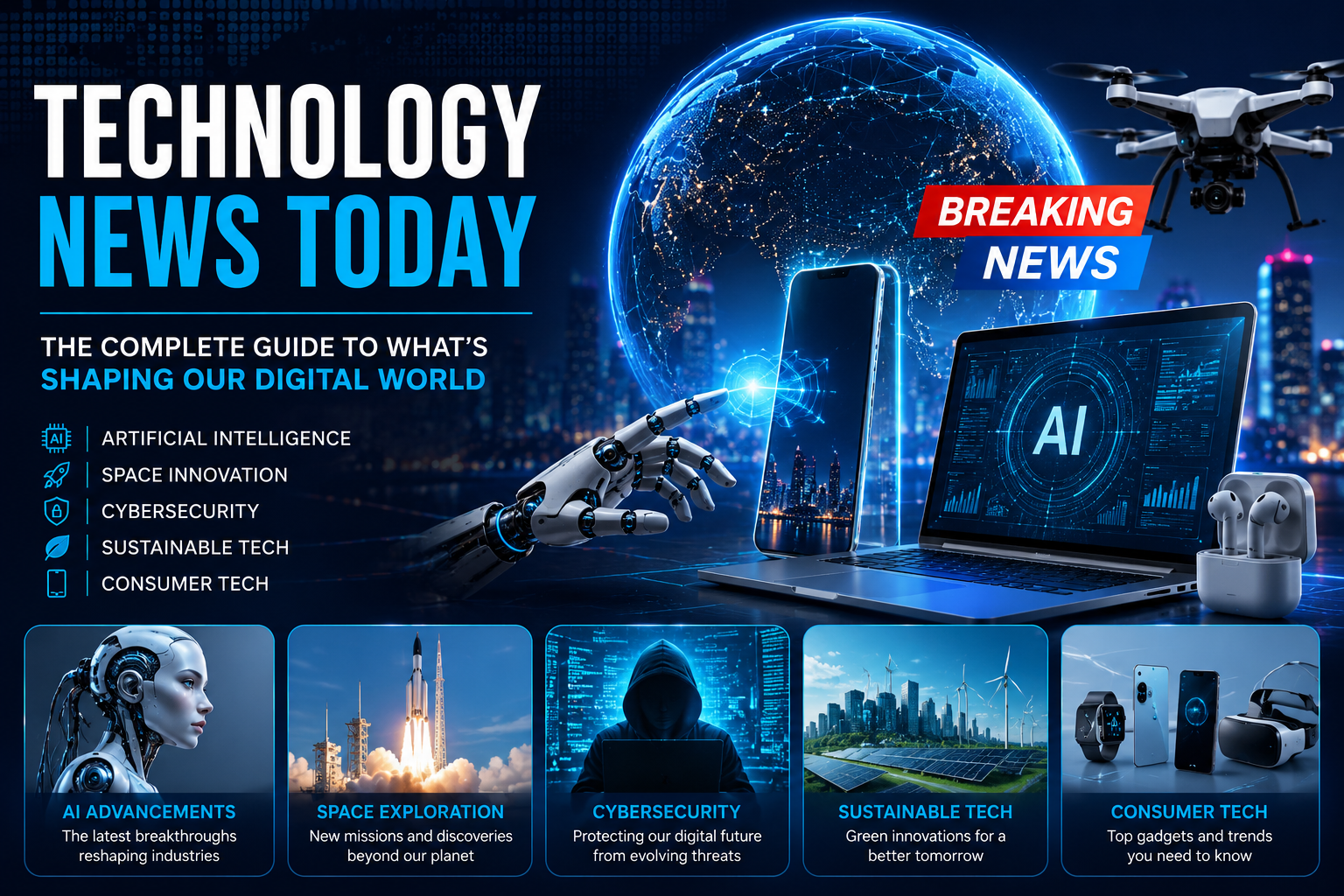

Technology news today moves faster than almost any other category of information, and keeping pace with it has become a daily habit for millions of readers around the world. From artificial intelligence breakthroughs to smartphone launches, from cybersecurity threats to space exploration milestones, the flow of updates never really stops. For professionals, students, entrepreneurs, and curious minds alike, staying informed about the latest tech developments is no longer optional, it is a practical necessity for navigating a world where digital tools influence nearly every decision we make.
This article takes a deep dive into the many facets of the modern tech landscape, exploring why it matters, how it is produced and consumed, and what trends are currently defining the conversation. Rather than simply listing headlines, this piece aims to connect the dots between different technological developments, showing how they influence business, culture, education, and everyday life. Whether you are someone who checks tech headlines every morning with coffee in hand or a professional who needs to understand innovation trends for strategic planning, this guide offers a comprehensive and engaging look at the subject.
What makes this moment particularly interesting is the sheer diversity of stories competing for attention within the technology space. On any given day, readers might encounter reporting on a groundbreaking chip design, a controversial policy decision affecting a major platform, or a small startup quietly solving a problem that could reshape an entire industry within a few years. This variety is part of what makes technology journalism so dynamic, and it is also why building a genuine understanding of the field requires looking beyond isolated headlines toward the broader patterns connecting them together.
Why Technology News Today Matters More Than Ever
In previous decades, technology updates were often confined to specialized magazines or niche television segments watched by a relatively small audience. Today, the situation has changed dramatically. This constant coverage reaches everyone because technology itself has become deeply embedded in daily routines, from the smartphones we check first thing in the morning to the smart appliances that manage our homes. This universal relevance means that even people who do not consider themselves tech enthusiasts are affected by shifts in the digital landscape, whether through a new app update, a data privacy scandal, or a change in how their favorite platform operates.
Another reason technology news today carries so much weight is its direct connection to the economy and job market. Major announcements from technology companies can move stock markets within minutes, influence hiring trends across industries, and reshape entire sectors almost overnight. When a company unveils a new artificial intelligence model or a breakthrough in semiconductor manufacturing, the ripple effects touch investors, workers, students choosing career paths, and consumers deciding which products to buy. Staying current with these developments allows individuals and businesses to make smarter, more informed decisions rather than reacting after the fact.
There is also an educational dimension to this constant stream of coverage that deserves attention. Parents trying to understand what devices are appropriate for their children, teachers incorporating digital tools into classrooms, and older adults navigating new banking apps all benefit from accessible reporting that translates complex technical shifts into practical guidance. In this sense, tech industry coverage functions not just as a record of innovation but as a bridge that helps everyday people understand and safely participate in an increasingly digital society, regardless of their technical background or comfort level with new tools.
The Rise of Artificial Intelligence in Everyday Life
Perhaps no subject dominates the tech headlines more consistently than artificial intelligence. What began as a niche research topic discussed mostly among computer scientists has transformed into a mainstream phenomenon that touches writing, art, customer service, healthcare diagnostics, and even personal relationships through chatbots and virtual assistants. Every week seems to bring a fresh announcement about a smarter model, a new application, or a debate about the ethical implications of increasingly capable machines. This constant stream of updates reflects just how rapidly the field is evolving and how central it has become to broader conversations about the future.
Beyond the flashy headlines about chatbots and image generators, artificial intelligence is quietly transforming industries that many people never think about. Agriculture now uses AI-powered sensors to monitor soil health and predict crop yields, while logistics companies rely on machine learning algorithms to optimize delivery routes and reduce fuel consumption. Financial institutions use AI to detect fraudulent transactions in real time, and hospitals are experimenting with diagnostic tools that can flag potential health issues faster than traditional methods. These behind-the-scenes applications rarely make flashy headlines, but they represent some of the most meaningful and lasting contributions of artificial intelligence to society.
The conversation around artificial intelligence within today’s tech landscape is not purely celebratory, however, and thoughtful reporting has increasingly focused on the challenges accompanying this rapid progress. Questions about job displacement, algorithmic bias, intellectual property rights for training data, and the environmental cost of training massive models are now regular features of coverage rather than afterthoughts. Journalists and researchers alike are working to present a balanced picture, acknowledging both the genuine benefits of these tools and the legitimate concerns that come with deploying powerful systems at such a rapid pace across so many sectors of society.
Regulatory bodies around the world have also entered the conversation, attempting to establish frameworks that encourage innovation while protecting consumers from potential harms associated with unchecked AI deployment. Debates over how to classify different levels of AI risk, who bears responsibility when automated systems make harmful decisions, and how much transparency companies should be required to provide continue to generate substantial coverage. This regulatory dimension adds another layer of complexity to artificial intelligence reporting, ensuring the topic remains relevant well beyond the initial excitement of any single product launch.
Breakthroughs in Consumer Electronics and Gadgets
Consumer electronics remain one of the most exciting categories within current tech trends, largely because these are the products people interact with directly on a daily basis. Smartphones continue to push boundaries with improved cameras, longer battery life, and foldable screen designs that were once considered science fiction. Wearable devices, including smartwatches and fitness trackers, have evolved from simple step counters into sophisticated health monitors capable of tracking heart rhythms, sleep quality, and even blood oxygen levels, making them valuable tools for personal wellness rather than mere novelties.
Home technology has also seen remarkable growth, with smart speakers, connected thermostats, and automated lighting systems becoming increasingly common in households across the country. These devices are no longer marketed solely as luxury items but as practical solutions for energy efficiency and convenience. Meanwhile, gaming hardware continues to push technical limits, with graphics processing units and consoles delivering increasingly realistic visuals and immersive experiences. Each new product launch generates significant buzz, feeding directly into the broader cycle of gadget coverage that consumers eagerly follow to decide what to purchase next.
Product reviews and comparison coverage have also become an essential part of how consumers navigate an increasingly crowded marketplace filled with similar-sounding devices from competing brands. Independent testing labs and technology journalists spend considerable time benchmarking performance, battery longevity, and build quality, giving shoppers a more objective basis for decisions than marketing materials alone could ever provide. This layer of consumer-focused reporting has become just as valuable as announcement coverage itself, helping readers cut through marketing language to understand which products genuinely deliver on their promises versus those that fall short in everyday use.
Cybersecurity Challenges in a Hyperconnected World
As more devices connect to the internet, cybersecurity has become an unavoidable and urgent topic within the digital news cycle. Data breaches affecting major corporations regularly make headlines, exposing sensitive information belonging to millions of users and raising serious questions about how companies protect the data they collect. These incidents are not isolated events but part of an ongoing pattern that reflects the growing sophistication of cybercriminals who exploit vulnerabilities in software, hardware, and human behavior alike. Understanding these threats has become essential for individuals and organizations trying to safeguard their digital lives.
Beyond large-scale corporate breaches, everyday cybersecurity concerns affect ordinary internet users in ways that are easy to overlook. Phishing scams, ransomware attacks, and identity theft schemes continue to evolve, often leveraging artificial intelligence to appear more convincing than ever before. Security researchers and technology journalists play a crucial role in exposing these threats and educating the public on protective measures such as multi-factor authentication and regular software updates. This ongoing coverage within the tech news cycle helps create a more security-conscious public, capable of recognizing red flags before falling victim to increasingly sophisticated attacks.
Critical infrastructure has also become a focal point of cybersecurity reporting, as attacks targeting power grids, water treatment facilities, and healthcare systems demonstrate that digital threats can carry serious real-world consequences beyond stolen data. Government agencies and private security firms increasingly collaborate to share threat intelligence and coordinate responses to these incidents, and coverage of these partnerships helps the public understand the scale of resources being devoted to protecting essential services. As critical systems become more interconnected, this category of reporting continues to grow in both volume and significance.
Small businesses represent another underreported yet important angle within cybersecurity coverage, since they often lack the resources of large corporations to defend against sophisticated attacks yet remain frequent targets precisely because of this vulnerability. Technology publications have increasingly dedicated coverage to affordable security practices tailored specifically for smaller organizations, recognizing that a one-size-fits-all approach to cybersecurity advice does not adequately serve businesses operating with limited budgets and technical staff. This practical, accessible reporting fills an important gap in the broader security conversation.
The Evolving Landscape of Cloud Computing and Data
Cloud computing has quietly become the backbone of the modern internet, powering everything from streaming services to enterprise software used by businesses of all sizes. Major providers continually announce new data centers, expanded services, and improved infrastructure designed to handle the growing demands of artificial intelligence workloads and big data analytics. These developments rarely generate the same excitement as a new smartphone launch, yet they form the invisible foundation upon which much of modern technology depends, making them a consistently important thread within the broader tech industry conversation.
Data privacy and management have become equally significant topics as companies grapple with regulations governing how personal information can be collected, stored, and used. Governments around the world continue to introduce new legislation aimed at giving consumers greater control over their digital footprint, and companies must adapt their practices accordingly or face substantial penalties. This intersection of technology, law, and personal privacy creates an ongoing narrative that technology journalists closely track, offering readers insight into how their own data is being handled by the platforms and services they use every single day.
The competitive landscape among cloud providers also generates steady coverage, as pricing changes, new service tiers, and partnership announcements can significantly affect businesses that depend on these platforms to run their operations. Smaller companies in particular pay close attention to this coverage, since shifts in cloud pricing or service availability can directly impact their operating costs and technical roadmaps. Understanding these dynamics has become essential knowledge for business owners and technology decision-makers who need to choose infrastructure partners capable of supporting long-term growth without unexpected disruptions.
Green Technology and Sustainable Innovation
Environmental concerns have increasingly found their way into mainstream tech coverage, as innovation and sustainability become intertwined in ways that were less common just a decade ago. Electric vehicles continue to capture significant attention, with manufacturers racing to improve battery efficiency, expand charging infrastructure, and reduce production costs to make sustainable transportation accessible to a broader range of consumers. These advancements are not just about environmental responsibility but also represent massive economic opportunities that are reshaping the automotive industry from the ground up.
Renewable energy technology has similarly become a recurring subject, with solar panel efficiency improvements, advances in wind turbine design, and breakthroughs in energy storage solutions regularly featured in coverage. Tech companies themselves are also under scrutiny for their environmental impact, particularly given the enormous energy consumption associated with data centers powering cloud services and artificial intelligence training. Many major corporations have pledged to achieve carbon neutrality within specific timeframes, and their progress toward these goals has become a legitimate news category that readers interested in sustainability actively follow.
Circular economy principles have also started influencing how technology companies design and market their products, with growing emphasis on repairability, recycling programs, and reducing electronic waste that has historically accumulated in landfills around the world. Right-to-repair legislation, which grants consumers greater ability to fix their own devices rather than relying exclusively on manufacturer-authorized services, has become a particularly notable storyline within this space. This shift reflects a broader recognition that sustainable innovation must address the full lifecycle of a product, not merely its energy consumption during use.
The Future of Work: Automation and Remote Collaboration Tools
The way people work has been fundamentally reshaped by technology, and this transformation remains a central theme within current technology coverage. Remote and hybrid work arrangements, accelerated by global events in recent years, have driven demand for collaboration software, video conferencing tools, and project management platforms that allow teams to function effectively regardless of physical location. Companies developing these tools regularly release updates and new features, competing fiercely to become the preferred choice for businesses navigating this new normal of distributed work.
Automation, meanwhile, continues to spark debate about its impact on employment across various industries. While some fear that robots and artificial intelligence will eliminate jobs, others argue that these technologies will simply shift the nature of work, creating new roles that did not previously exist while eliminating repetitive tasks. Manufacturing, retail, and even white-collar professions such as legal research and content creation are experiencing this shift firsthand. This ongoing tension between technological progress and workforce stability ensures that automation remains a consistently discussed and analyzed topic in technology reporting.
Workforce reskilling has emerged as a particularly important storyline connected to this broader automation narrative, as companies, educational institutions, and government programs attempt to prepare workers for roles that will exist in an increasingly automated economy. Coverage often highlights partnerships between technology companies and community colleges aimed at teaching practical digital skills, as well as corporate training programs designed to help existing employees transition into new positions rather than facing displacement. This forward-looking angle offers a more constructive counterpoint to purely alarmist narratives about job losses caused by advancing technology.
Social Media, Digital Culture, and Online Trends
Social media platforms represent a fascinating and ever-changing corner of the tech world, given how quickly trends, features, and even entire platforms can rise and fall in popularity. Algorithm changes on major platforms can dramatically affect how content is distributed, directly impacting businesses, influencers, and everyday users who rely on these networks for communication and income. Every tweak to a recommendation system or content moderation policy tends to generate significant discussion, reflecting how deeply intertwined social media has become with public discourse and commerce.
Beyond platform mechanics, the broader cultural impact of digital technology continues to evolve in unexpected ways. Short-form video content has reshaped attention spans and marketing strategies alike, while online communities built around shared interests have created new forms of social connection that did not exist a generation ago. Concerns about screen time, misinformation, and the psychological effects of constant connectivity have also become legitimate areas of investigation, with researchers and journalists working together to understand the long-term implications of a society that spends increasing amounts of time engaging with digital platforms.
The business side of social media also generates substantial coverage, particularly as platforms experiment with new monetization strategies ranging from subscription tiers to expanded advertising formats and creator revenue-sharing programs. Content creators themselves have become influential voices within technology discussions, often sharing firsthand perspectives on how platform changes affect their livelihoods in ways that traditional journalism sometimes struggles to capture. This blending of creator commentary with formal reporting has created a richer, more multifaceted picture of how social media platforms actually function behind the scenes.
Space Technology and Exploration Advances
Space exploration has experienced a remarkable resurgence in public interest, making it a recurring and exciting category within the tech world’s headlines. Private companies have joined government agencies in pursuing ambitious goals, ranging from reusable rocket technology that dramatically reduces launch costs to satellite constellations designed to provide internet access in remote areas of the world. These developments capture public imagination in ways few other technology stories can, blending scientific achievement with the timeless human fascination with exploring the unknown.
Beyond rockets and satellites, advances in space technology are increasingly relevant to everyday life on Earth. Satellite imagery now plays a crucial role in monitoring climate change, tracking natural disasters, and supporting precision agriculture, demonstrating that space innovation extends far beyond exploration for its own sake. Plans for lunar missions and eventual crewed journeys to Mars continue to generate substantial coverage, as milestones in these ambitious projects represent significant steps toward humanity becoming a multi-planetary species, a narrative that continues to captivate audiences worldwide.
Commercial space tourism has also entered the conversation, with several companies now offering paid suborbital and orbital flights to private citizens willing to pay substantial sums for the experience. While still accessible to only a small number of wealthy individuals, these ventures represent an important step toward eventually making space travel more broadly available, and each successful flight generates considerable media attention. Critics raise valid questions about the environmental cost and resource allocation of these projects, adding a layer of nuanced debate to what might otherwise be purely celebratory coverage of technological achievement.
How to Stay Updated with Technology News Today
Given the sheer volume of information available, knowing how to effectively stay updated with the latest tech developments requires a thoughtful approach rather than simply scrolling through random headlines. Dedicated technology news websites, industry newsletters, and podcasts hosted by knowledgeable experts offer curated and reliable sources of information that can help filter out noise from substance. Following reputable journalists and analysts on social media can also provide timely insights, though it remains important to verify information through multiple sources before accepting it as fact, particularly given how quickly misinformation can spread online.
For those seeking deeper understanding rather than surface-level headlines, subscribing to specialized publications focused on particular niches such as cybersecurity, artificial intelligence, or startup culture can provide more nuanced perspectives. Attending industry conferences, either in person or virtually, offers another valuable avenue for staying informed while also providing networking opportunities within the technology community. Ultimately, building a personalized information diet that balances breadth and depth allows readers to stay genuinely well-informed about the digital world without becoming overwhelmed by the constant stream of updates.
Developing a habit of critical reading is equally important, particularly given how frequently sensationalized headlines can misrepresent the actual substance of a technology story. Learning to distinguish between confirmed announcements, speculative rumors, and outright marketing spin takes practice, but it pays significant dividends in helping readers form accurate impressions of where the industry genuinely stands. Engaging with comment sections, discussion forums, and expert analysis alongside primary reporting can further round out understanding, offering multiple perspectives on the same underlying development rather than relying on a single source’s framing of events.
The Role of Startups and Innovation Hubs
Startups represent the experimental frontier of the technology industry, and their stories consistently feature within tech industry headlines because they often signal where the industry is headed next. Innovation hubs scattered across the country and around the world continue to nurture new ventures tackling everything from healthcare accessibility to financial inclusion, often leveraging emerging technologies in creative ways that established corporations are too slow or risk-averse to pursue. Venture capital funding trends, successful product launches, and occasional high-profile failures all contribute to a narrative that keeps entrepreneurs and investors closely engaged with startup coverage.
The startup ecosystem also plays a crucial role in talent development and economic growth within local communities. Many successful entrepreneurs got their start working at smaller companies before launching their own ventures, creating a cycle of knowledge transfer that benefits the broader industry over time. Acquisitions of promising startups by larger technology companies frequently make headlines as well, illustrating how established players continue to rely on smaller, more agile teams to drive innovation forward. This dynamic interplay between startups and established corporations remains one of the more compelling storylines within ongoing technology coverage.
Funding trends themselves offer a useful barometer for understanding broader shifts within the technology industry, since investors often place bets based on where they believe future growth and demand will materialize. Periods of abundant venture capital funding tend to encourage experimentation and rapid expansion, while tighter funding environments push startups toward more disciplined, revenue-focused strategies. Observing these cycles over time provides valuable context for understanding not just individual company stories but the broader economic forces shaping innovation across the entire technology sector.
The Growing Influence of Mobile Technology and Connectivity
Mobile technology continues to be a defining pillar within digital innovation news, as billions of people around the world rely on smartphones as their primary gateway to the internet. The rollout of faster network infrastructure has enabled new possibilities for streaming, gaming, and real-time communication that were simply not feasible on older networks. Telecommunications companies regularly announce expansions and upgrades, generating coverage that directly affects how quickly and reliably consumers can access digital services in their daily lives.
Connectivity improvements extend beyond just faster internet speeds, encompassing broader efforts to bridge the digital divide that still separates urban and rural populations in terms of access to reliable technology. Initiatives aimed at expanding broadband access to underserved communities have gained significant policy attention, recognizing that equitable access to technology is increasingly tied to educational and economic opportunity. As mobile devices become even more central to daily functioning, from banking to healthcare appointments, the infrastructure supporting this connectivity remains a critically important and frequently updated topic within technology reporting.
Mobile application ecosystems also continue to evolve alongside network improvements, with app stores regularly updating policies around developer fees, content guidelines, and security requirements that shape what consumers can access on their devices. Disputes between platform operators and app developers over commission structures have become a recurring storyline, occasionally spilling into legal battles that attract significant public attention. These conflicts highlight the substantial economic power concentrated within mobile ecosystems and the ongoing tension between platform control and developer autonomy that continues to shape the broader mobile technology landscape.
Healthcare Technology and the Digital Transformation of Medicine
Healthcare represents one of the most impactful, though sometimes underappreciated, areas within the broader technology conversation, as digital tools increasingly reshape how patients receive care and how providers manage their practices. Telemedicine platforms have made remote consultations commonplace, allowing patients in rural or underserved areas to access specialists they might never have been able to see in person. Wearable health monitors, electronic medical records, and AI-assisted diagnostic tools are collectively transforming a traditionally conservative industry into one that increasingly embraces digital innovation to improve patient outcomes and operational efficiency.
Pharmaceutical research has also benefited enormously from technological advances, particularly through the use of computational modeling and machine learning to accelerate drug discovery processes that once took many years to complete. Genomic sequencing costs have fallen dramatically, opening doors to personalized medicine approaches tailored to an individual’s specific genetic makeup rather than relying solely on broad population-based treatment guidelines. These developments carry profound implications for public health, and coverage of breakthroughs in this space tends to resonate strongly with readers who understand technology’s potential to directly improve quality of life and longevity.
Conclusion
Technology news today encompasses an extraordinarily broad and interconnected set of subjects, ranging from artificial intelligence and cybersecurity to space exploration and sustainable innovation. What makes this category of news so compelling is not simply the pace of change but the way these developments ripple outward, touching economies, cultures, and individual lives in ways both obvious and subtle. Staying informed allows readers to make better decisions, whether that means choosing the right device, protecting personal data, or understanding broader shifts that will shape career opportunities in the years ahead.
As technology continues to advance at a remarkable pace, the importance of thoughtful, well-sourced reporting will only grow. Readers who take the time to engage critically with tech industry coverage, rather than passively consuming headlines, position themselves to better understand and adapt to a world that seems to reinvent itself every few months. Whether your interest lies in gadgets, artificial intelligence, sustainability, or the future of work, there has never been a more fascinating time to follow the ongoing story of technological progress unfolding around us.
FAQs
What is the best way to follow technology news today without getting overwhelmed?
The best approach is to choose a handful of trusted sources, such as reputable technology publications or newsletters, rather than trying to consume every headline that appears online. Setting aside a specific time each day to review updates can also help maintain a healthy balance between staying informed and avoiding information overload.
Why does artificial intelligence dominate so much of the tech news cycle?
Artificial intelligence dominates coverage because it is advancing rapidly and affects nearly every industry, from healthcare to entertainment. Its broad applicability, combined with ongoing ethical debates about its use, makes it a naturally recurring and high-interest subject for journalists and readers alike.
How can I verify whether a piece of technology news is accurate?
Cross-referencing information across multiple reputable sources is one of the most reliable methods for verifying accuracy. It also helps to check whether the original claim comes from an official company announcement, a peer-reviewed study, or a credible journalist rather than an anonymous social media post.
Are startups as important as large technology companies in shaping industry trends?
Yes, startups often introduce innovative ideas and technologies that larger companies later adopt or acquire. While big corporations have more resources, startups frequently drive the experimental breakthroughs that eventually influence mainstream products and services across the industry.
How often should I check tech industry updates to stay properly informed?
Checking updates once or twice daily is generally sufficient for most people who want to stay reasonably informed without becoming consumed by constant notifications. Professionals working directly in technology fields may benefit from more frequent monitoring depending on their specific role and responsibilities.
Is cybersecurity news relevant to people who are not tech professionals?
Absolutely, cybersecurity news is relevant to everyone because it often includes practical guidance on protecting personal information, recognizing scams, and understanding how data breaches might affect individual users. Being aware of these risks helps ordinary internet users make safer choices online.
What role does government regulation play in shaping technology news today?
Government regulation increasingly shapes how technology companies operate, particularly regarding data privacy, antitrust concerns, and artificial intelligence oversight. Coverage of these regulatory developments helps readers understand how legal frameworks might affect the products and services they use on a daily basis.