
Few brand names carry as much weight in the tech world as Apple. Say the words Apple computer and most people picture something specific, whether it’s the sleek aluminum body of a MacBook, the glowing logo on a coffee shop table, or the memory of a beige box from decades ago that quietly changed how ordinary people interacted with technology. What started as a small operation building circuit boards in a garage has grown into one of the most influential companies in the history of computing, and understanding that journey helps explain why Apple computers still command such loyalty today.
This article takes a close look at the full picture behind the Apple computer story, from its founding days through to the modern Mac lineup available right now. Rather than just listing specifications, the goal here is to give you real context: how the company got its start, how its computers evolved, what your options look like today, and how to think about choosing the right machine for your needs. Whether you’re considering your first Mac or simply curious about how Apple built its reputation, this guide covers the details that actually matter.
The Origins of Apple Computer: How It All Began
Apple Computer, Inc. was founded in 1976 by Steve Jobs, Steve Wozniak, and Ronald Wayne, working out of a garage in Los Altos, California. Wozniak’s engineering skill produced the Apple I, a bare circuit board sold to hobbyists who had to supply their own case, keyboard, and monitor. It was a modest start, but it captured something important: a belief that computers could eventually become tools for everyday people rather than machines reserved for large institutions and research labs.
The real turning point came with the Apple II in 1977, a fully assembled computer with color graphics and an accessible design that helped introduce personal computing to homes, schools, and small businesses. This machine is widely credited with helping kick off the broader personal computer industry, competing directly with early rivals and establishing Apple as a serious player almost immediately. The success of the Apple II gave the company the resources and credibility to keep pushing forward, setting the stage for the far more ambitious projects that would follow in the years ahead.
From Apple Computer to Apple Inc.: A Company Reinvented
For nearly three decades, the company operated under the name Apple Computer, Inc., reflecting its original focus on personal computers. That began to change with the 1984 release of the Macintosh, the first widely successful computer to feature a graphical user interface and mouse-driven navigation, concepts that felt revolutionary at the time and eventually became standard across the entire industry. The Macintosh cemented Apple’s reputation for design-forward, user-friendly computing, even as the company went through turbulent years in the late 1980s and 1990s.
In 2007, following the launch of the iPhone, the company officially dropped “Computer” from its name, becoming simply Apple Inc. This wasn’t just a branding decision, it reflected a genuine shift in business focus toward mobile devices, software, and services alongside computers. Even so, the Mac line never disappeared. It remained a core part of the business, continuing to evolve through major transitions like the move from PowerPC processors to Intel chips, and later, the shift to Apple’s own custom-designed silicon, a change that reshaped what an Apple computer could do.
Understanding Today’s Mac Lineup
Apple’s current computer lineup is built entirely around its own custom Apple Silicon chips, a shift that began several years ago and has continued to mature with each new generation. As of 2026, most new Macs ship with M5-series chips, offering strong performance per watt and notably long battery life compared to earlier Intel-based models. This transition has been widely credited with revitalizing the Mac’s reputation among both everyday users and professionals who need serious computing power without excessive heat or noise.
The lineup itself spans several distinct product families designed for different needs and budgets. There’s the ultra-portable MacBook Air, the more powerful MacBook Pro aimed at demanding workflows, the budget-friendly MacBook Neo designed for students and first-time buyers, and desktop options including the Mac mini, iMac, Mac Studio, and Mac Pro. Each of these serves a different type of user, and understanding the distinctions between them makes it much easier to figure out which Apple computer actually fits your situation rather than simply buying whichever one is most heavily advertised.
MacBook Air: Apple’s Everyday Powerhouse
The MacBook Air has become something of a default recommendation for people who want a reliable, portable laptop without unnecessary complexity. Its thin, lightweight design makes it easy to carry around all day, while its current generation of Apple Silicon chips delivers performance that comfortably handles web browsing, office work, media consumption, and even moderate creative tasks like photo editing. Battery life remains one of its strongest selling points, often lasting a full workday on a single charge under typical use.
What makes the MacBook Air particularly appealing is how well it balances capability and simplicity. It doesn’t try to be the most powerful machine in Apple’s lineup, and that’s precisely the point, it’s built for people who want dependable performance without paying for specs they’ll never use. Students, remote workers, and casual creatives frequently gravitate toward this model, and its combination of price and performance has kept it as one of the most consistently recommended Apple computers on the market.
MacBook Pro: Built for Professionals and Power Users
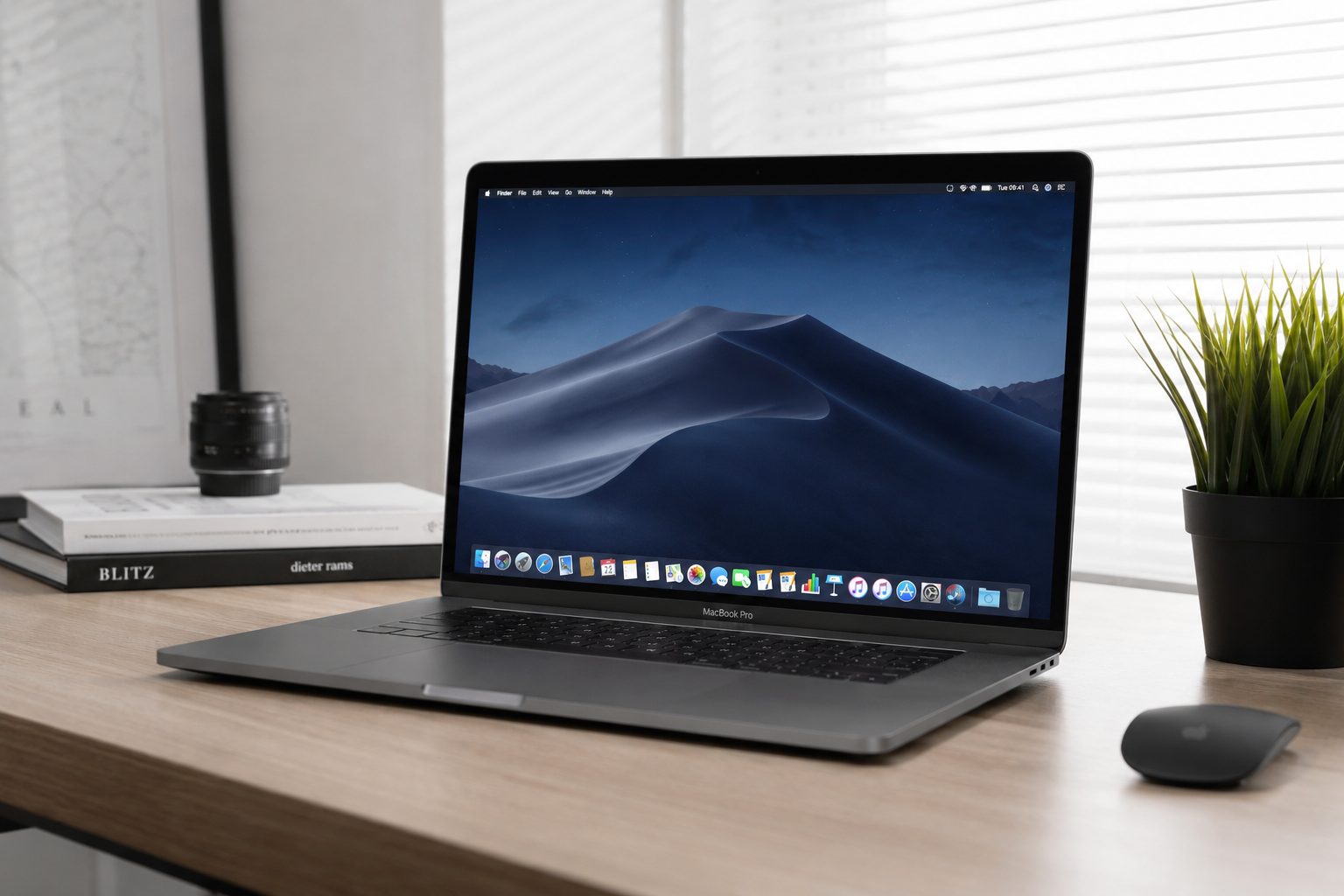
For users with more demanding workloads, the MacBook Pro remains Apple’s flagship laptop, aimed squarely at video editors, software developers, musicians, and other professionals who need serious sustained performance. Available in 14-inch and 16-inch configurations, the Pro lineup offers more powerful Pro and Max chip variants, additional ports, brighter and more color-accurate displays, and better cooling systems that allow it to maintain performance during intensive, prolonged tasks without throttling.
Industry reporting throughout 2026 has pointed toward a significant redesign for the high-end MacBook Pro, potentially introducing Apple’s first touchscreen Mac along with an OLED display, expected later in the year. It’s worth being clear that these details come from supply chain reports and industry analysts rather than official Apple announcements, so specifics like naming, exact release timing, and final features should be treated as informed speculation rather than confirmed fact until Apple formally unveils the product. What is confirmed is that the current MacBook Pro lineup, built around M5-series chips, already represents one of the most capable laptops Apple has ever produced.
Mac mini and Mac Studio: Compact Power for Desktop Users
Not every professional needs a laptop, and Apple’s compact desktop options have quietly become some of the most interesting machines in the current lineup. The Mac mini offers desktop-level performance in a remarkably small footprint, making it a popular choice for users who already have a preferred monitor, keyboard, and mouse and simply need a capable computer to power their setup. Its affordability relative to other desktop options has also made it a favorite entry point for people building their first Mac-based home office or media server.
The Mac Studio sits a step above, aimed at professionals working with demanding applications like 3D rendering, large-scale video production, or machine learning workflows. Reports throughout 2026 have pointed to growing demand for both the Mac mini and Mac Studio driven partly by users running AI applications directly on their devices rather than relying on cloud-based services, a trend often referred to as on-device AI processing. This approach offers advantages in speed and privacy, since data doesn’t need to travel to an external server, and it has helped reinforce demand for Apple’s more powerful desktop chip configurations.
iMac: The All-in-One Classic Reimagined
The iMac has long represented Apple’s vision of simplicity, combining a full computer and display into a single, elegant unit that requires minimal setup. Its colorful, minimalist design has made it a popular choice for home offices, creative professionals, and anyone who prefers a clean desk setup without a tangle of separate components. While it doesn’t offer the same raw power as the MacBook Pro or Mac Studio, its combination of a high-quality display and solid everyday performance continues to make it a reasonable choice for many households.
According to industry reporting, Apple has been preparing the first meaningful refresh of the iMac in roughly two years, expected sometime in the latter half of 2026. As with other unreleased products, exact specifications and release dates remain unconfirmed until Apple makes an official statement, so it’s worth treating detailed leaks with appropriate caution. What can be said with confidence is that the iMac remains a relevant option for users who value simplicity and design as much as raw computing power.
What’s Next for Apple Computers
Apple has reportedly been working on one of its most extensive Mac refresh cycles in recent memory, with plans reportedly extending across 2026 and into 2027. According to supply chain analysts and technology reporters, this includes updated MacBook Pro models with new M6 chips, refreshed Mac mini and Mac Studio options, and eventually new MacBook Air models further down the line. Much of this reporting traces back to industry analysts who have a strong track record with Apple predictions, though it’s important to remember that unannounced products can still change in scope, timing, or feature set before their official release.
One notable trend shaping this next generation of Apple computers is the growing emphasis on on-device artificial intelligence capability. As AI tools become more integrated into everyday computing tasks, Apple appears to be positioning its newer chips to handle these workloads locally rather than relying entirely on cloud processing. This shift could have meaningful implications for both performance expectations and privacy, since running AI models directly on a device generally reduces the amount of personal data transmitted externally. As with all forward-looking product plans, readers should treat this as a developing trend rather than a finalized roadmap until Apple confirms specific features.
Why People Still Choose Apple Computers Today
Despite facing serious competition from a wide range of Windows-based manufacturers, Apple computers continue to hold a loyal and often passionate user base. Part of this comes down to the tight integration between hardware and software that Apple has cultivated over decades, resulting in a computing experience that tends to feel more cohesive and predictable than many competing systems. Features like seamless integration with iPhones and iPads, consistent design language, and long-term software support all contribute to a sense of reliability that keeps many users returning to the brand.
Performance and efficiency have also played a major role in strengthening Apple’s reputation in recent years, particularly since the shift to Apple Silicon chips. Where older Intel-based Macs sometimes struggled to match dedicated Windows laptops on raw performance, current-generation Apple computers are frequently praised for delivering strong performance while running cooler, quieter, and longer on battery than many comparable machines. For creative professionals in particular, this combination of power and efficiency has made the Mac an increasingly practical choice rather than simply a stylistic one.
Apple Computer vs Windows PC: Key Differences Worth Understanding
One of the most common questions people ask before buying an Apple computer is how it actually compares to a traditional Windows PC. The most fundamental difference lies in the operating system itself, macOS versus Windows, each offering a distinct interface, software ecosystem, and approach to system management. macOS is generally regarded as more streamlined and consistent across devices, while Windows offers broader hardware compatibility and a wider range of price points, since it isn’t tied to a single manufacturer.
Software availability is another important consideration, since certain specialized programs, particularly in fields like gaming or specific enterprise software, remain more readily available on Windows machines. That said, the gap has narrowed significantly over the years, with most mainstream creative, productivity, and development tools now offering strong Mac versions. Ultimately, the right choice often comes down to which ecosystem you’re already invested in, what specific software you rely on, and whether you personally prefer the design philosophy and workflow that macOS offers compared to Windows.
Tips for Choosing the Right Apple Computer for Your Needs
With several distinct models available, choosing the right Apple computer starts with an honest assessment of how you actually plan to use it. If your daily tasks revolve around web browsing, email, writing, and light photo editing, the MacBook Air or even the more affordable MacBook Neo will likely provide more than enough performance without unnecessary expense. On the other hand, users working with video editing software, large codebases, or resource-intensive creative applications will generally benefit more from the added power of a MacBook Pro or Mac Studio.
Budget naturally plays a significant role in this decision as well, and it’s worth resisting the temptation to overspend on specifications you’re unlikely to use regularly. Considering how long you plan to keep the machine can also help guide your decision, since investing in a slightly more capable configuration upfront can extend the useful lifespan of the device by a year or two compared to buying the bare minimum. Finally, if you’re already embedded in the Apple ecosystem through an iPhone or iPad, factoring in that integration can meaningfully influence which model delivers the smoothest overall experience.
Conclusion
The story of Apple computer stretches from a small garage operation in the 1970s to one of the most recognizable and influential technology brands in the world today. Along the way, the company’s approach to design, usability, and performance has shaped not just its own product line but the broader expectations users bring to personal computing in general. Today’s Mac lineup, powered by Apple’s custom silicon and continually evolving with new capabilities, reflects decades of refinement built on that original foundation.
Whether you’re drawn to the portability of the MacBook Air, the raw power of the MacBook Pro, or the simplicity of the iMac, understanding how these machines fit into Apple’s broader history and current strategy makes it much easier to choose the right one for your needs. As Apple continues refreshing its lineup with new chips and evolving designs, the core appeal of the Apple computer, thoughtful design paired with dependable performance, remains largely unchanged, even as the technology underneath continues to advance.
Frequently Asked Questions About Apple Computers
What is the difference between Apple Computer and Apple Inc.?
Apple Computer, Inc. was the company’s original name from its founding in 1976 until 2007, when it officially became Apple Inc. to reflect its expanded focus beyond personal computers into devices like the iPhone and other product categories.
Which Apple computer is best for beginners?
The MacBook Air or MacBook Neo are generally the best starting points for beginners, offering reliable everyday performance, long battery life, and a simpler, more affordable entry into the Apple ecosystem compared to the higher-end MacBook Pro or Mac Studio.
Are Apple computers worth the higher price compared to Windows PCs?
This depends largely on your needs and priorities, since Apple computers tend to offer strong build quality, efficient performance, and long-term software support, while Windows PCs typically offer more flexibility in pricing and hardware options. Neither option is universally better, and the right choice depends on your budget, software requirements, and existing device ecosystem.
What chip do current Apple computers use?
As of 2026, most current-generation Apple computers use chips from the M5 series, part of Apple’s own custom silicon lineup that replaced Intel processors in recent years. Apple has reportedly been developing M6-series chips for upcoming models, though official confirmation typically comes only at launch.
Can Apple computers run Windows software?
Many Windows applications can run on Apple computers through virtualization software or compatibility tools, though performance and compatibility can vary depending on the specific program. Some specialized software, particularly certain games and enterprise tools, may still run more reliably on a native Windows PC.
How long do Apple computers typically last?
With proper care, most Apple computers remain functional and receive software updates for around six to eight years, though this can vary depending on the specific model and how demanding your typical usage is. Apple Silicon Macs in particular have been praised for maintaining strong performance well beyond their initial release period.
Is it better to buy a Mac laptop or a Mac desktop?
This largely depends on whether portability matters to you, since MacBooks offer flexibility to work from different locations while desktop options like the iMac, Mac mini, or Mac Studio generally provide more consistent performance and easier upgrade paths for storage and accessories. Users who work primarily from one location often find desktop Macs offer better long-term value for demanding tasks.
Is Apple planning any major new computer releases soon?
According to ongoing industry reporting, Apple has been preparing a significant refresh across its Mac lineup throughout 2026 and into 2027, including updated MacBook Pro and iMac models. However, specific details remain unconfirmed rumors and reports until Apple makes an official announcement, so exact timing and features should be treated as speculative until then.