
Search behavior has changed more in the past two years than it did in the previous decade, and most marketers are still catching up. People no longer type a query into a search box and scroll through ten blue links. Instead, they ask a conversational assistant a question and expect a direct, synthesized answer pulled from dozens of sources at once. This shift has created a pressing need to understand what are the best ai search monitoring tools, because brands that cannot see how they appear inside AI-generated answers are effectively flying blind in a market that increasingly decides purchasing decisions before a shopper ever visits a website.
This guide walks through everything a business owner, marketer, or SEO professional needs to know about tracking visibility across AI-driven search experiences. We will look at what these tools actually do, the features that separate a genuinely useful platform from a flashy dashboard, the industries benefiting most from this technology, and a detailed breakdown of the tools currently leading the space. By the end, you will have a clear framework for choosing a solution that fits your brand, along with practical steps for building a monitoring strategy that keeps you visible no matter how search continues to evolve.
What Are AI Search Monitoring Tools and Why They Matter
AI search monitoring tools are software platforms designed to track how a brand, product, or piece of content appears within answers generated by artificial intelligence systems such as chatbots, generative search engines, and AI-powered assistants. Unlike traditional rank trackers that measure a website’s position on a search engine results page, these tools focus on a different kind of visibility, one that involves whether a brand is mentioned, cited, recommended, or ignored entirely when an AI model responds to a user’s question. This distinction matters enormously because the mechanics of appearing in an AI answer are fundamentally different from ranking in a classic search listing.
The reason these platforms have become essential comes down to a simple but disruptive trend, which is that a growing share of consumers now start their research journey inside a conversational interface rather than a search bar. When someone asks an assistant to recommend a project management tool or the best hiking boots for wide feet, the assistant synthesizes information from many sources and presents a curated answer, often without listing every website it drew from. If your business is not part of that synthesis, you lose the opportunity entirely, regardless of how well you rank in traditional search. Monitoring tools give you the visibility needed to understand your standing in this new landscape and to make informed decisions about how to improve it.
How AI Search Is Reshaping the Way Brands Get Discovered
The mechanics behind AI search differ sharply from the mechanics of traditional search engines, and understanding that difference is the first step toward appreciating why monitoring has become non-negotiable. Traditional search engines index pages, evaluate signals like backlinks and keyword relevance, and return a ranked list that users click through at their own pace. Generative AI systems instead compress that entire research process into a single conversational response, pulling from training data, real-time web crawls, and increasingly from structured data sources to construct an answer that feels authoritative and complete on its own.
This compression changes the incentives for content creators and marketers in profound ways. A page that used to earn traffic simply by ranking on page one might now be summarized, paraphrased, or entirely excluded from an AI-generated response, even if it remains the most accurate and helpful resource on the topic. Brands that want to remain visible have to think less about keyword density and more about how clearly their content answers specific questions, how frequently they are cited by other authoritative sources, and how consistently their brand name appears in contexts an AI model would consider trustworthy. This is precisely the gap that dedicated monitoring platforms are built to fill, giving marketers a window into a process that would otherwise remain a black box.
Key Features to Look for When Choosing AI Search Monitoring Tools
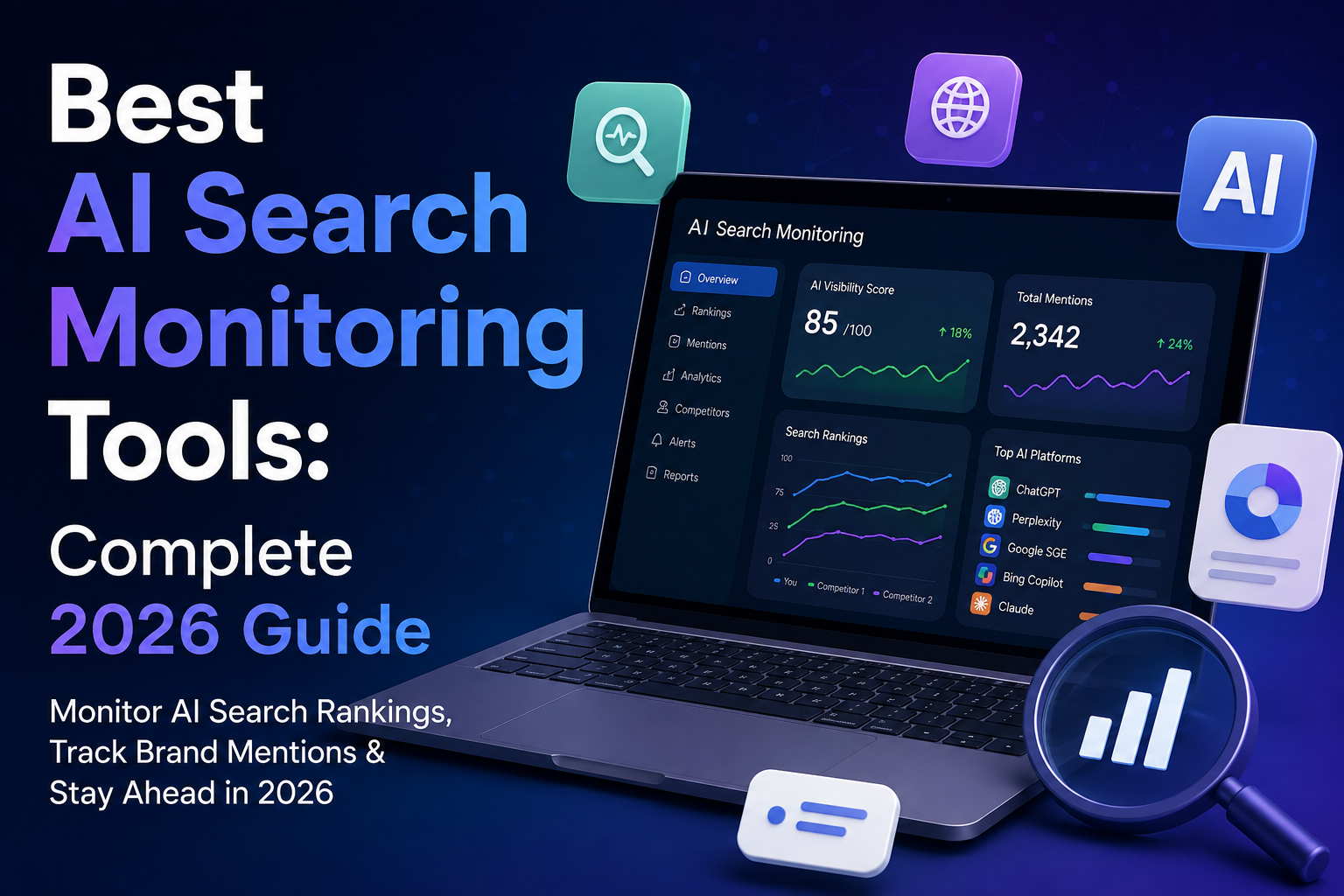
Not every platform marketed under this label delivers the same depth of insight, so it helps to know which capabilities actually move the needle. The strongest tools track brand mentions across multiple AI engines simultaneously, including conversational assistants, generative search overviews, and specialized answer engines, rather than focusing on a single platform. This breadth matters because consumers are not loyal to one assistant, and a brand that dominates visibility in one system but disappears in another is still leaving significant opportunity on the table.
Beyond raw mention tracking, the best platforms offer sentiment analysis that tells you not just whether you were mentioned but how favorably, alongside competitive benchmarking that shows how often rival brands appear in the same conversational contexts. Citation tracking is another feature worth prioritizing, since it reveals which of your web pages or content assets the AI models are actually pulling from when constructing an answer, giving you a roadmap for which content to strengthen further. Finally, look for tools that provide historical trend data and alerting, because visibility in AI search can shift quickly as models get updated, and you want to know the moment your presence changes rather than discovering it weeks later through a drop in traffic.
Top Use Cases for AI Search Monitoring Across Industries
E-commerce brands were among the earliest adopters of AI search monitoring because purchasing decisions increasingly begin with a conversational product recommendation rather than a search query. A retailer selling outdoor gear, for example, benefits enormously from knowing whether an AI assistant recommends their brand when a user asks for the best waterproof jacket under a certain price point, since that single recommendation can influence a purchase far more directly than a generic search listing ever could. Monitoring tools let these brands see exactly where they stand relative to competitors in these high-intent conversational moments.
Software and technology companies represent another major use case, particularly because buyers researching business tools often rely heavily on AI assistants to shortlist options before ever visiting a vendor’s website. A SaaS company that discovers it is consistently left out of AI-generated comparisons against its closest competitors gains a clear signal that its content strategy, review presence, or third-party citations need attention. Healthcare providers, financial services firms, and local businesses are also increasingly turning to these platforms, since even industries that once relied heavily on local search now find that conversational assistants are becoming a first stop for research, making visibility monitoring relevant across nearly every sector imaginable.
Comparing AI Search Monitoring Tools with Traditional SEO Trackers
Marketers who have spent years relying on conventional rank tracking software sometimes assume that AI search monitoring is simply an extension of the same discipline, but the two categories solve fundamentally different problems. A traditional SEO tool tells you where a page ranks for a given keyword, how much organic traffic it receives, and how backlink profiles compare to competitors. That data remains valuable, but it says nothing about whether an AI assistant would choose to mention your brand when synthesizing an answer, because the ranking algorithms behind generative systems weigh entirely different signals than classic search algorithms.
AI search monitoring platforms instead simulate or observe the actual conversational queries a real user might ask, then record whether and how a brand appears in the resulting answer. This requires a different technical approach, often involving repeated querying of multiple AI models with varied phrasing to capture a realistic picture of visibility, since a single test query can return inconsistent results depending on subtle wording changes. The two categories of tools are complementary rather than interchangeable, and most sophisticated marketing teams now run both in parallel, using traditional SEO data to maintain foundational website health while relying on AI search monitoring to understand the newer, faster-moving layer of discovery that increasingly sits on top of it.
What Are the Best AI Search Monitoring Tools Available Today
When evaluating what are the best ai search monitoring tools currently on the market, it helps to group platforms by their core strength rather than treating them as interchangeable products. Some tools specialize in broad brand mention tracking across many AI engines at once, giving marketers a bird’s eye view of overall visibility trends over time. Others focus more narrowly on citation analysis, digging into which specific pages or content pieces are being pulled into AI answers, which proves invaluable for content teams trying to understand exactly what to optimize next.
A third category of platform blends AI search monitoring with broader brand intelligence, combining conversational visibility data with social listening, review monitoring, and traditional search performance into a single unified dashboard. This approach appeals to larger organizations that want a consolidated view of brand health rather than juggling multiple disconnected tools. Regardless of category, the strongest platforms share a few common traits worth prioritizing during evaluation, including transparent methodology about how they query AI models, frequent data refresh rates that keep pace with how quickly generative systems update their outputs, and reporting that translates raw visibility numbers into actionable recommendations rather than leaving marketers to interpret raw data alone.
How to Evaluate Pricing and ROI for AI Search Monitoring Platforms
Budgeting for a new category of software always raises questions about whether the investment will pay off, and AI search monitoring tools are no exception. Pricing across the category varies widely, with some platforms offering entry-level plans suited to small businesses tracking a handful of branded queries, while enterprise tiers can run into thousands of dollars monthly for organizations that need to monitor hundreds of keywords across multiple AI engines and markets simultaneously. Before committing to a plan, it is worth mapping out exactly which queries and competitors matter most to your business, since overpaying for capacity you will never use is a common and avoidable mistake.
Calculating return on investment requires connecting visibility improvements to tangible business outcomes, which can feel abstract at first given how new this discipline still is. A practical approach involves tracking correlation between improved AI search visibility and downstream metrics like branded search volume, direct website traffic, or assisted conversions, since a rise in any of these following a visibility improvement offers reasonably strong evidence that the investment is paying off. Many teams also find value in simply avoiding the cost of invisibility, since losing consideration in an increasingly AI-mediated research process carries a real, if harder to quantify, opportunity cost that grows more significant every quarter as conversational search adoption continues climbing.
How to Set Up an Effective AI Search Monitoring Strategy
Building a monitoring strategy starts with defining the specific questions your target customers are likely to ask an AI assistant during their research process, rather than simply tracking your brand name in isolation. This means brainstorming a realistic list of conversational queries, including comparison questions, recommendation requests, and problem-solving prompts, since these are the moments where AI-generated answers most directly influence purchasing decisions. A well-constructed query list should mirror the actual language customers use, which often differs meaningfully from the more formal keyword phrases used in traditional SEO planning.
Once queries are defined, the next step involves establishing a consistent cadence for monitoring, since visibility in AI search can fluctuate as underlying models are updated or retrained. Weekly or biweekly checks tend to strike a reasonable balance between staying current and avoiding data overload, though highly competitive industries may benefit from more frequent tracking. It also helps to assign clear ownership within your marketing team for reviewing monitoring reports and translating findings into content or PR actions, because data without a designated owner tends to sit unused, and the entire value of monitoring depends on someone actually acting on what it reveals.
Common Mistakes Brands Make When Monitoring AI Search Visibility
One of the most frequent mistakes companies make is treating AI search monitoring as a one-time audit rather than an ongoing practice. Because generative models are updated far more often than traditional search algorithms, a snapshot taken today can look meaningfully different within a matter of weeks, and brands that check their visibility once and then move on often miss important shifts that would have prompted timely content updates or PR outreach. Continuous tracking is what turns this data from an interesting curiosity into a genuinely strategic asset.
Another common misstep involves focusing exclusively on a single AI platform, usually whichever one happens to be most popular at the time, while ignoring the broader ecosystem of assistants and generative engines that collectively shape consumer research. A brand might invest heavily in optimizing for one system only to discover it remains invisible across several others that a meaningful portion of its audience actually uses. Finally, many teams fail to close the loop between monitoring insights and content strategy, collecting valuable data about citation gaps or sentiment issues without ever adjusting their content roadmap to address what the data reveals, which renders the entire monitoring effort largely symbolic rather than practically useful.
The Role of AI Search Monitoring in Brand Reputation Management
Visibility is only part of the picture, because how a brand is described within an AI-generated answer matters just as much as whether it appears at all. A company might be mentioned frequently by an AI assistant yet consistently framed in a lukewarm or even inaccurate way, which can quietly erode consumer trust without the brand ever realizing it. This is where sentiment tracking within monitoring platforms becomes particularly valuable, since it surfaces the tone and framing AI systems use when discussing your business, giving you the chance to correct misinformation or reinforce positive associations before they calcify into a widely repeated narrative.
Because generative AI models often draw from review sites, forums, and news coverage when forming their responses, reputation management in this new environment requires thinking beyond your own website. A cluster of negative reviews or an outdated news article can shape how an AI assistant characterizes your brand for months after the underlying issue has been resolved, simply because that content remains part of the training or retrieval data the model relies on. Proactive brands use monitoring insights to identify these reputational risks early, then invest in updated press coverage, review management, and authoritative third-party content that gradually shifts the sentiment an AI system associates with their name.
Integrating AI Search Data into Broader Marketing Decisions
AI search monitoring delivers the most value when its findings are woven into the fabric of broader marketing strategy rather than siloed within a standalone report that only the SEO team reviews. Content teams benefit from knowing which topics and questions currently lack strong brand representation in AI answers, since this directly informs which new articles, guides, or product pages deserve priority on the editorial calendar. Similarly, public relations teams can use citation data to identify which third-party publications AI models trust most within a given industry, guiding smarter outreach and partnership decisions.
Product and customer experience teams also stand to gain from this data, particularly when monitoring reveals recurring themes in how an AI assistant frames common customer pain points related to a brand. If several AI-generated answers consistently mention a specific limitation or complaint about a product, that pattern often reflects a genuine and widespread customer sentiment worth addressing at the product level, not merely a marketing problem to spin away. Organizations that treat AI search monitoring as a cross-functional intelligence source, rather than a narrow SEO metric, tend to extract far more strategic value from their investment in these platforms over time.
Future Trends in AI Search Monitoring and Generative Engine Optimization
The discipline surrounding what are the best ai search monitoring tools is still maturing rapidly, and several trends suggest where the category is headed next. Expect deeper integration between monitoring platforms and content management systems, allowing marketers to move directly from spotting a visibility gap to publishing optimized content without switching between disconnected tools. This kind of workflow integration will likely become a key differentiator among competing platforms as the market matures and buyers demand more seamless, action-oriented experiences.
Another emerging trend involves the rise of what many practitioners now call generative engine optimization, a discipline distinct from traditional SEO that focuses specifically on structuring content to be more easily understood, extracted, and cited by AI models. Monitoring tools are beginning to incorporate optimization recommendations directly alongside visibility data, effectively merging the diagnostic and prescriptive sides of this work into a single platform. As more AI search engines enter the market and consumer adoption continues climbing, businesses that establish strong monitoring habits now will be far better positioned to adapt quickly, while those that delay risk discovering their competitive blind spots only after losing meaningful market share to more visible rivals.
Building an In-House Team Versus Outsourcing AI Search Monitoring
Some organizations choose to build internal expertise around AI search monitoring, training existing SEO or content marketers to interpret visibility data and translate it into action, while others prefer to bring in specialized agencies or consultants who already understand the nuances of this fast-evolving field. The right choice often depends on company size and how central AI-driven discovery is to the overall marketing mix, since a large e-commerce brand with significant exposure to conversational shopping behavior may justify a dedicated internal role in a way that a smaller local business simply cannot.
Outsourcing offers the advantage of immediate expertise, since specialized agencies have typically already tested multiple platforms, developed query frameworks across various industries, and learned through trial and error which optimization tactics actually move the needle on AI visibility. The tradeoff comes in the form of less direct control and potentially higher ongoing costs compared to building internal capability over time. Many mid-sized organizations land on a hybrid approach, using external expertise to establish the initial monitoring framework and query strategy before transitioning day-to-day tracking and reporting to an internal team member who can respond quickly to shifts in visibility without waiting on an external partner’s availability.
Conclusion
The way people discover brands, products, and services has fundamentally shifted, and that shift shows no sign of slowing down. Conversational AI assistants and generative search engines are becoming a genuine first stop in the research journey for millions of consumers, which means the old assumption that ranking well in traditional search is enough no longer holds true. Understanding what are the best ai search monitoring tools and putting one to work for your brand is quickly becoming as essential as traditional SEO software was a decade ago. Throughout this guide, we explored what these platforms actually measure, the features that distinguish strong tools from weak ones, and the practical steps involved in building a monitoring strategy that generates real business value rather than sitting as an unused dashboard. We also looked at how this data intersects with reputation management, broader marketing strategy, and the emerging discipline of generative engine optimization.
FAQs
What exactly do AI search monitoring tools track?
These tools track how often and how favorably a brand, product, or piece of content is mentioned within answers generated by AI assistants and generative search engines. This includes tracking direct brand mentions, citations of specific web pages, sentiment around those mentions, and how a brand compares to competitors within the same conversational context.
How is AI search monitoring different from traditional rank tracking?
Traditional rank tracking measures where a webpage appears on a search engine results page for a given keyword, while AI search monitoring measures whether and how a brand appears within a synthesized, conversational answer generated by an AI model. The underlying signals that influence each type of visibility are quite different, which is why many teams now use both types of tools together.
Do small businesses actually need AI search monitoring tools?
Small businesses can benefit significantly, particularly those in competitive local or e-commerce markets where conversational recommendations increasingly influence purchasing decisions. Many platforms now offer affordable entry-level plans specifically designed for smaller teams that do not need enterprise-scale monitoring capacity.
How often should a brand check its AI search visibility?
A weekly or biweekly cadence works well for most businesses, though companies in fast-moving or highly competitive industries may benefit from more frequent monitoring. The key is consistency, since generative AI models update often enough that a single snapshot can quickly become outdated.
Can improving AI search visibility actually increase sales?
While the relationship is not always as directly measurable as traditional search traffic, many brands report meaningful increases in branded search volume and direct traffic after improving their presence within AI-generated answers, particularly in categories where consumers frequently ask assistants for product recommendations before making a purchase.
What is generative engine optimization and how does it relate to monitoring?
Generative engine optimization is the practice of structuring and writing content specifically to be more easily understood, extracted, and cited by AI models. Monitoring tools provide the diagnostic data that reveals where optimization is needed, making the two practices closely intertwined rather than separate disciplines.
Is it worth using multiple AI search monitoring platforms at once?
For larger organizations with complex needs, combining a broad visibility tracker with a more specialized citation analysis tool can provide a fuller picture than any single platform alone. Smaller businesses, however, often find that one well-chosen tool covering their core AI engines of interest is sufficient to start building an effective monitoring habit.