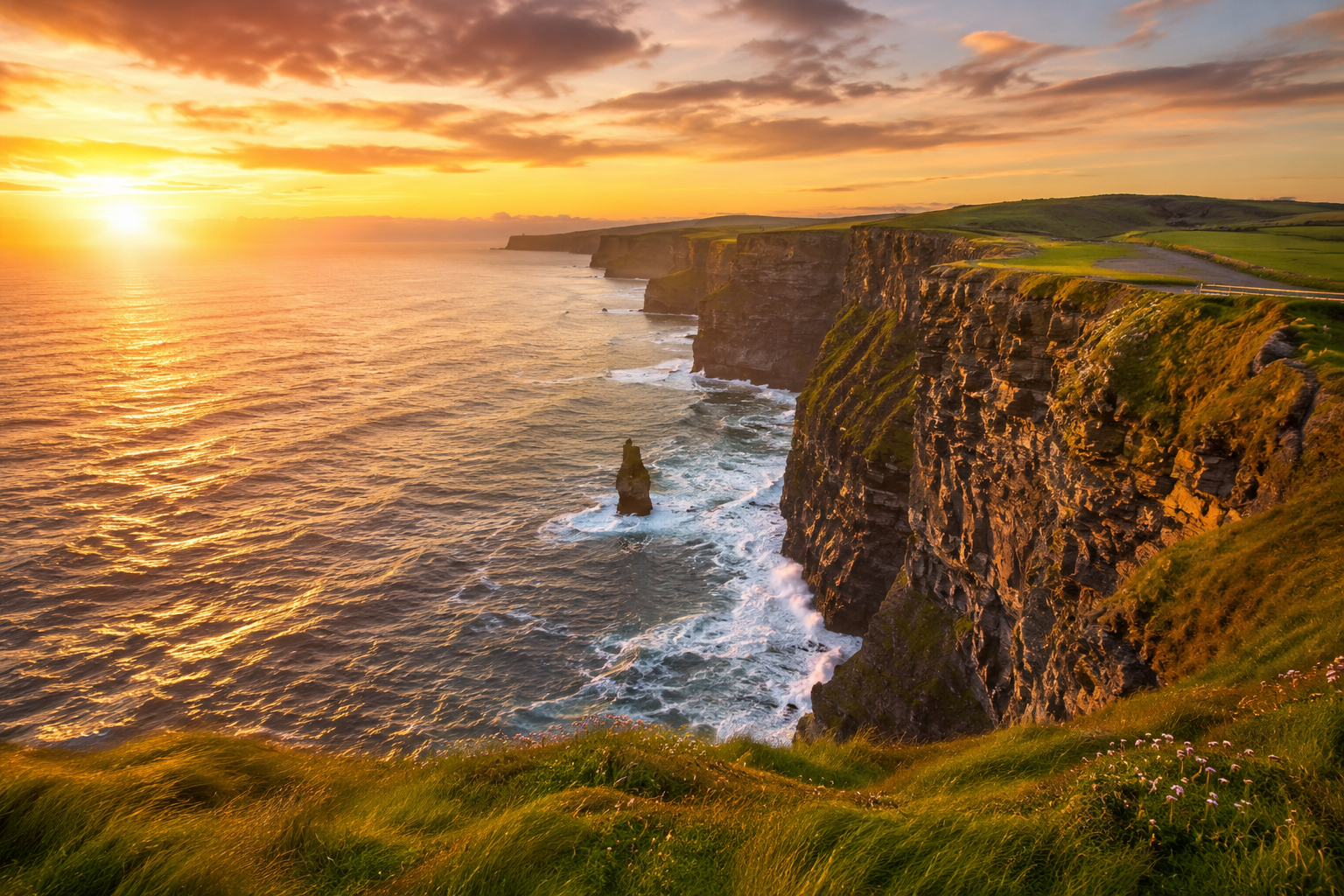

Few countries on earth manage to blend dramatic natural beauty with rich culture the way Norway does. Towering fjords carved by ancient glaciers, colorful wooden harbors, remote Arctic villages, and skies that dance with the aurora borealis all come together to make this Scandinavian nation one of the most rewarding places to explore. If you’re searching for the best places to visit in Norway, you’re really asking a bigger question: where do you even begin in a country this varied and this beautiful?
That’s exactly what this guide is here to answer. Norway isn’t a destination you rush through with a single checklist. It rewards travelers who take their time, whether that means cruising past mile-high cliffs in Geirangerfjord, wandering the cobblestone lanes of Bergen, or standing beneath a sky lit green by the northern lights in Tromsø. Along the way, we’ll cover the country’s most iconic natural wonders, its best cities, hidden gems, practical travel tips, and answers to the questions most travelers ask before booking a trip. By the end, you’ll have a clear picture of the best places to visit in Norway and how to fit them into a trip that actually matches your interests and travel style.
Oslo: Norway’s Cultural and Historical Capital
Any list of the best places to visit in Norway naturally starts with its capital city, Oslo. Unlike some European capitals that feel overwhelming, Oslo strikes a comfortable balance between urban energy and easy access to nature. The city sits at the head of the Oslofjord, surrounded by forested hills, which means you can spend your morning in a world-class museum and your afternoon hiking or swimming just a short tram ride away. This mix of culture and outdoor access is part of what makes Oslo such a strong starting point for a Norwegian itinerary.
The Vigeland Sculpture Park inside Frogner Park is one of Oslo’s signature attractions, featuring over 200 bronze, granite, and cast iron sculptures created entirely by the Norwegian artist Gustav Vigeland. It remains the largest sculpture park in the world made by a single artist, and it draws well over a million visitors every year, making it an essential stop for anyone interested in art displayed in an open, walkable outdoor setting. Nearby, the Bygdøy Peninsula houses several museums dedicated to Norwegian maritime history, including the Fram Museum, home to the polar exploration ship used by legendary explorers such as Roald Amundsen and Fridtjof Nansen during expeditions to the Arctic and Antarctic.
Beyond its museums, Oslo’s main street, Karl Johans Gate, connects the central train station to the Royal Palace and offers a pleasant introduction to the city’s shops, cafes, and street life. Travelers with a bit of extra time often use Oslo as a base for day trips into the surrounding countryside, including the Kistefos sculpture park with its striking Twist museum spanning a river. For first-time visitors trying to understand the best places to visit in Norway, Oslo works well as both an introduction to Norwegian culture and a practical gateway to the rest of the country, thanks to its international airport and strong rail connections heading west toward the fjords.
Bergen: Gateway to the Fjords
If Oslo represents Norway’s civic and cultural heart, Bergen represents its soul as a fjord city. Nestled between seven mountains on the country’s western coast, Bergen has long served as the natural entry point for travelers heading into Norway’s fjord region, and it remains one of the best places to visit in Norway for anyone who wants charm, history, and mountain views without straying too far from a proper city center. The city’s compact size makes it easy to explore on foot, with cobbled streets winding past colorful wooden buildings that seem to belong to another century.
The most photographed part of Bergen is Bryggen, the old Hanseatic wharf lined with tilted wooden buildings painted in shades of red, yellow, and white. This UNESCO World Heritage site dates back centuries and once served as a hub for the Hanseatic League’s trade in dried fish, and today it houses shops, restaurants, and small museums that give visitors a genuine sense of Bergen’s mercantile past. Just a short walk from the harbor, the Bergen Fish Market offers fresh seafood and local specialties, making it a favorite stop for travelers wanting a taste of authentic Norwegian coastal cuisine.
No visit to Bergen feels complete without a trip up Mount Fløyen, which towers nearly 1,300 feet above the city and offers sweeping panoramic views of the harbor, surrounding fjords, and distant mountain ranges. The Fløibanen funicular railway carries visitors to the summit in just a few minutes, though hiking trails are also available for those who prefer to earn the view on foot. From Fløyen, an extensive network of walking and biking paths lets travelers continue deeper into the hills, making it a popular half-day excursion for both casual sightseers and serious hikers alike.
Geirangerfjord: Norway’s Most Iconic Fjord
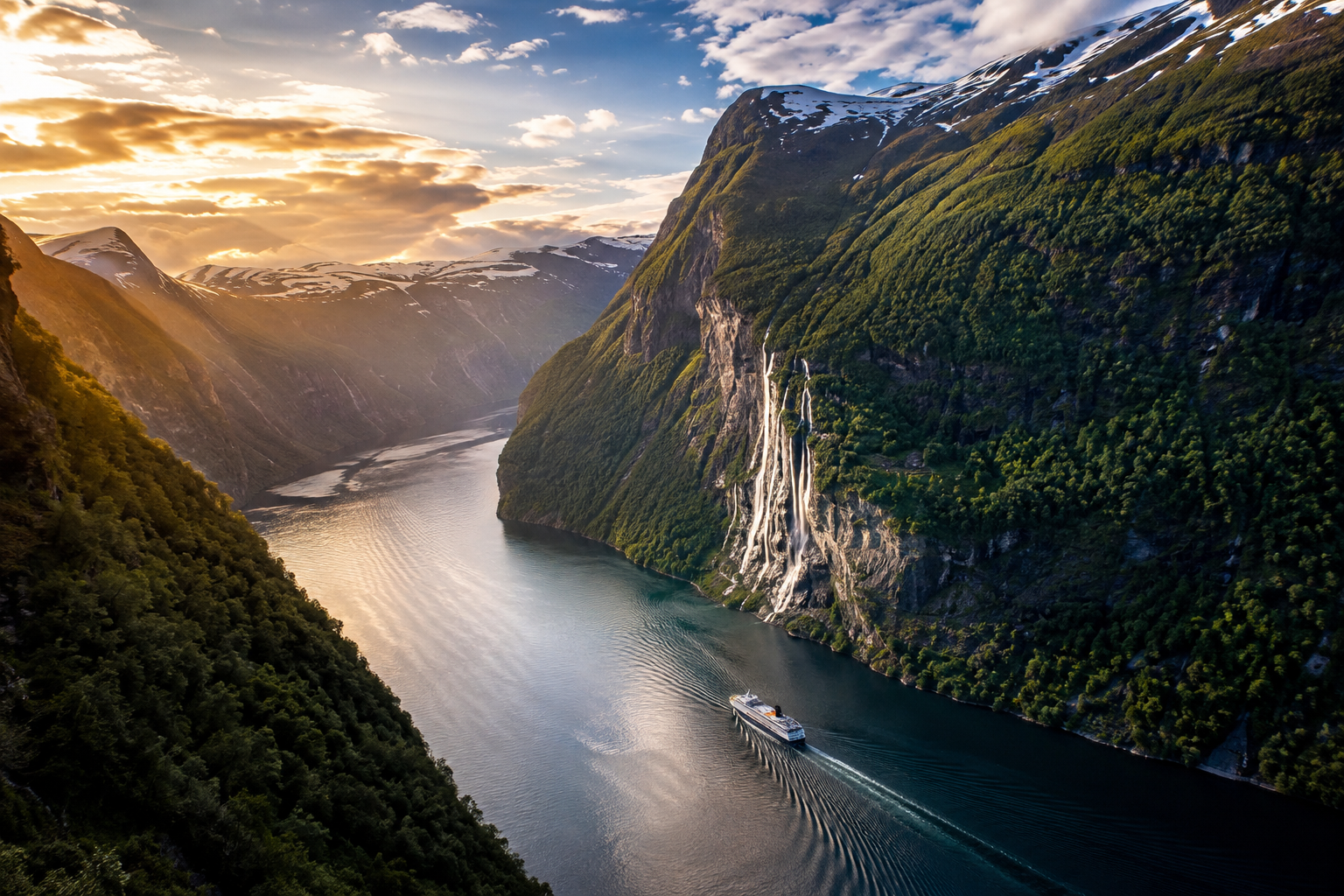
When people picture the best places to visit in Norway, they’re often picturing Geirangerfjord without even realizing it. This narrow, UNESCO-listed fjord is famous for its sheer cliff walls, cascading waterfalls, and turquoise waters that seem almost too vivid to be real. Surrounded by snow-capped peaks and dotted with abandoned farms clinging to impossibly steep hillsides, Geirangerfjord has become something of a symbol for Norway’s fjord landscapes in general, appearing on postcards and travel brochures around the world.
The fjord’s most famous waterfalls, including the Seven Sisters and the Suitor, tumble directly into the water and are best appreciated from a boat cruise, which allows travelers to experience the scale of the surrounding cliffs up close. As of recent years, tourist boats operating in Geirangerfjord have been transitioning toward low- and zero-emission technology, reflecting a broader push within Norway’s tourism industry to protect the very landscapes that draw so many visitors in the first place. This shift matters for environmentally conscious travelers who want their trip to align with responsible tourism practices.
Beyond the boat cruise itself, the drive into and out of Geirangerfjord is an attraction in its own right. The Eagle Road and Trollstigen mountain pass both offer hairpin turns and viewpoints that rival the fjord views themselves, making the journey nearly as memorable as the destination. Travelers with a car often combine a Geirangerfjord visit with stops at nearby viewpoints such as Dalsnibba, which sits high above the fjord and provides one of the most dramatic vantage points in the entire region.
Sognefjord and the Flåm Railway
Stretching more than 100 miles inland from the coast, Sognefjord holds the title of Norway’s longest and deepest fjord, and its nickname, the King of the Fjords, is well earned. Cliffs rising over 3,000 feet plunge into ice-blue waters, while small villages tucked into the landscape seem to defy the odds of survival in such steep terrain. For travelers deciding where to focus their limited time, Sognefjord consistently ranks among the best places to visit in Norway thanks to its sheer scale and the variety of experiences packed into the surrounding region.
Within the greater Sognefjord area sits Flåm, a small village that serves as the starting point for one of the most celebrated train journeys in the world. The Flåm Railway climbs steeply through valleys, past waterfalls, and along mountainsides, connecting the fjord to the higher-altitude town of Myrdal in roughly an hour. The route is considered one of the most scenic rail journeys anywhere, and many travelers combine it with a scenic boat cruise along the Nærøyfjord, a narrower branch of Sognefjord that has also earned UNESCO recognition for its exceptional natural beauty.
Nearby, the Aurlandsfjord offers another picturesque slice of this fjord system, with the Stegastein viewpoint providing a striking cantilevered platform that juts out over the water far below. Travelers staying in the area often choose historic accommodations such as the Fretheim Hotel in Flåm, which offers direct views of the fjord and easy access to hiking trails, boat tours, and the railway station. For anyone building an itinerary focused on natural scenery, this corner of western Norway offers some of the most rewarding and varied experiences in the entire country.
Preikestolen and Trolltunga: Norway’s Iconic Hikes
For travelers who want to actively earn their views rather than simply admire them from a boat or car window, Norway’s hiking trails offer some of the most rewarding experiences in the country. Preikestolen, commonly known as Pulpit Rock, is perhaps the most famous of these hikes, leading to a flat cliff plateau that juts out nearly 2,000 feet above the Lysefjord below. The hike typically takes several hours round trip and requires no technical climbing skill, which makes it accessible to reasonably fit travelers of many different experience levels.
Because of its popularity, Preikestolen now operates with a pay-on-exit parking system at the trailhead, with typical rates running a modest daily fee, and the lot tends to get busiest between mid-morning and late afternoon during summer weekends. Arriving early or hiking in the shoulder season can help travelers avoid the largest crowds while still enjoying reasonably mild weather. The reward at the top, standing at the edge of the cliff with the fjord stretching out below, remains one of the most iconic photo opportunities among all the best places to visit in Norway.
Trolltunga, meaning Troll’s Tongue, is another legendary hike, though considerably more demanding than Preikestolen. This dramatic rock formation juts horizontally out from a cliffside high above Lake Ringedalsvatnet, and reaching it typically requires a full day of strenuous hiking, often cited at somewhere between ten and twelve hours round trip depending on fitness level and trail conditions. Because of the length and difficulty, proper planning is essential, including checking weather conditions, starting early in the day, and carrying enough food, water, and layers for rapidly changing mountain conditions. Despite the effort required, Trolltunga has become something of a bucket-list hike for adventurous travelers, and the image of standing on that narrow rock ledge has become instantly recognizable around the world.
The Lofoten Islands: Dramatic Peaks Meet Arctic Villages
Far north of the mainland’s more commonly visited fjords, the Lofoten Islands offer a landscape unlike anywhere else in Norway. Jagged granite peaks rise almost directly from the sea, framing tiny fishing villages painted in traditional red and white. During summer, the midnight sun bathes these dramatic peaks in golden light well past midnight, creating surreal photography conditions that draw landscape photographers from around the world. It’s easy to see why so many seasoned travelers consider Lofoten among the best places to visit in Norway for pure visual drama.
Villages such as Reine and Hamnøy are frequently photographed for their combination of mountains, sea, and traditional rorbuer, the red fishing cabins that once housed seasonal fishermen and now serve as charming accommodations for visitors. Beyond the postcard views, Lofoten offers excellent hiking trails, some of which lead to secluded beaches with surprisingly turquoise water that would look at home in a tropical destination if not for the chilly Arctic air. The contrast between white sand beaches and snow-dusted peaks is part of what makes Lofoten feel so unique compared to other Norwegian destinations.
Winter transforms Lofoten into an entirely different destination, with the same dramatic peaks now serving as a backdrop for the northern lights. Because Lofoten sits well within the Arctic Circle, the aurora borealis becomes visible on clear nights between roughly September and April, giving travelers a rare opportunity to combine mountain and coastal scenery with one of nature’s most spectacular light shows. Fishing remains a major part of local culture here as well, and visitors can learn about the region’s centuries-old cod fishing traditions at small local museums scattered throughout the islands.
Tromsø and the Northern Lights Experience
While the aurora borealis can technically be seen from various parts of Norway during the darker months, Tromsø has earned a reputation as one of the best places to visit in Norway specifically for chasing the northern lights. Located well above the Arctic Circle, Tromsø offers a rare combination of northern lights visibility and genuine city infrastructure, including hotels, restaurants, and organized tours, making it considerably more accessible than more remote Arctic destinations.
The best chances of catching the aurora generally fall between the latitudes of 65 and 72 degrees north, placing northern Norway squarely within the optimal viewing zone. The northern lights season typically runs from October through March, with many experienced travelers pointing to October as a particularly strong month thanks to a combination of dark skies and still relatively mild autumn weather compared to the depths of winter. Because sightings depend heavily on clear skies and solar activity, most visitors plan multiple nights in the region to improve their odds, often joining guided tours that chase clear patches of sky away from city light pollution.
Beyond the aurora itself, Tromsø offers its own worthwhile attractions, including the Arctic Cathedral with its striking triangular architecture and the Polaria museum focused on Arctic wildlife and climate research. Winter activities such as dog sledding, reindeer sledding, and snowshoeing add another dimension to a Tromsø visit, giving travelers plenty to do during daylight hours before heading out to search the night sky. For photographers and adventure travelers alike, few destinations combine convenience and natural spectacle quite like this Arctic city.
North Cape: Standing at the Edge of Europe
For travelers drawn to extremes, the North Cape, or Nordkapp, offers the chance to stand at what is often considered the northernmost point of mainland Europe accessible by road. A dramatic cliff plunges more than 300 meters into the Arctic Ocean, and a large globe monument marks the spot where countless travelers have taken photos to commemorate reaching this remote edge of the continent. Getting here requires genuine commitment, often involving a long drive through increasingly remote landscapes, but that sense of achievement is part of what makes the destination so memorable.
The North Cape plateau features a visitor center with a restaurant, exhibition space, and panoramic windows overlooking the Barents Sea, giving travelers a comfortable place to take in the view regardless of weather conditions outside. During summer months, the midnight sun means the sun never fully sets, creating a strange and beautiful experience for visitors unused to constant daylight. In winter, the same location offers excellent conditions for viewing the northern lights, assuming clear skies cooperate, making North Cape a rewarding destination across very different seasons.
Reaching North Cape typically involves traveling through northern Norway’s sparsely populated landscapes, passing small fishing communities and vast stretches of tundra along the way. Many travelers combine the trip with stops in nearby towns to break up the journey, along with visits to Sami cultural sites that offer insight into the indigenous reindeer-herding communities native to this Arctic region. While it demands more effort than many other entries on this list, North Cape rewards determined travelers with a genuine sense of having reached somewhere truly remote and special.
Stave Churches and Norway’s Historic Architecture
Scattered throughout the Norwegian countryside, stave churches represent one of the country’s most distinctive architectural contributions and offer a fascinating glimpse into medieval Scandinavian craftsmanship. Built almost entirely from wood using construction techniques dating back to the Viking Age, these churches feature intricate carvings that blend Christian symbolism with older pagan motifs, reflecting Norway’s gradual transition from Norse traditions to Christianity centuries ago. Several surviving examples have been recognized for their historical and architectural significance, including structures dating back to the twelfth and thirteenth centuries.
The stave church relocated to the Norsk Folkemuseum in Oslo, originally built in the town of Gol, offers visitors an easy way to experience this architectural style without traveling to remote parts of the country. For travelers willing to venture further, original stave churches still standing in their original locations, such as those in Urnes and Borgund, offer a more authentic sense of place, often surrounded by dramatic fjord or mountain scenery that adds to their historic atmosphere. These sites provide meaningful context for understanding Norwegian history beyond the natural landscapes that typically dominate travel itineraries.
Visiting a stave church works particularly well as a complement to fjord sightseeing, since many of these historic structures sit within easy reach of popular fjord routes in western Norway. Rather than treating architecture and nature as separate categories of sightseeing, experienced travelers often weave stave church visits into the same day as fjord cruises or scenic drives, creating a richer and more well-rounded picture of what makes Norway culturally distinctive alongside its natural beauty.
Best Time to Visit Norway
Timing plays a significant role in shaping any Norwegian itinerary, since the country’s seasons offer dramatically different experiences depending on the region and time of year. Summer, roughly from May through August, brings long daylight hours and the famous midnight sun in northern areas, making it the most popular season for fjord cruises, hiking, and general sightseeing. This period also offers the mildest weather, which makes demanding hikes such as Trolltunga considerably safer and more manageable for travelers without extensive mountaineering experience.
Winter, on the other hand, transforms Norway into a destination built around snow, darkness, and the northern lights. Traveling between October and March opens up opportunities for aurora viewing across northern Norway, along with winter activities like dog sledding, skiing, and snowshoeing that simply aren’t available during the warmer months. However, winter travel requires more careful planning, since many hiking trails close, daylight hours shrink dramatically in the north, and driving conditions can become considerably more challenging across mountainous regions.
Shoulder seasons in spring and early autumn offer a reasonable middle ground for travelers hoping to avoid peak summer crowds while still enjoying manageable weather and decent daylight hours. September in particular has become popular among photographers, since it sometimes offers a chance to see both fall colors and early-season northern lights within the same trip. Choosing the right season ultimately depends on which of the best places to visit in Norway top your personal list, since fjord-focused itineraries favor summer while aurora-focused trips lean heavily toward the darker winter months.
Practical Travel Tips for Exploring Norway
Norway is not a budget destination, and travelers should plan accordingly when it comes to accommodation, dining, and transportation costs. Renting a car remains one of the most flexible ways to explore the fjord regions and northern areas, and the country’s growing electric vehicle charging infrastructure has made renting an EV an increasingly practical option for eco-conscious travelers. For those who prefer not to drive, well-organized public transportation, including trains, ferries, and buses, connects most major destinations, particularly in the more populated southern and western regions.
Packing appropriately makes a significant difference in overall trip comfort, especially for travelers planning hikes or countryside excursions. Sturdy waterproof hiking boots, a reliable rain jacket, and warm layers are essential even during summer months, since mountain weather can shift quickly and unpredictably regardless of the season. Travelers heading into Arctic regions during winter should pack considerably heavier gear, including thermal layers, insulated boots, and windproof outerwear suited to genuinely cold conditions.
Accommodation quality varies considerably across the country, and travelers should temper expectations somewhat in smaller towns and rural fjord villages, where hotels tend to be simpler and restaurant service more relaxed than in larger cities. That said, Norway’s fine dining scene has earned a strong reputation in recent years, particularly in Oslo and Bergen, where ambitious restaurants showcase fresh, high-quality Norwegian ingredients in creative and memorable ways. Splurging on at least one notable dining experience during a Norway trip is something many repeat visitors recommend, even for travelers otherwise sticking to a tighter overall budget.
Conclusion
Norway offers a rare combination of dramatic natural beauty, rich cultural history, and genuine adventure that few other countries can match within a single trip. From the sculpture parks and museums of Oslo to the wooden wharves of Bergen, from the towering cliffs of Geirangerfjord to the midnight sun over Lofoten’s jagged peaks, the best places to visit in Norway each offer something distinct, whether that’s quiet reflection, physical challenge, or simple visual wonder. Add in the chance to witness the northern lights dancing over Tromsø or stand at the edge of Europe at North Cape, and it becomes clear why so many travelers return to this country again and again.
Planning a trip around the best places to visit in Norway ultimately comes down to matching the season, pace, and regions to your own travel style, whether that means a fast-paced fjord tour, a slower cultural exploration of historic cities, or an ambitious hiking adventure across some of the country’s most demanding trails. Whichever path you choose, Norway rewards curiosity and a willingness to venture beyond the obvious highlights, offering memories that are likely to stay with you long after the trip has ended.
Frequently Asked Questions About Visiting Norway
What are the best places to visit in Norway for first-time travelers?
First-time visitors generally benefit from combining Oslo and Bergen with at least one major fjord experience, such as Geirangerfjord or Sognefjord. This combination offers a balanced introduction to Norwegian cities, culture, and natural scenery without requiring an overly ambitious itinerary for a first trip.
How many days do you need to see the best places to visit in Norway?
A trip of ten to fourteen days allows enough time to comfortably combine Oslo, Bergen, and at least one fjord region without feeling rushed. Travelers hoping to also include northern destinations like Lofoten or Tromsø should plan for closer to two to three weeks given the country’s size and travel distances.
Is Norway an expensive country to visit?
Yes, Norway is generally considered one of the more expensive countries in Europe, particularly when it comes to dining out and alcohol. Budget-conscious travelers can manage costs by cooking some meals, using public transportation, and choosing simpler accommodations outside major cities.
When is the best time to see the northern lights in Norway?
The northern lights are typically visible in northern Norway between October and March, with clear, dark skies offering the best viewing conditions. Tromsø and the Lofoten Islands are among the most popular and accessible locations for aurora viewing during this period.
Do I need to rent a car to explore Norway’s fjords?
While a car offers the most flexibility for exploring fjord regions at your own pace, it isn’t strictly necessary. Trains, ferries, and organized tours connect most major fjord destinations, making it entirely possible to see incredible scenery using public transportation alone.
Is hiking to Trolltunga or Preikestolen difficult?
Preikestolen is a moderately challenging hike suitable for most reasonably fit travelers, typically taking several hours round trip. Trolltunga is considerably more demanding, often requiring ten to twelve hours of hiking, and should only be attempted with proper preparation, good weather, and adequate daylight hours.
What is the best month to visit Norway overall?
There isn’t a single best month, since it depends on your priorities. June through August offers the best weather and longest days for fjord sightseeing and hiking, while October through February suits travelers primarily interested in the northern lights and winter activities.
Are stave churches worth visiting in Norway?
Yes, stave churches offer a unique glimpse into medieval Scandinavian architecture and history that complements Norway’s natural scenery well. Several historic examples remain in their original settings in western Norway, often located near popular fjord routes, making them easy to incorporate into a broader sightseeing itinerary.