
Every organization talks about wanting a strong company culture, but very few actually have a reliable way to measure it, let alone improve it with real data. This is precisely the problem Culture Amp was built to solve. What began as a small idea from a group of founders who noticed that most big organizational changes fail not because of technology, but because of people and culture, has grown into one of the most widely recognized names in the HR technology space today.
If you work in human resources, people operations, or leadership at a mid-sized to large company, there is a good chance you have already encountered Culture Amp, whether through an employee engagement survey, a performance review cycle, or a manager development tool. But what exactly does the platform do, how did it come to be trusted by thousands of organizations worldwide, and is it actually the right fit for your team? This article takes a thorough, honest look at Culture Amp, covering its history, its core products, how it works in practice, and what both HR leaders and everyday employees should know before adopting it.
What Is Culture Amp?
Culture Amp is a cloud-based employee experience platform designed to help organizations understand, measure, and improve how their people feel about work. At its foundation, the platform is built on people science, drawing from research areas like organizational behavior and industrial-organizational psychology rather than relying purely on generic survey templates. This scientific grounding is a big part of why Culture Amp has positioned itself differently from simpler feedback tools that only collect data without offering much guidance on what to do with it.
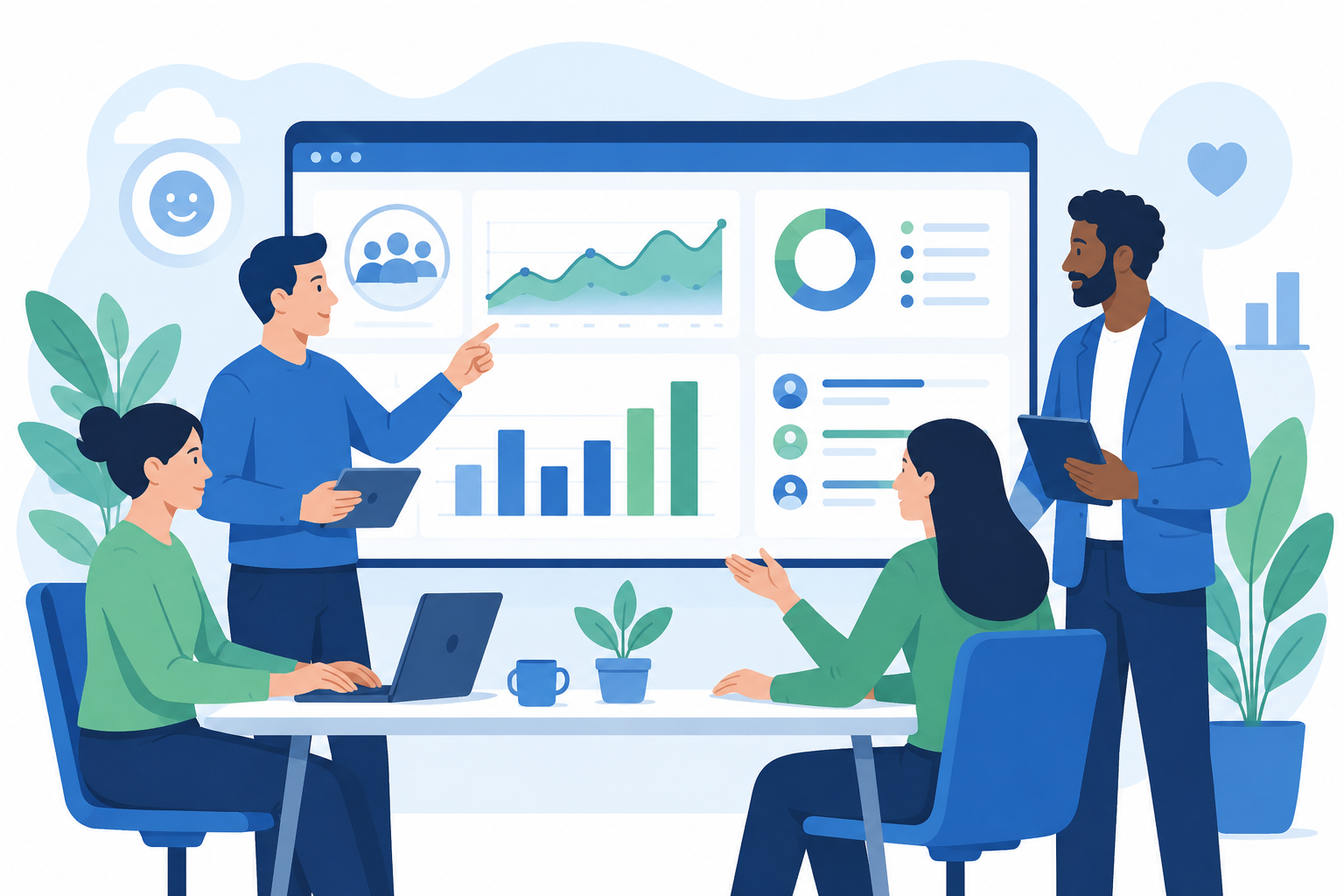
In practical terms, Culture Amp allows HR teams to launch employee engagement surveys, run structured performance review cycles, support employee development goals, and analyze workforce data through a unified dashboard. Rather than treating engagement, performance, and development as separate, disconnected processes, the platform is designed to connect these different pieces of the employee journey together, giving leaders a more complete picture of what is actually happening inside their organization rather than just isolated snapshots from a single survey or review period.
The Origins and Founding Story of Culture Amp
Culture Amp was founded in 2009 in Melbourne, Australia, by Didier Elzinga, Doug English, Rod Hamilton, and Jon Williams. According to accounts from the company, the founders started Culture Amp after recognizing a pattern across large technology transformation projects: the initiatives that failed rarely failed because of the technology itself, but because organizations underestimated the human and cultural side of change. This insight became the founding premise behind building a platform focused specifically on culture and people data rather than another generic project management or HR administration tool.
The company’s growth story reflects a fairly typical, though impressive, startup trajectory. After operating primarily in Australia during its early years, Culture Amp expanded internationally, opening its first office in San Francisco following a Series A funding round in 2015. Over the following years, the company continued raising capital and expanding its physical footprint into markets including New York, London, and Berlin. In July 2021, Culture Amp closed a significant Series F funding round led by investors including Sequoia Capital China and TDM Growth Partners, a raise that valued the company at over a billion dollars and cemented its status as one of Australia’s most successful technology exports.
Key Products and Features
Engage: Employee Engagement Surveys
The Engage product is often the first entry point organizations have with Culture Amp, and it remains central to the platform’s identity. Engage allows HR teams to deploy employee engagement surveys using a library of research-backed templates, then analyze the resulting feedback through dashboards that break down sentiment by department, tenure, or other relevant employee segments. The goal is not simply to collect opinions, but to identify specific, actionable focus areas that leadership can act on rather than being left with a large spreadsheet of raw numbers.
A key part of what makes Engage useful is its benchmarking capability, which allows companies to compare their own engagement scores against industry data rather than evaluating results in a vacuum. This context matters significantly, since a particular engagement score might look concerning on its own but could actually be quite strong relative to industry norms, or vice versa. Culture Amp also builds in tools for tracking sentiment over time, allowing organizations to see whether specific interventions or changes are actually moving the needle rather than just guessing based on anecdotal impressions.
Perform: Continuous Performance Management
Perform is Culture Amp’s answer to the often dreaded annual performance review process. Rather than treating performance evaluation as a single, high stakes event once a year, the Perform module is built around the idea of continuous, real time feedback that fits more naturally into how modern teams actually operate. This includes structured review cycles, calibration tools designed to help ensure fairness across evaluators, and goal-setting features that connect individual objectives to broader business priorities.
The emphasis on calibration is particularly notable, since performance review bias remains a persistent challenge for many organizations, where similar work can be rated very differently depending on which manager is conducting the review. By building calibration directly into the workflow, Culture Amp aims to help HR teams identify and address inconsistencies before they translate into unfair promotion, compensation, or termination decisions, which is a meaningful concern for any organization trying to build a genuinely equitable performance process.
Develop: Employee Growth and Career Development
The Develop module focuses on the growth side of the employee experience, helping organizations support career development, skills growth, and internal mobility. This part of the platform typically includes tools for setting personal development goals, tracking progress over time, and connecting employee growth plans to the broader talent strategy of the organization. For employees, this can mean having a clearer, more structured path for understanding what skills or experiences they need to grow into their next role.
From an organizational perspective, investing in visible development tools tends to have a direct connection to retention, since employees who feel they have a genuine growth path within a company are generally less likely to look elsewhere. By pairing development tracking with the same platform used for engagement and performance data, Culture Amp allows organizations to see potential connections between development investment and other outcomes, such as whether employees with active development plans show different engagement or retention patterns compared to those without one.
People Analytics
People Analytics functions as the connective layer across Culture Amp’s other products, pulling data from engagement surveys, performance reviews, and development tracking into a unified analytics environment. This allows HR and business leaders to move beyond looking at isolated metrics and instead explore relationships between different aspects of the employee experience, such as whether certain engagement drivers correlate with performance outcomes or turnover risk within specific teams or departments.
For organizations with more mature people analytics practices, this kind of integrated data view can be genuinely valuable for strategic workforce planning. Rather than relying purely on intuition or scattered reports pulled from multiple disconnected systems, leaders can access more holistic insights that inform decisions around retention strategy, organizational design, and resource allocation. That said, getting real value from people analytics tools generally requires a certain level of organizational readiness, including clean data practices and genuine leadership buy-in to act on what the data reveals.
AI Coach
In 2025, Culture Amp introduced AI Coach, an AI-powered coaching tool designed to support both employees and managers with personalized guidance drawn from the platform’s underlying people science research and data. According to the company, AI Coach is intended to help managers prepare for difficult conversations, build more balanced and actionable performance reviews, and surface relevant focus areas based on engagement survey results, functioning as an always-available coaching resource rather than something limited to scheduled training sessions.
The introduction of AI-driven features reflects a broader shift happening across the HR technology industry, where many platforms are integrating generative AI tools to help translate raw data into more digestible, actionable guidance. While these tools can meaningfully reduce the time and expertise required to interpret complex people data, organizations considering AI-powered coaching features should still apply thoughtful oversight, ensuring that AI-generated recommendations are reviewed with appropriate context rather than treated as infallible guidance, particularly for sensitive situations involving individual employees.
Who Uses Culture Amp?
Culture Amp serves a broad range of organizations, from mid-sized businesses to large global enterprises, spanning industries such as technology, retail, finance, and professional services. The platform’s customer base includes well-known organizations that rely on it for engagement surveys, performance cycles, or both, reflecting its position as one of the more established names in the employee experience software category. Because the platform is designed to scale, it can support organizations with a few hundred employees as well as those with tens of thousands of people across multiple countries.
That said, Culture Amp is generally best suited to organizations that are ready to invest real time and leadership attention into building consistent listening and performance practices, rather than treating it as a one-off tool to check a compliance box. Smaller or very early-stage companies without dedicated HR resources may find the platform’s depth to be more than they currently need, and it is worth noting that Culture Amp is not designed to replace core HR information systems or payroll software, functioning instead as a specialized layer focused specifically on engagement, performance, and development.
How Culture Amp Works in Practice
From an implementation standpoint, organizations typically begin by integrating Culture Amp with their existing HR information system, allowing employee data to sync automatically rather than requiring manual updates. This integration capability is important because it reduces administrative overhead for HR teams and helps ensure that survey results and performance data are automatically aligned with accurate organizational structures, such as current team assignments and reporting lines.
Once set up, day-to-day usage generally revolves around a combination of scheduled activities, such as periodic engagement surveys and structured performance review cycles, alongside more continuous elements like ongoing manager check-ins or real-time feedback prompts. Culture Amp also emphasizes security and compliance in how it handles the sensitive employee data flowing through the platform, noting that it maintains SOC II, ISO, and GDPR compliance standards, which is a meaningful consideration for any organization handling personal employee feedback and performance information across multiple countries with different data protection regulations.
Benefits of Using Culture Amp
One of the clearest benefits organizations report when adopting Culture Amp is the shift from anecdotal, gut-feeling assessments of company culture toward genuinely data-informed decision-making. Instead of assuming that turnover in a particular department is simply due to “bad luck” or individual circumstances, HR teams can examine actual engagement data to identify whether there are systemic issues, such as management concerns or unclear growth opportunities, that are contributing to the pattern. This kind of evidence-based approach tends to lead to more targeted, effective interventions rather than generic, company-wide initiatives that may not address the actual root cause.
Another notable benefit lies in how the platform connects engagement, performance, and development data together rather than treating them as separate silos managed by different tools or spreadsheets. This integration can reveal meaningful patterns that would otherwise be difficult to spot, such as identifying that teams with lower engagement scores also tend to show weaker performance outcomes or higher attrition risk. For organizations serious about building a genuinely people-centered culture, having this connected view can meaningfully sharpen strategic priorities and help leadership teams focus limited resources on the interventions most likely to make a real difference.
Culture Amp Compared to Other Employee Experience Platforms
Culture Amp operates in a competitive space alongside other well-known platforms such as Qualtrics, Medallia, and various dedicated performance management tools. Broadly speaking, these platforms share overlapping core functionality, including employee surveys, analytics dashboards, and performance tracking features. Where differences tend to emerge is in areas like depth of people science research behind survey design, the degree of integration between engagement and performance modules, pricing structure, and how each platform approaches emerging capabilities like AI-powered coaching or recommendations.
Organizations evaluating Culture Amp against alternatives should generally consider their specific priorities rather than assuming any single platform is universally best. A company primarily focused on large-scale customer experience alongside employee experience might lean toward a more customer-experience-oriented platform, while an organization specifically prioritizing a research-backed, HR-focused tool with strong performance management integration may find Culture Amp’s specialized focus more aligned with their needs. As with most enterprise software decisions, requesting demos, reviewing independent user feedback, and running a pilot with a subset of teams tends to provide more reliable guidance than marketing materials alone.
Pricing and Getting Started
Culture Amp does not publicly list fixed pricing on its website, which is common practice among enterprise HR technology platforms given how significantly costs can vary based on company size, selected modules, and contract terms. Organizations interested in the platform typically need to contact Culture Amp’s sales team directly to receive a customized quote based on their specific needs, whether that means starting with just the Engage survey product or implementing the full suite including Perform, Develop, and People Analytics.
For organizations exploring the platform for the first time, many providers, including Culture Amp, generally offer guided demos that walk through specific use cases relevant to a prospective customer’s situation. This is typically a more useful starting point than trying to evaluate the platform purely through marketing pages, since a demo allows HR teams to ask direct questions about implementation timelines, data migration from existing systems, and how the platform would specifically map onto their current organizational structure and processes.
Culture Amp’s Role in Modern People Science
Beyond its software products, Culture Amp has positioned itself as a thought leader within the broader people science and HR research community. The company regularly publishes research, best practice guides, and benchmarking data drawn from its aggregated, anonymized survey dataset, contributing to the broader conversation about what actually drives employee engagement and retention across different industries and company sizes. This research-driven positioning helps differentiate Culture Amp from purely transactional survey tools, framing the platform as a partner in understanding workplace dynamics rather than just a data collection mechanism.
This emphasis on research also extends to community building efforts, such as bringing together HR practitioners and people leaders to share strategies and best practices with one another. For HR professionals navigating an increasingly complex landscape of remote work, generational shifts in workplace expectations, and growing demands for data-driven decision-making, having access to this kind of shared knowledge base can be a genuinely valuable supplement to the core software tools themselves, helping teams benchmark their own practices against what is working elsewhere.
Tips for Getting the Most Out of Culture Amp
Organizations that see the strongest results from Culture Amp tend to treat it as an ongoing practice rather than a one-time deployment. This means committing to a regular cadence of engagement surveys rather than running one and never following up, since employees quickly lose trust in feedback processes that do not appear to lead to any visible action or change. Closing the feedback loop, meaning actually communicating back to employees about what was heard and what changes are being made as a result, is consistently cited as one of the most important factors in maintaining genuine employee trust in the process.
It also helps to involve managers directly in interpreting and acting on survey results rather than keeping this responsibility isolated within the HR department alone. Since managers have the most direct daily influence over their team’s day-to-day experience, equipping them with clear, accessible summaries of their team’s specific feedback, along with practical guidance on how to respond, tends to produce more meaningful improvements than centralized HR initiatives alone. Combining this manager-level engagement with the platform’s broader analytics capabilities creates a more complete, sustainable approach to using Culture Amp effectively over time.
Frequently Asked Questions
What is Culture Amp used for?
Culture Amp is used by organizations to measure employee engagement, manage performance review cycles, support employee development goals, and analyze people data through a connected platform built on people science research.
Who founded Culture Amp?
Culture Amp was founded in 2009 in Melbourne, Australia, by Didier Elzinga, Doug English, Rod Hamilton, and Jon Williams.
Is Culture Amp only for large companies?
No, Culture Amp serves organizations of varying sizes, from mid-sized businesses to large global enterprises, though it is generally best suited to organizations ready to invest time and leadership attention into consistent people practices.
Does Culture Amp replace a company’s HR information system?
No. Culture Amp functions as a specialized layer focused on engagement, performance, and development, and it typically integrates with a company’s existing HRIS or payroll system rather than replacing it.
How much does Culture Amp cost?
Culture Amp does not publish fixed public pricing, as costs vary based on company size, selected modules, and contract terms. Interested organizations generally need to contact the company’s sales team for a customized quote.
What is AI Coach in Culture Amp?
AI Coach is an AI-powered coaching feature introduced in 2025 that provides personalized guidance to managers and employees, drawing on Culture Amp’s people science research and platform data to support performance conversations and development planning.
Is Culture Amp secure for handling employee data?
Culture Amp states that it maintains SOC II, ISO, and GDPR compliance standards to protect the confidentiality and security of employee data processed through the platform.
How is Culture Amp different from a standard survey tool?
Unlike generic survey tools, Culture Amp is built on people science research and connects engagement data with performance and development tracking, aiming to provide more actionable, integrated insights rather than isolated survey results.
Conclusion
Culture Amp has grown from a Melbourne-based startup founded on a simple but important insight, that organizational change is fundamentally a people problem, into one of the most established platforms in the employee experience software category. By combining research-backed engagement surveys, continuous performance management, development tracking, and increasingly sophisticated AI-powered coaching tools, the platform offers organizations a genuinely connected view of their workforce rather than fragmented, disconnected data points. Whether Culture Amp is the right fit ultimately depends on an organization’s size, readiness to commit to ongoing people practices, and specific priorities, but for companies serious about building a data-informed, people-centered culture, it remains one of the more thoughtfully designed options available today.