
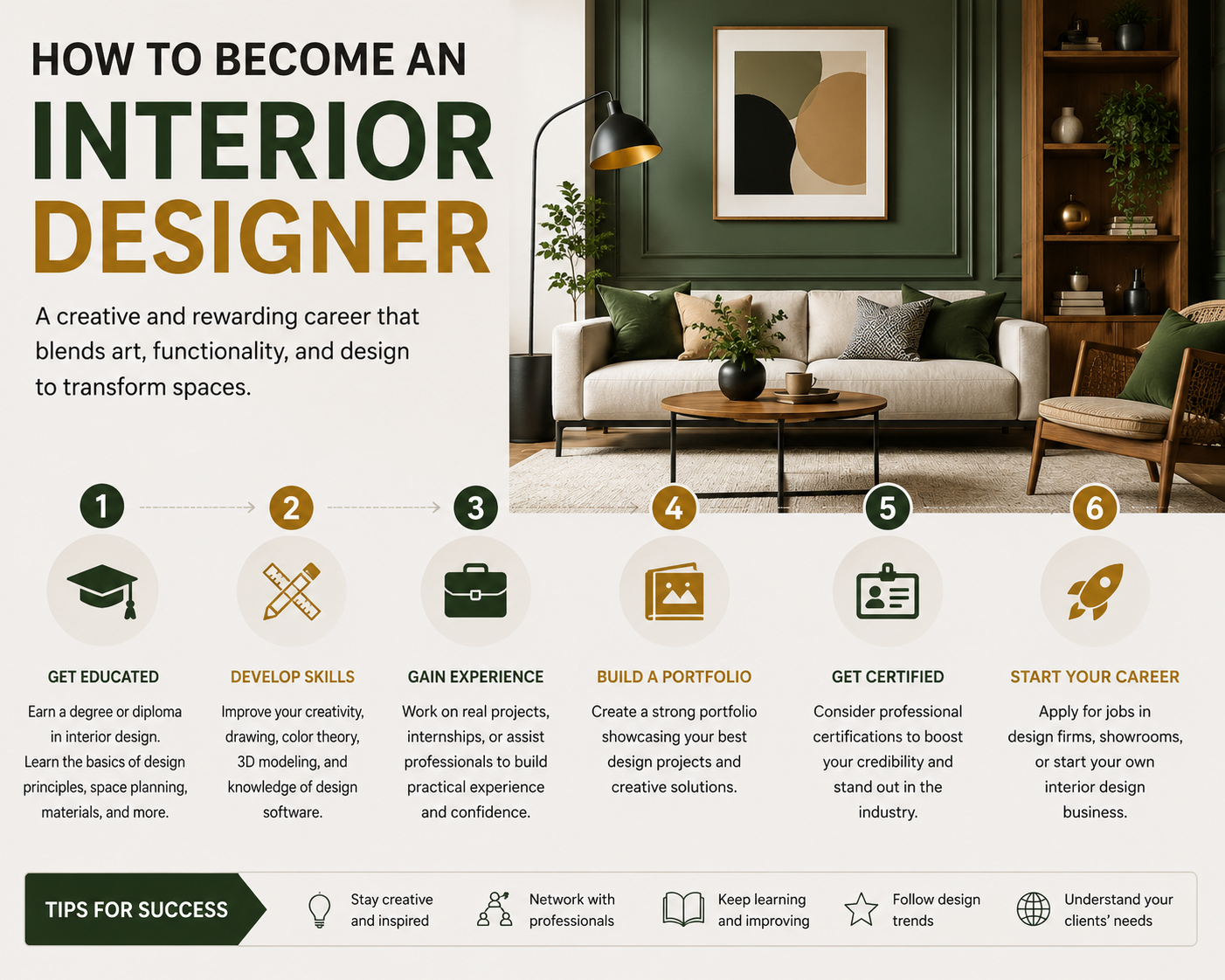

Learning how to become an interior designer is a journey that blends artistic vision with technical precision, and it appeals to anyone who has ever walked into a room and instantly imagined how it could look better. This career sits at the intersection of creativity and functionality, requiring professionals to understand color theory, spatial planning, material science, and human behavior all at once. Unlike many creative fields, interior design also demands a working knowledge of building codes, budgeting, and client communication, which makes it a profession that rewards both artistic talent and business acumen in equal measure.
Across the United States, the demand for skilled interior designers continues to grow as homeowners, corporations, and hospitality brands invest in spaces that reflect identity, comfort, and productivity. Whether you dream of designing luxury residences, corporate offices, boutique hotels, or sustainable green buildings, the path to becoming an interior designer follows a fairly consistent roadmap involving education, hands-on training, certification, and relationship building. This guide walks through every stage of that roadmap in detail, offering practical insights drawn from how the industry actually operates today, so you can approach your career transition or entry with clarity and confidence.
What Does an Interior Designer Actually Do
Before diving into how to become an interior designer, it helps to understand what the role truly involves on a day-to-day basis, because the job is far more layered than simply choosing paint colors or arranging furniture. Interior designers assess how people use a space, then translate those needs into functional layouts that consider traffic flow, lighting, acoustics, ergonomics, and safety regulations. They collaborate with architects, contractors, and engineers to ensure that aesthetic choices align with structural realities, electrical systems, and plumbing constraints, which means the job requires as much problem-solving as it does artistic sensibility.
Beyond the creative process, interior designers manage timelines, negotiate with vendors, source materials, and oversee installation to ensure a project stays on budget and on schedule. They also produce detailed drawings, mood boards, and 3D renderings that communicate their vision to clients before any physical work begins. This blend of creative direction and project management is what separates professional interior designers from casual decorators, and it is precisely why formal training and practical experience matter so much when building a credible, sustainable career in this field.
Skills You Need to Become an Interior Designer
Anyone exploring how to become an interior designer should start by honestly assessing which skills they already possess and which ones need development, because this profession draws on a surprisingly diverse skill set. A strong sense of color, proportion, texture, and spatial balance is essential, but so is the ability to sketch ideas quickly, read architectural blueprints, and use digital design software to bring concepts to life. Designers also need sharp analytical thinking to solve spatial puzzles, such as fitting functional furniture into an awkward room shape without sacrificing flow or comfort.
Equally important are the soft skills that often determine whether a designer thrives in the industry: communication, active listening, negotiation, and time management. Clients rarely articulate their vision perfectly, so designers must ask the right questions, interpret vague preferences, and translate emotional cues into concrete design decisions. Financial literacy also plays a surprisingly large role, since designers must create realistic budgets, track expenses, and explain cost implications to clients without derailing the creative process. Developing these interpersonal and business skills early will make every subsequent step of your career smoother and more profitable.
Educational Requirements for How to Become an Interior Designer
Formal education remains one of the most reliable ways to understand how to become an interior designer, and most successful professionals begin with an accredited degree program in interior design, architecture, or a closely related field. A bachelor’s degree typically takes four years and covers subjects such as design theory, computer-aided drafting, building codes, sustainable design practices, and the history of architecture and furniture. Many universities also require studio courses where students complete simulated client projects, giving them early exposure to the pressures and creative demands of real-world design work.
For those who want to enter the field faster or test their interest before committing to a full degree, associate degree programs and specialized diploma courses offer a condensed alternative that still covers essential technical skills. These shorter programs typically take one to two years and focus heavily on practical software training, drafting, and basic design principles, though graduates may face more competition when applying for senior roles later without a bachelor’s degree. Regardless of which path you choose, selecting a program accredited by a recognized body such as the Council for Interior Design Accreditation significantly strengthens your resume and later eligibility for professional certification exams.
Choosing the Right Interior Design Program
Selecting the right school is a pivotal decision in the process of learning how to become an interior designer, since the quality of your education directly shapes your technical foundation and professional network. When comparing programs, look closely at faculty credentials, studio facilities, software training offered, and whether the curriculum includes internships or partnerships with local design firms. Programs located in cities with active design industries, such as New York, Los Angeles, or Chicago, often provide richer opportunities for guest lectures, site visits, and early networking with practicing professionals.
It is also worth investigating a program’s accreditation status and graduate outcomes before enrolling, because accreditation affects your future eligibility to sit for the National Council for Interior Design Qualification exam in many states. Prospective students should request information about job placement rates, alumni success stories, and available scholarships, since interior design education can be a significant financial investment. Visiting campuses, attending open houses, and speaking directly with current students can reveal details about program culture and workload that marketing materials rarely capture, helping you make a more informed and confident choice.
Gaining Practical Experience Through Internships
Classroom knowledge only goes so far, which is why internships are considered one of the most critical steps in understanding how to become an interior designer who can actually function in a professional studio environment. Internships expose students to real client interactions, vendor negotiations, site inspections, and the pace of managing multiple projects simultaneously, none of which can be fully replicated in a classroom setting. Many design firms specifically seek interns during their busiest seasons, offering hands-on experience in exchange for academic credit or modest compensation.
Beyond skill development, internships serve as an extended job interview, allowing firms to evaluate a candidate’s work ethic, creativity, and reliability before extending a full-time offer. Students who take their internships seriously often receive job offers directly from their host companies, or at minimum gain strong references and portfolio pieces that make future job applications far more competitive. It is wise to seek internships at firms whose design philosophy and project types align with your career interests, whether that means residential design, commercial spaces, hospitality, or sustainable architecture, since early exposure often shapes long-term specialization.
Building a Strong Portfolio
A compelling portfolio is arguably the single most persuasive tool for anyone figuring out how to become an interior designer, because clients and employers judge design talent primarily through visual evidence rather than resumes or credentials alone. Your portfolio should showcase a range of projects that demonstrate versatility, including residential spaces, commercial layouts, and conceptual work if you lack extensive professional experience yet. Each project entry should include before-and-after images when possible, floor plans, mood boards, and a brief narrative explaining the design challenge and how you solved it.
As your career progresses, curate your portfolio ruthlessly, removing older or weaker projects in favor of your strongest and most recent work, since quality consistently outperforms quantity in the eyes of potential clients and employers. Digital portfolios hosted on personal websites or platforms like Behance allow for easy sharing and search engine visibility, while physical printed portfolios still hold value during in-person client meetings and interviews. Regularly updating your portfolio with fresh projects, professional photography, and client testimonials keeps it relevant and demonstrates continuous growth, which is something both employers and prospective clients actively look for when evaluating a designer’s credibility.
Certification and Licensing Requirements
Understanding certification and licensing is an essential part of learning how to become an interior designer, particularly because requirements vary significantly from state to state within the United States. Many states require designers who use the title “interior designer” professionally, or who work on commercial projects involving structural changes, to pass the National Council for Interior Design Qualification exam, commonly known as the NCIDQ. This rigorous exam tests knowledge of building systems, codes, contract administration, and design application, and passing it signals a high level of professional competency to employers and clients alike.
Eligibility for the NCIDQ typically requires a combination of accredited education and verified work experience, often around six years combined, though the exact formula depends on your degree level. Beyond the NCIDQ, some designers pursue additional certifications in sustainable design, such as LEED accreditation, or specialized credentials in kitchen and bath design, aging-in-place design, or healthcare design, all of which can differentiate a designer in a competitive marketplace. While not every state legally mandates licensure for residential design work, obtaining recognized certifications consistently increases earning potential, client trust, and access to larger commercial projects.
Specializing in a Niche
Once you have grasped the fundamentals of how to become an interior designer, choosing a specialization can dramatically accelerate your career growth and help you stand out in a crowded market. Popular niches include residential design, commercial and corporate office design, hospitality and restaurant design, healthcare facility design, sustainable and eco-friendly design, and universal or accessible design for aging populations. Each niche demands distinct technical knowledge, such as understanding hospital infection control standards for healthcare design or acoustic engineering principles for restaurant and hospitality spaces.
Specializing allows designers to charge premium rates because clients increasingly seek experts rather than generalists, especially for complex projects with strict regulatory requirements or unique functional demands. It also simplifies marketing efforts, since a designer known for luxury residential kitchens or boutique hotel lobbies can target their portfolio, website content, and networking efforts toward a specific, identifiable audience. That said, many successful designers begin their careers as generalists, gaining broad experience across multiple project types before narrowing their focus once they discover which area genuinely excites them and showcases their strongest skills.
Building Your Client Base and Network
No matter how talented a designer becomes technically, sustained success ultimately depends on relationships, which makes networking a vital component of any serious plan for how to become an interior designer with a thriving, independent practice. Joining professional organizations such as the American Society of Interior Designers provides access to industry events, continuing education, and referral networks that can generate steady project leads throughout your career. Attending trade shows, design expos, and local business networking events also introduces designers to contractors, real estate agents, and architects who frequently refer clients in need of design services.
Social media platforms, particularly Instagram and Pinterest, have become essential marketing tools for interior designers seeking to build a recognizable personal brand and attract organic client inquiries. Consistently posting high-quality photography of completed projects, sharing design tips, and engaging with followers helps establish authority and keeps a designer top-of-mind when someone in their network needs design services. Word-of-mouth referrals remain the most powerful client acquisition tool in this industry, so delivering exceptional service and maintaining strong communication throughout every project directly fuels long-term business growth.
Tools and Software Every Interior Designer Should Know
Modern interior design relies heavily on digital tools, and mastering the right software is a practical necessity for anyone serious about how to become an interior designer capable of competing in today’s market. Programs such as AutoCAD and SketchUp allow designers to create precise floor plans and three-dimensional models, while rendering software like Enscape or Lumion transforms those models into photorealistic visualizations that help clients understand a design before construction begins. Familiarity with Adobe Creative Suite, particularly Photoshop and InDesign, also proves valuable for creating polished presentation boards and marketing materials.
Beyond design-specific software, many designers use project management platforms to track budgets, timelines, and vendor communications across multiple simultaneous projects, since juggling several clients without organized systems quickly leads to costly mistakes. Cloud-based tools that allow real-time collaboration with clients, contractors, and suppliers have become increasingly standard, especially as remote work and virtual client consultations grow more common across the industry. Investing time in learning these tools during your education or early career pays dividends throughout your professional life, since technical fluency directly affects both the quality and efficiency of your design output.
Salary Expectations and Career Growth
Understanding realistic salary expectations provides helpful context for anyone evaluating how to become an interior designer as a long-term career choice rather than a passing interest. Entry-level interior designers in the United States typically earn a modest starting salary, but earnings increase substantially with experience, specialization, and the ability to attract high-value commercial or luxury residential clients. Designers who eventually open their own firms or become recognized specialists in lucrative niches like hospitality or corporate design often see the most significant income growth over time.
Career advancement in this field frequently follows a path from junior designer to senior designer, then to design director or studio principal, with many experienced professionals eventually transitioning into firm ownership or consulting roles. Geographic location also plays a substantial role in earning potential, with major metropolitan areas generally offering higher salaries alongside a higher cost of living and more intense competition. Continuing education, building a strong professional reputation, and consistently expanding your network all contribute meaningfully to long-term income growth, making patience and persistence just as important as raw talent in this competitive industry.
Common Challenges and How to Overcome Them
Every meaningful exploration of how to become an interior designer should include an honest look at the challenges the profession presents, since understanding obstacles in advance helps aspiring designers prepare realistic strategies for overcoming them. New designers often struggle with managing client expectations, particularly when a client’s vision conflicts with budget constraints or structural limitations, requiring diplomatic communication and creative compromise. Financial instability during the early years, especially for freelancers building their client base from scratch, is another common hurdle that demands careful budgeting and often a temporary side income while the business gains momentum.
Staying current with rapidly evolving design trends, sustainable materials, and building regulations also requires ongoing effort, since a designer who stops learning quickly becomes outdated in an industry driven by innovation and changing consumer preferences. Building resilience against creative criticism and learning to separate personal artistic pride from professional feedback is essential, as clients and contractors will not always agree with a designer’s initial vision. Successful designers typically overcome these challenges by seeking mentorship from established professionals, joining supportive industry communities, and treating early setbacks as valuable learning experiences rather than reasons to abandon the career path altogether.
Freelancing Versus Working for a Design Firm
An important decision point in the journey of how to become an interior designer involves choosing whether to work as an employee at an established firm or to launch an independent freelance practice. Working for a firm offers structured mentorship, steady income, access to established client relationships, and exposure to large-scale projects that would be difficult for a solo practitioner to secure early in their career. This path also allows newer designers to learn business operations, vendor negotiations, and project management practices by observing experienced colleagues before taking on that responsibility themselves.
Freelancing, on the other hand, offers greater creative freedom, flexible scheduling, and the potential for higher earnings once a designer builds a reliable client base, though it comes with the added responsibility of managing marketing, invoicing, taxes, and business development independently. Many designers choose a hybrid approach, gaining several years of firm experience before transitioning into independent practice with the confidence and network needed to sustain a solo business. Whichever path you choose, it is worth periodically reassessing whether your current work environment still aligns with your creative goals and lifestyle preferences as your career matures.
Conclusion
Mastering how to become an interior designer requires far more than a natural eye for aesthetics; it demands formal education, hands-on experience, strategic networking, and a genuine commitment to continuous learning throughout your career. From selecting the right accredited program and completing meaningful internships to building a compelling portfolio and pursuing recognized certifications like the NCIDQ, each step plays a distinct role in shaping a credible, sustainable career in this competitive field. Specializing in a niche, mastering essential design software, and deciding between firm employment and independent freelancing further refine the path based on your personal strengths and ambitions.
Ultimately, the designers who thrive are those who balance creative passion with disciplined professionalism, treating every project as an opportunity to refine their craft and expand their reputation. If you are willing to invest in your education, embrace feedback, and consistently deliver thoughtful, functional, and beautiful spaces for your clients, a rewarding career in interior design is well within reach. The industry continues to evolve alongside changing lifestyles, sustainability priorities, and technology, ensuring that dedicated, adaptable designers will always find meaningful opportunities to grow.
FAQs
Do I need a college degree to become an interior designer? A college degree is not always legally required, but most employers and clients strongly prefer candidates with an accredited degree in interior design, since it provides the technical foundation and credibility needed to compete in the industry. Some designers do succeed through diploma programs or self-taught paths combined with strong portfolios, though this route generally takes longer and involves more effort to establish trust with clients.
How long does it take to become a licensed interior designer? Becoming a licensed or certified interior designer typically takes between four and six years, accounting for a bachelor’s degree program followed by the accumulated work experience required to sit for the NCIDQ exam. Those who pursue associate degrees or diploma programs may enter entry-level roles faster, but often need additional years of experience before qualifying for advanced certification.
Is interior design a good career choice financially? Interior design can be a financially rewarding career, particularly for those who specialize in high-demand niches, build strong professional networks, or eventually launch successful independent firms, though entry-level salaries are generally modest. Long-term financial success in this field depends heavily on reputation, specialization, and business skills in addition to raw design talent.
Can I become an interior designer without formal training? While it is technically possible to work informally as a decorator without formal training, using the professional title “interior designer” and handling commercial or structural projects usually requires accredited education and, in many states, passing a certification exam. Formal training also significantly improves technical competency in areas like building codes and space planning that are difficult to learn through self-study alone.
What software skills are most important for interior designers? AutoCAD and SketchUp are considered essential for creating accurate floor plans and three-dimensional models, while rendering programs and Adobe Creative Suite tools help designers produce polished presentations for clients. Familiarity with project management software is also increasingly valuable for staying organized across multiple concurrent projects.
How much can a beginner interior designer expect to earn? Beginner interior designers in the United States generally start with modest salaries that reflect their limited experience and client base, though earnings grow steadily as they gain skills, certifications, and a stronger professional reputation. Location, specialization, and whether a designer works for a firm or independently all significantly influence starting compensation.
Should I specialize early or gain broad experience first? Most industry professionals recommend gaining broad experience across different project types early in your career before narrowing into a specific niche, since this approach helps you discover genuine strengths and interests while building a versatile skill set. Specializing too early can limit your exposure to valuable learning experiences that later inform more confident, informed niche selection.