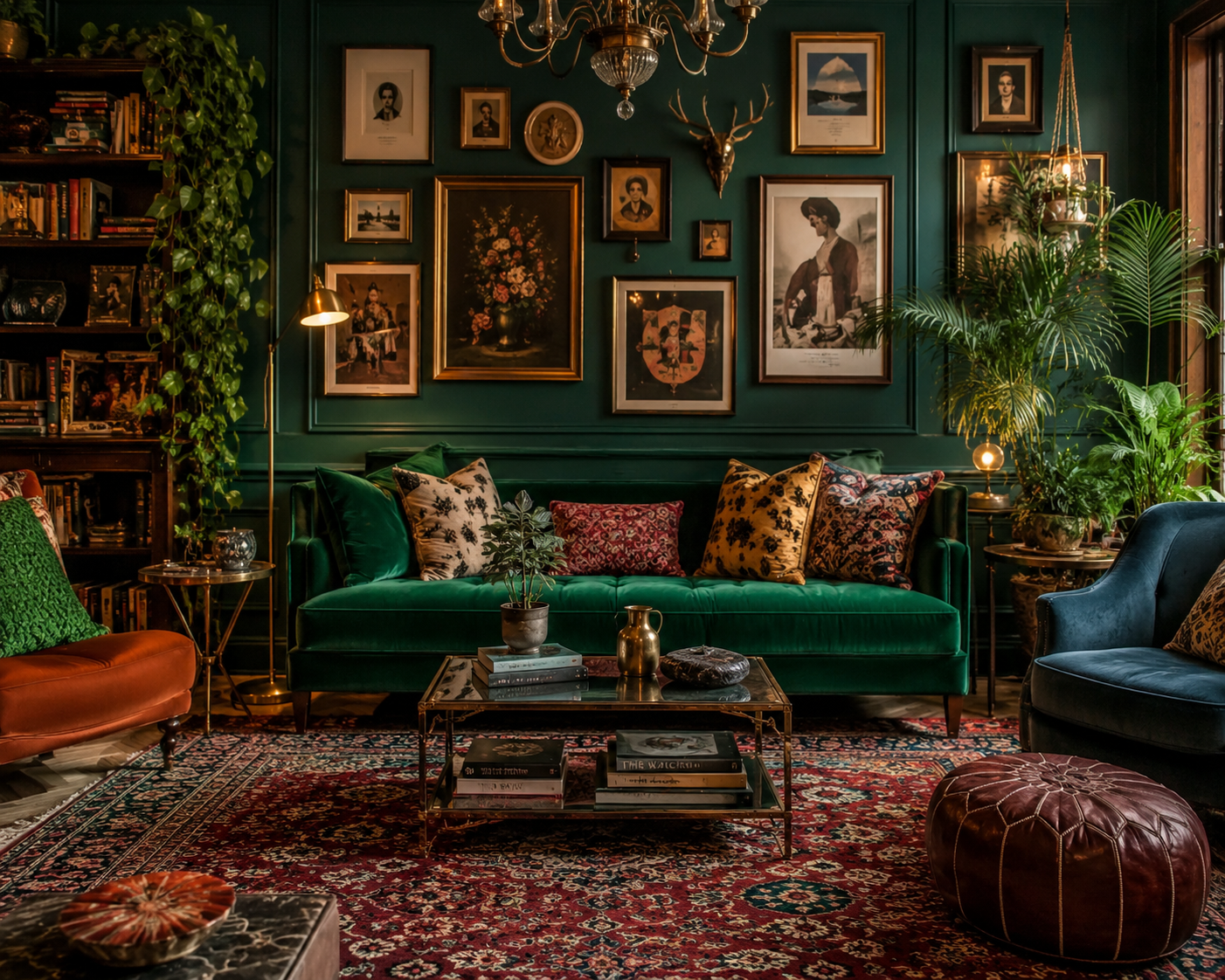

Walk into a room filled with rich jewel-toned walls, layered patterns, gallery style art arrangements, and furniture that tells a story, and you are likely standing inside a space shaped by maximalist interior design. For years, minimalism dominated design conversations with its promise of calm, clutter-free living, but a growing number of homeowners and designers are now embracing the opposite philosophy: more color, more texture, more personality. So what does this bold design approach actually involve, and why is it capturing so much attention right now?
At its core, maximalist interior design is about self-expression through abundance rather than restraint. It rejects the idea that a beautiful home must be sparse or neutral, instead celebrating bold choices, personal collections, and layered visual richness. This article will walk you through everything you need to know about this expressive style, from its defining characteristics and historical roots to practical tips for bringing eclectic, layered decor into your own home, whether you are working with an entire house or a single statement room.
What Is Maximalist Interior Design?
Maximalist interior design is a decorating philosophy built around abundance, layering, and unapologetic personal expression. Rather than following the “less is more” mindset associated with minimalism, maximalism embraces a “more is more” approach, combining bold colors, mixed patterns, diverse textures, and curated collections of objects to create spaces that feel rich, dynamic, and deeply personal. It is not about randomly filling a room with items; instead, it is a deliberate design strategy that requires thoughtful layering so that the final result feels intentional rather than chaotic.
What makes this design philosophy particularly interesting is how personal it is by nature. Two maximalist homes can look completely different from one another, since the style is less about following a strict formula and more about reflecting the individual tastes, travels, memories, and interests of the person living there. A maximalist living room might combine vintage furniture with contemporary art, while a maximalist bedroom might layer floral wallpaper with animal-print textiles and an eclectic mix of frames. This flexibility is part of what makes the style so appealing to people who feel that minimalist spaces do not fully capture who they are.
The Origins and Evolution of Maximalism
Maximalist design is not a brand-new invention; it draws heavily from historical design movements that celebrated ornamentation and abundance long before the term “maximalism” became a popular search phrase. Victorian-era interiors, for example, were known for their heavy fabrics, dark wood furniture, and densely arranged decorative objects. Similarly, Art Deco design in the early twentieth century embraced glamour through bold geometric patterns, rich materials, and dramatic color contrasts, laying groundwork for many of the visual instincts modern maximalism still relies on today.
The contemporary resurgence of this bold decorating trend can be partly understood as a reaction to the minimalist trends that dominated much of the 2010s. As sparse, neutral-toned interiors became widely popular through social media and mainstream design media, many people began to feel that these spaces, while visually calming, lacked warmth and individuality. Maximalism reemerged as a counterbalance, offering a way to create homes that feel lived-in, personal, and full of character rather than staged and impersonal. This cyclical relationship between opposing design philosophies is common throughout design history, and it helps explain why maximalism continues to gain renewed interest today.
Key Characteristics of Maximalist Interior Design
Bold Color Palettes
Color is arguably the most immediately recognizable feature of this bold decorating style. Rather than relying on neutral tones like white, beige, or soft gray, maximalist spaces often embrace deep jewel tones such as emerald green, sapphire blue, and burgundy, alongside vibrant accent colors that create visual energy throughout a room. These color choices are rarely applied sparingly; walls, furniture, textiles, and accessories often work together to build a cohesive but visually rich color story rather than isolating bold color to a single accent piece.
Successful maximalist color schemes typically rely on an underlying logic, even when they appear bold and adventurous at first glance. Designers often choose a core palette of two or three dominant colors and then build layers of complementary or contrasting shades around that foundation. This approach allows a room to feel vibrant and expressive without descending into visual chaos, since the eye can still identify a unifying thread running through the space even amid a wide range of colors and tones.
Pattern Mixing
Pattern mixing is another defining hallmark of maximalism, and it is often the element that intimidates newcomers the most. Maximalist rooms frequently combine florals, stripes, geometric prints, and animal patterns within the same space, layering them across wallpaper, upholstery, rugs, and cushions. When done thoughtfully, this combination creates depth and visual interest rather than overwhelming the senses, though it does require a trained eye for scale, color coordination, and balance.
A common technique used by experienced maximalist designers involves varying the scale of patterns being combined, pairing a large-scale floral print with a smaller geometric pattern, for example, so that each pattern has room to be visually distinct rather than competing for identical attention. Repeating certain colors across different patterns also helps tie a mixed-pattern room together, giving the eye a consistent anchor point even as it moves across multiple busy surfaces throughout the space.
Curated Clutter and Collections
Unlike disorganized clutter, the “clutter” found in this decorating style is intentional and curated, often reflecting a homeowner’s personal collections, travel souvenirs, or treasured family heirlooms. Bookshelves overflowing with carefully arranged books, gallery walls packed with mismatched frames, and display shelves filled with ceramics or art objects are common features that give maximalist spaces their signature sense of abundance and personality.
This emphasis on personal collections is part of what distinguishes true maximalism from simply having a messy or overcrowded home. Every object typically has a purpose or story behind it, whether that is a piece of art collected during a memorable trip or a vintage item passed down through generations. This intentionality transforms what might otherwise look like clutter into a curated, meaningful display that communicates something authentic about the people who live in the space.
Maximalism vs Minimalism
Understanding this bold, layered design approach often becomes clearer when compared directly to its philosophical opposite, minimalism. Minimalist design emphasizes simplicity, negative space, and a restrained color palette, typically favoring function and visual calm over decorative abundance. Maximalism, by contrast, embraces complexity, layered visual detail, and emotional expression through decor, treating a home as a canvas for storytelling rather than a space defined primarily by restraint.
It is worth noting that these two philosophies are not always mutually exclusive, and many modern homes borrow elements from both approaches. Some designers describe a hybrid style sometimes called “curated maximalism” or “organized maximalism,” which incorporates the boldness and personality of maximalist design while maintaining enough structure and intentional arrangement to avoid visual overwhelm. Understanding both ends of this design spectrum can help homeowners identify where their own personal taste naturally falls, rather than feeling pressured to commit entirely to one extreme or the other.
Popular Maximalist Design Styles
Maximalism is not a single, uniform aesthetic; it manifests through several distinct sub-styles that share the same core “more is more” philosophy while looking quite different from one another. Bohemian maximalism, for instance, leans heavily on natural textures, layered textiles, plants, and global-inspired decor, creating a relaxed, eclectic atmosphere. Glamorous or “Hollywood regency” maximalism, on the other hand, favors rich velvet fabrics, metallic accents, and dramatic lighting fixtures to create a more polished, luxurious take on the style.
Another popular variation is vintage or antique-inspired maximalism, which draws heavily from historical design periods such as Victorian or Art Deco interiors, incorporating ornate furniture, ornamental molding, and richly patterned wallpaper. There is also a growing trend toward what some designers call “grandmillennial” maximalism, which blends traditional decorative elements like chintz fabric and needlepoint pillows with more contemporary furniture and color choices. Recognizing these different sub-styles can help homeowners narrow down which specific version of maximalism best matches their personal taste before diving into a full room redesign.
How to Achieve Maximalist Interior Design in Your Home
Bringing this bold, layered aesthetic into your own space does not require an unlimited budget or a complete home renovation. A practical starting point involves choosing a foundational color palette and building outward from there, rather than randomly acquiring bold pieces without an underlying plan. Selecting two or three dominant colors that you genuinely love provides a helpful framework for later decisions about furniture, textiles, and accessories, ensuring the finished room feels cohesive rather than randomly assembled.
Layering is another essential technique for achieving an authentic maximalist look. This might involve combining multiple rugs, stacking cushions with different patterns, or arranging art in dense, gallery-style clusters rather than spacing pieces sparingly across a wall. It also helps to introduce maximalism gradually if you are new to the style, starting with a single room or even a single wall before committing to a full-home transformation. This gradual approach allows you to develop confidence with bold color and pattern choices while still maintaining flexibility to adjust your vision as your personal taste evolves over time.
Common Mistakes to Avoid
One of the most common mistakes people make when attempting this style is confusing genuine curation with simple accumulation. Filling a room with random objects purchased without any underlying color or thematic logic often results in a space that feels cluttered and disorganized rather than intentionally rich and layered. Successful maximalism requires editing just as much as minimalism does; every piece should contribute to the overall visual story rather than existing purely as filler.
Another frequent pitfall involves ignoring balance and negative space entirely. Even in the boldest maximalist rooms, small breathing pockets, whether through a plain wall section, a single neutral furniture piece, or strategic lighting, help prevent the space from feeling visually exhausting. Without these subtle pauses, even a well-curated collection of colors and patterns can start to feel overwhelming rather than energizing. Skilled maximalist design always maintains an underlying sense of rhythm and intentional pacing, even amid substantial visual complexity.
Maximalism in Different Rooms
This decorating style can be applied throughout an entire home, though certain rooms tend to lend themselves particularly well to the approach. Living rooms are a common starting point, since they typically offer ample wall space for gallery displays and enough furniture variety to support layered textiles and patterns. Dining rooms also work beautifully with maximalist touches, particularly through bold wallpaper, statement lighting fixtures, and richly patterned upholstery on dining chairs that create a dramatic backdrop for entertaining guests.
Bedrooms offer another excellent opportunity to explore maximalist design, since this more private space allows for experimentation with sensory-rich elements like layered bedding, textured headboards, and personal collections displayed on nightstands or dressers. Even smaller spaces such as powder rooms and hallways can serve as ideal testing grounds for maximalism, since their limited square footage allows homeowners to commit to bold wallpaper or saturated paint colors without the same financial or design commitment required for larger rooms throughout the house.
Pros and Cons of Maximalist Interior Design
Like any design philosophy, this decorating approach comes with distinct advantages and potential drawbacks worth considering before committing to the style. On the positive side, maximalism allows for genuine personal expression, giving homeowners the freedom to display meaningful collections, favorite colors, and unique finds without needing to hide them in storage for the sake of visual restraint. Many people also find maximalist spaces feel warmer and more inviting compared to sparse minimalist interiors, since the layered visual richness can create a cozy, lived-in atmosphere.
On the other hand, maximalist design does require more ongoing maintenance and thoughtful curation than minimalist spaces, since dense collections of objects and textiles can accumulate dust and require regular cleaning and reorganization. There is also a genuine learning curve involved in mastering color coordination and pattern mixing, meaning that inexperienced attempts at maximalism can sometimes result in spaces that feel cluttered rather than intentionally curated. Additionally, because maximalist design tends to be highly personal and specific, it may not appeal to future homebuyers in the same broad way that neutral, minimalist staging often does, which is worth considering if resale value is an important factor in your decision-making.
Maximalist Interior Design on a Budget
A common misconception is that this decorating style requires significant financial investment, but many of its signature elements can actually be achieved affordably. Thrift stores, estate sales, and secondhand marketplaces are excellent sources for the vintage furniture, unique art pieces, and eclectic accessories that give maximalist spaces their distinctive character, often at a fraction of the cost of buying new. Building a room gradually through secondhand finds also aligns naturally with the personal, storytelling quality that defines authentic maximalism.
Textiles offer another budget-friendly entry point into maximalism, since items like patterned cushion covers, textured throws, and statement rugs can dramatically transform a room’s visual energy without requiring a full furniture overhaul. Removable, peel-and-stick wallpaper has also become a popular option for renters or budget-conscious homeowners who want to experiment with bold patterns without committing to permanent installation. By focusing spending on a few carefully chosen statement pieces while sourcing the rest through affordable or secondhand options, it is entirely possible to create an authentic maximalist look without an unlimited decorating budget.
Frequently Asked Questions
What is maximalist interior design in simple terms?
Maximalist interior design is a decorating style that embraces bold colors, layered patterns, and curated collections to create rich, personality-filled spaces, following a “more is more” philosophy rather than minimalist restraint.
Is maximalism the same as clutter?
No. While maximalist spaces contain more visual elements than minimalist rooms, the style relies on intentional curation and thoughtful arrangement, distinguishing it from disorganized or accidental clutter.
Can this design style work in small spaces?
Yes. Small rooms, hallways, and powder rooms can be excellent places to experiment with maximalist elements like bold wallpaper or saturated color, since the limited square footage allows for dramatic impact without overwhelming an entire home.
How do you mix patterns without making a room look chaotic?
Successful pattern mixing typically involves varying the scale of patterns, repeating shared colors across different prints, and balancing busy patterns with occasional solid or neutral elements to give the eye visual rest.
Is maximalist decorating expensive?
Not necessarily. Many maximalist elements, including vintage furniture, secondhand decor, and patterned textiles, can be sourced affordably, making the style accessible even on a limited decorating budget.
What colors work best for a maximalist look?
Deep jewel tones such as emerald green, sapphire blue, and burgundy are commonly used in maximalist spaces, though the style ultimately embraces any bold color palette that reflects the homeowner’s personal taste.
Does maximalism suit every home style?
Maximalism can be adapted to many architectural styles, though it tends to pair especially well with older or more ornate homes that already feature detailed molding, high ceilings, or traditional architectural elements.
How is maximalism different from minimalism?
Minimalism emphasizes simplicity, negative space, and restrained color, while maximalism embraces abundance, layered pattern, and bold color as tools for personal expression and storytelling within a home.
Conclusion
Understanding what maximalist interior design truly involves reveals a style that goes far beyond simply filling a room with decorative objects. At its heart, maximalism is about intentional abundance, using bold color, layered pattern, and curated personal collections to build spaces that feel warm, expressive, and deeply reflective of the people who live in them. Whether you choose to fully embrace the style throughout your home or simply borrow a few maximalist techniques for a single statement room, this design philosophy offers a compelling alternative for anyone who feels that a beautiful home does not need to be sparse or restrained. As interest in personal, character-driven interiors continues to grow, maximalist interior design remains a genuinely rewarding path toward creating a home that feels authentically, unapologetically yours.