
Walk into any newly renovated home featured on a design blog or shelter magazine today and there is a good chance you will spot at least one striking black door standing in quiet contrast against lighter walls. Black interior doors have moved from a niche architectural choice reserved for ultra modern lofts to a mainstream favorite among homeowners, interior designers, and builders across the United States. What was once considered an unconventional or even risky decision has become one of the most requested upgrades in home renovation projects and for good reason. A single dark door can transform a hallway, define a room’s personality, and elevate an otherwise ordinary space into something that feels curated and intentional.
This shift is not simply about following a passing trend. Black interior doors offer genuine functional and aesthetic benefits that homeowners are discovering as they search for ways to make their interiors feel more sophisticated without a complete gut renovation. They hide fingerprints and scuffs better than white doors, they create striking focal points and they pair beautifully with nearly every color palette, from soft neutrals to bold jewel tones. Throughout this guide, we will explore everything you need to know about black interior doors, including design considerations, material choices, hardware pairings, maintenance realities and budgeting tips, so you can decide whether this design statement belongs in your own home.
Why Black Interior Doors Have Become a Design Favorite
The rise of black interior doors is closely tied to broader shifts in interior design philosophy over the past decade. Homeowners have moved away from the all white, farmhouse inspired aesthetic that dominated the 2010s and are now gravitating toward spaces with more depth, contrast, and character. A black door introduces a grounding element into a room, anchoring lighter furniture, walls, and flooring in a way that feels deliberate rather than accidental. Designers often describe this effect as adding visual weight, which helps balance airy, light filled rooms that might otherwise feel flat or one dimensional.
Beyond aesthetics, there is a practical dimension to this popularity as well. Traditional white doors are notorious for showing dirt, scuffs, and yellowing over time, especially in high traffic households with children or pets. Black interior doors, by contrast, tend to camouflage everyday wear far more effectively, which means they often look fresher for longer stretches between repaints or touch ups. This combination of striking visual impact and lower maintenance appearance explains why so many renovation shows, real estate stagers, and interior design influencers continue to champion this simple yet transformative upgrade.
The Psychological and Visual Impact of Dark Doors
Color psychology plays a meaningful role in why black interior doors resonate so strongly with people renovating their homes. Black is often associated with sophistication, stability, and quiet confidence, and when used thoughtfully in architecture, it can lend those same qualities to an entire room. Unlike overwhelming or garish colors, black tends to recede visually in some contexts while asserting itself powerfully in others, particularly when it frames an entryway or hallway. This duality is part of what makes it such a versatile design tool for homeowners who want impact without chaos.
There is also a framing effect at play. A dark colored door acts almost like a picture frame around the threshold of a room, drawing the eye and creating a sense of intentional transition between spaces. This is especially effective in open-concept homes, where defined boundaries between rooms can otherwise feel blurred or nonexistent. Interior designers frequently use black interior doors strategically in these floor plans to reintroduce a sense of structure and flow, helping each area of the home feel distinct while still belonging to a cohesive overall design language.
Popular Styles and Finishes for Black Interior Doors
When homeowners begin exploring black interior doors, one of the first decisions involves choosing between a matte, satin, or semi gloss finish. Matte finishes have surged in popularity because they offer a soft, velvety appearance that feels contemporary and understated, hiding minor surface imperfections exceptionally well. Satin finishes strike a middle ground, offering a subtle sheen that reflects light just enough to add dimension without appearing overly glossy. Semi-gloss finishes, meanwhile, remain a practical classic, providing a durable, easy to clean surface that has long been favored for doors and trim in busy households.
Style choice matters just as much as finish. Shake style black doors, characterized by their clean recessed panels, remain extremely popular because they suit both traditional and modern homes without feeling out of place in either. Flat slab doors, on the other hand, appeal to homeowners chasing a minimalist or industrial aesthetic, offering an unbroken surface that emphasizes the boldness of the black color itself. French doors with glass panes painted black have also become a favorite for connecting living spaces while still allowing natural light to pass through, proving that black interior doors can be both a design statement and a functional architectural feature.
Choosing the Right Material for Black Interior Doors
Material selection significantly affects how a black interior door performs over time, both in terms of appearance and longevity. Solid wood doors remain a premium choice, offering excellent durability, a satisfying weight when opened and closed, and the ability to be sanded and refinished if the surface ever becomes damaged. However, solid wood doors also tend to be the most expensive option, and in humid climates, they can be prone to warping if not properly sealed and maintained, which is an important consideration for anyone comparing long term value.
Composite and engineered wood doors have become increasingly popular alternatives because they offer much of the aesthetic appeal of solid wood at a more accessible price point, while also being more resistant to warping and cracking. Hollow core doors, often used in secondary rooms like closets or guest bathrooms, provide the most budget-friendly option, though they lack the substantial feel and soundproofing qualities of solid alternatives. For homeowners who want the striking look of black interior doors throughout their home without breaking their renovation budget, mixing material types strategically based on room importance and traffic level is often the smartest approach.
Black Interior Doors in Different Home Styles
One of the most compelling aspects of black interior doors is their remarkable versatility across architectural styles. In modern farmhouse interiors, a black door paired with white shiplap walls and brass hardware creates the kind of striking, magazine worthy contrast that has become synonymous with the style itself. This pairing has become so iconic that many homeowners specifically renovate with this exact combination in mind, often citing popular home renovation television programs as their initial inspiration for making the leap into darker door colors.
In contrast, mid century modern and contemporary homes benefit from black interior doors in a different way, using them to emphasize clean geometric lines and an overall sense of architectural precision. Traditional and colonial style homes are not left out of this trend either a black door in these settings can lend an air of formality and old world elegance, particularly when paired with detailed molding and classic brass or oil-rubbed bronze hardware. Even coastal and Scandinavian inspired interiors, typically associated with lighter, breezier palettes, often incorporate a single black door as an intentional grounding contrast, proving that this design choice truly transcends any single decorating style.
Pairing Black Interior Doors with Wall Colors and Trim
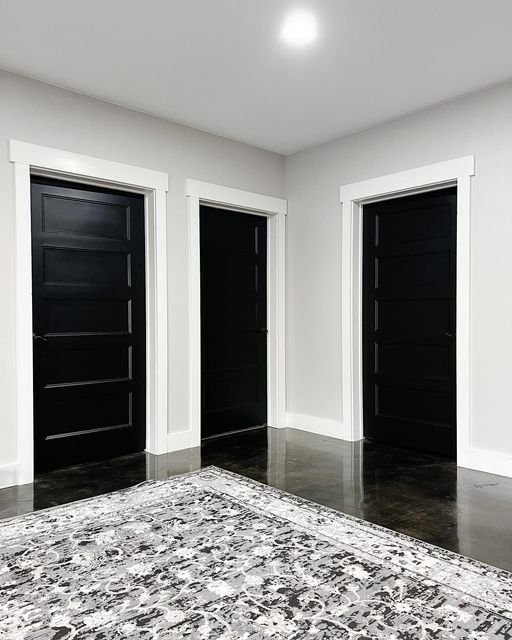
Successfully incorporating black interior doors into a home’s design requires thoughtful consideration of surrounding wall colors and trim work. Crisp white walls remain the most popular pairing, and for good reason, since the sharp contrast between the two tones creates an eye catching, gallery like effect that photographs beautifully and never feels outdated. Soft greige or warm beige walls offer a slightly gentler contrast, softening the boldness of the black while still allowing the door to stand out as a clear focal point within the room.
For homeowners drawn to more daring palettes, black interior doors pair strikingly well with deep, saturated wall colors like navy, forest green, or charcoal, creating a moody, immersive atmosphere often described as a jewel box effect. Trim color is another important variable to consider; painting trim white creates a crisp, defined boundary around the black door, while painting trim the same black as the door produces a more dramatic, monochromatic look that visually enlarges the doorway. Whichever combination a homeowner chooses, testing paint samples under actual lighting conditions in the room is essential, since black can shift dramatically in appearance between warm incandescent light and cool natural daylight.
Hardware and Accessories That Complement Black Doors
Hardware selection plays a surprisingly large role in how a black interior door ultimately reads within a space, and getting this detail right can make the difference between a polished result and one that feels mismatched. Brushed brass and unlacquered brass hardware have become especially popular pairings, as the warm golden tones create a luxurious contrast against the cool, matte black surface. This combination has become something of a signature look in contemporary interior design, frequently appearing in high end renovation projects and designer show houses across the country.
Matte black hardware offers an alternative approach, creating a sleek, monochromatic look where the door and its hinges, handles, and hinges blend seamlessly into a single unified statement. Brushed nickel and chrome hardware provide a cooler, more industrial contrast that works particularly well in modern or transitional interiors. Beyond the primary hardware, small details like door stops, kick plates, and even the visible screws holding hinges in place should be considered as part of the overall composition, since these finishing touches contribute meaningfully to how professional and intentional the final result appears.
Practical Considerations: Maintenance and Durability
While black interior doors offer undeniable visual appeal, homeowners should understand the practical realities of living with them day to day. One common misconception is that black doors will show every speck of dust, but in reality, the opposite is often true for scuffs, fingerprints, and general handling marks, which tend to blend into the dark surface rather than standing out starkly as they would on white paint. That said, dust and light colored debris can sometimes be more visible on matte black finishes, which means regular light dusting or wiping down remains a helpful part of routine home maintenance.
Durability also depends heavily on the quality of paint and primer used during installation or refinishing. Using a high-quality enamel paint specifically formulated for doors and trim will significantly extend the lifespan of the finish, resisting chipping and yellowing far better than standard wall paint repurposed for door use. Homeowners in humid or high-traffic environments, such as households with young children or large dogs, should also consider semi-gloss or satin finishes over pure matte, since these sheens tend to be more resistant to scuffing and are considerably easier to wipe clean without leaving visible marks or dulling the surface over time.
Cost Factors and Budgeting for Black Interior Doors
Understanding the cost landscape is essential for any homeowner considering black interior doors as part of a renovation project. If existing doors are structurally sound and simply need a color change, repainting is by far the most budget-friendly route, often costing homeowners only the price of quality paint, primer, and basic supplies if they choose to complete the project themselves. Professional painting services, by comparison, typically charge per door, with pricing influenced by door size, condition, and the number of coats required to achieve a rich, even black finish.
For homeowners replacing doors entirely rather than repainting existing ones, costs vary considerably based on material choice, with hollow-core options representing the most economical entry point and solid wood or custom millwork doors sitting at the premium end of the spectrum. It is also worth factoring in the cost of new hardware, since swapping outdated hinges and handles for finishes like brushed brass or matte black often completes the transformation and can meaningfully affect the overall project budget. Many homeowners find that a phased approach, tackling the most visible doors first, such as those in entryways or main living areas, allows them to enjoy the impact of black interior doors without committing to a full-house overhaul all at once.
Installation Tips and Common Mistakes to Avoid
Proper preparation is arguably the single most important factor in achieving a professional looking result when installing or repainting black interior doors. Skipping the sanding and priming stages is one of the most common mistakes homeowners make, often resulting in visible brush strokes, uneven coverage, or premature peeling that undermines an otherwise beautiful color choice. Removing doors from their hinges before painting, rather than attempting to paint them while still mounted, typically produces a much smoother and more even finish, since it allows for better access to edges and eliminates the risk of drips running down a vertical surface.
Another frequent misstep involves rushing the drying and curing process between coats, which can lead to a finish that looks acceptable initially but fails to hold up under regular use. Most quality enamel paints require adequate time between coats and an extended curing period before the door can be closed against the frame without risking the paint sticking or marring. Homeowners should also resist the temptation to skip a bonding primer when painting over glossy or previously varnished wood, since this step is critical for ensuring the new black finish adheres properly and does not chip away within the first few months of daily use.
Boosting Home Value and Buyer Appeal
Real estate professionals have increasingly noted that thoughtful design updates like black interior doors can genuinely influence how prospective buyers perceive a home during showings and open houses. Homes staged with these dark, dramatic accents often photograph exceptionally well for online listings, which matters enormously in a market where the vast majority of buyers begin their search browsing photographs before ever stepping foot inside a property. This visual impact can help a listing stand out among dozens of similar homes in a competitive neighborhood or price range.
Beyond photography, black interior doors signal to buyers that a home has been updated with current design sensibilities rather than left untouched for decades, which can subtly influence perceived value even if the change itself was relatively inexpensive to implement. It is worth noting that moderation matters here; while a few strategically placed black doors can feel fresh and intentional, painting every single door throughout an entire home black without variation can occasionally read as overly trendy to more conservative buyers. Striking a balance, often by using black doors in main living areas while keeping bedrooms or bathrooms in complementary lighter tones, tends to appeal to the broadest range of potential buyers while still capturing that sought-after design edge.
Conclusion
Black interior doors represent far more than a passing design fad; they are a genuinely versatile, practical, and visually striking upgrade that suits an enormous range of architectural styles and personal tastes. From the psychological weight and grounding presence they bring to a room, to their surprising ability to camouflage everyday wear better than lighter alternatives, the appeal of this design choice is rooted in both form and function. Whether paired with crisp white walls for maximum contrast or nestled among deep, saturated tones for a more immersive atmosphere, black doors offer homeowners a remarkably flexible tool for reshaping how their spaces feel and function.
As with any renovation decision, success ultimately comes down to thoughtful planning, from selecting the right material and finish to choosing hardware that complements rather than clashes with the overall vision. By taking the time to test paint samples, invest in quality materials, and consider how black interior doors will interact with existing architectural details, homeowners can achieve a result that feels both current and timeless. For those still weighing whether this bold choice belongs in their own home, the growing popularity and lasting relevance of black interior doors across design trends, renovation shows, and real estate listings alike suggest that this is one upgrade with genuine staying power rather than fleeting appeal.
FAQs
Do black interior doors make a room feel smaller?
Not necessarily. While black is a dark color, its impact on perceived room size depends heavily on surrounding wall colors, natural light levels, and overall room layout. In rooms with ample natural light and lighter walls, a black door often acts as a striking accent rather than making the space feel cramped, and in some cases the strong contrast can actually make a room feel more dynamic and intentional rather than smaller.
What is the best paint finish for black interior doors?
Satin and semi-gloss finishes are generally considered the most practical choices, offering durability and easy cleaning while still providing an attractive, slightly reflective surface. Matte finishes are popular for their soft, contemporary appearance but may require more frequent cleaning in high-traffic households, so the best choice ultimately depends on the specific room and household lifestyle.
Can I paint my existing doors black myself, or should I hire a professional?
Many homeowners successfully paint their own doors with proper preparation, including sanding, priming, and using quality enamel paint formulated for trim and doors. However, hiring a professional can ensure a smoother, more even finish, particularly for solid wood doors or homes where multiple doors need to be completed efficiently and consistently.
Do black interior doors work in small homes or apartments?
Yes, black interior doors can work beautifully in smaller spaces when used thoughtfully, often as a single accent feature rather than throughout the entire home. Using them selectively, such as on a primary entry door or a standout feature like a pantry or office door, allows smaller spaces to enjoy the design impact without overwhelming the overall footprint.
What hardware pairs best with black interior doors?
Brushed brass and unlacquered brass hardware are extremely popular for their warm contrast against black surfaces, while matte black hardware offers a sleek, monochromatic alternative. Brushed nickel and chrome are also solid choices for homeowners seeking a cooler, more industrial aesthetic, and the right choice ultimately depends on the broader hardware finishes already present throughout the home.
Will black interior doors go out of style?
While specific design trends evolve over time, black interior doors have demonstrated remarkable staying power across multiple design eras, from traditional to modern interiors. Because black is a neutral rather than a trend-specific color, doors finished in this tone tend to remain visually relevant far longer than more niche or seasonal color choices.
How do black interior doors affect natural light in a room?
Doors themselves, regardless of color, do not significantly block natural light unless they contain glass panels, so a black door will not meaningfully reduce brightness in a room. The color primarily affects the visual perception of the space rather than the actual amount of light entering through windows, meaning well-lit rooms remain well-lit regardless of door color choice.