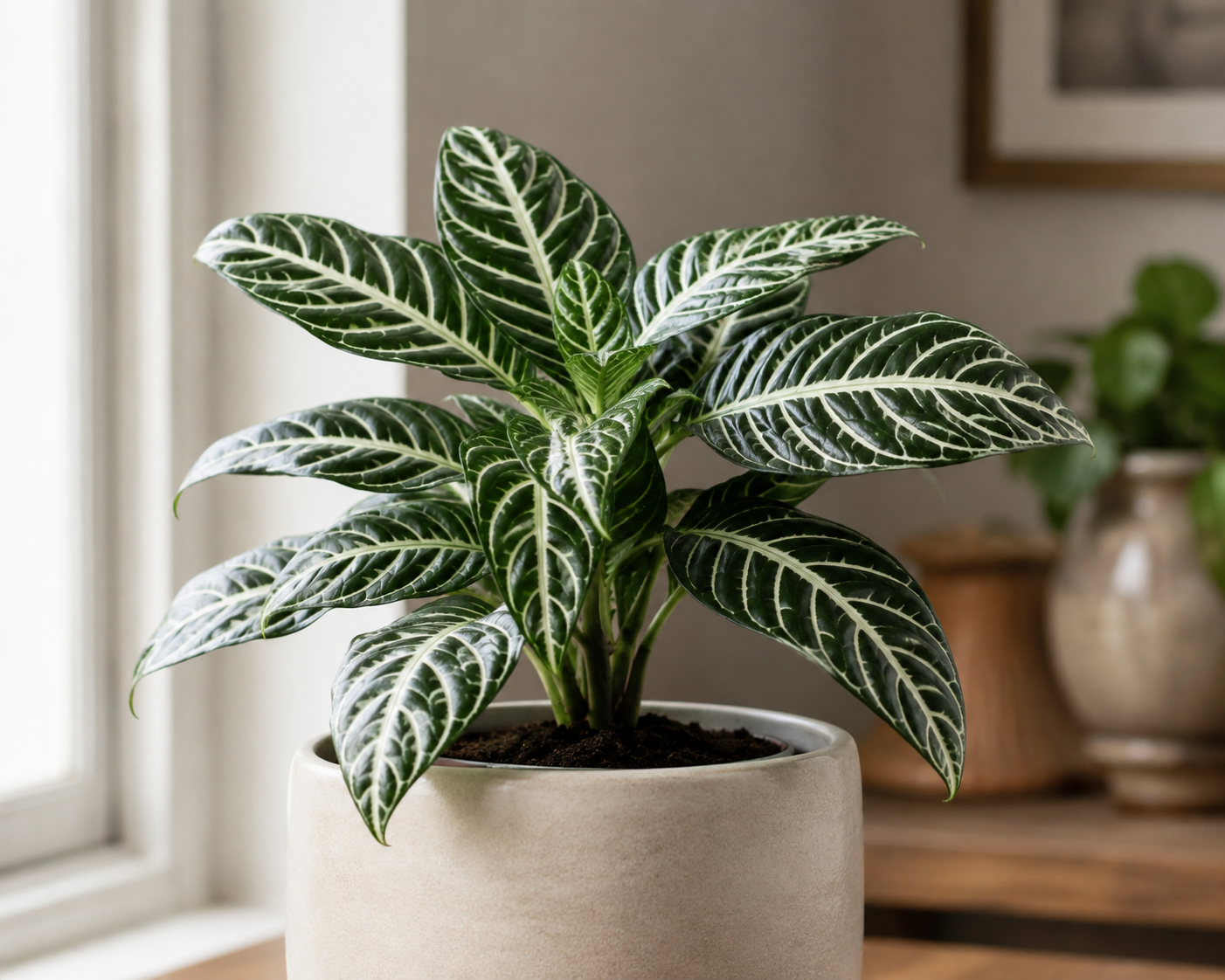

The zebra plant has earned its place as one of the most eye catching houseplants you can bring into your home, thanks to its bold, striped foliage that looks almost hand painted. Walk into any plant enthusiast’s living room and you will likely spot one sitting near a bright window, its dark green leaves marked with crisp white veins that genuinely resemble the pattern of a zebra’s coat. But beyond its striking appearance, this plant carries a reputation for being a little demanding, which is exactly why so many people search for reliable guidance before bringing one home.
This guide walks through everything you need to know about the zebra plant, from understanding exactly which plant the name refers to, since it is sometimes confused with a few other striped species, to the specific care routine that keeps it thriving indoors. Whether you already own one that seems to be struggling or you are simply curious about adding this dramatic plant to your collection, this article will give you a clear, practical, and honest picture of what it takes to grow a healthy, vibrant zebra plant at home.
What Is a Zebra Plant
The name zebra plant is most commonly used to refer to Aphelandra squarrosa, a tropical evergreen shrub native to the rainforests of Brazil. It is prized for its glossy, dark green leaves striped with prominent white or cream veins, and under the right conditions, it can produce a striking yellow flower spike that emerges from a cone-shaped bract. This flowering feature sets it apart from many other foliage houseplants, giving growers something extra to look forward to beyond just attractive leaves.
It is worth noting that the common name zebra plant is sometimes applied loosely to other striped plants as well, which can cause confusion when searching for care advice online. Haworthia fasciata, a small succulent with thick, pointed leaves covered in white bumpy stripes, is often called zebra haworthia or zebra succulent. Calathea zebrina, another popular houseplant, is sometimes referred to as the zebra plant because of the striped pattern on its velvety leaves. This article focuses primarily on Aphelandra squarrosa, the plant most widely recognized under this name in gardening circles, while also touching briefly on these related species later on so you can be sure you are caring for the right one.
Zebra Plant Origin and Natural Habitat
Understanding where a plant comes from naturally helps explain why it behaves the way it does indoors, and the zebra plant is no exception. Aphelandra squarrosa originates from the humid, shaded understory of Brazilian rainforests, where it grows beneath a dense canopy that filters sunlight and keeps the surrounding air consistently moist. This environment shaped the plant into something that thrives in warm, humid conditions with indirect but fairly bright light, rather than harsh, direct sun exposure.
This tropical background is the key to unlocking successful care at home. Many of the common struggles people experience with this plant, such as leaf drop or crispy brown edges, trace directly back to conditions that differ too much from its native rainforest habitat. Recreating a warm, humid, and evenly lit environment as closely as possible indoors will make an enormous difference in how well the plant performs, which is why so much of this guide focuses on replicating those natural growing conditions rather than treating the plant as a generic, low-maintenance houseplant.
Why the Zebra Plant Is a Popular Houseplant Choice
Despite its reputation for being somewhat particular about its care, the zebra plant remains a favorite among houseplant collectors and interior decorators alike. Its striking foliage pattern offers a level of visual interest that few other plants can match, making it a natural focal point in any room where it is placed. Unlike plants that rely purely on green foliage, the dramatic white venation against dark leaves creates contrast that photographs beautifully and elevates the overall aesthetic of a space without requiring additional decor.
Beyond aesthetics, this plant also appeals to growers who enjoy a bit of a challenge and the satisfaction that comes with successfully maintaining a slightly fussier species. Because it responds so visibly to changes in light, water, and humidity, it essentially communicates its needs through its leaves, making it an excellent plant for those who want to become more attentive and skilled indoor gardeners. Once you understand its preferences, this striped beauty can become a long term, rewarding addition to a home plant collection rather than a short-lived experiment.
Zebra Plant Light Requirements
Light is one of the most important factors in successfully growing a zebra plant indoors, and getting it right requires a bit more nuance than simply placing the pot near any window. This species prefers bright, indirect light that mimics the dappled sunlight it would receive under a rainforest canopy. A spot near an east-facing window, or a few feet back from a south or west-facing window with a sheer curtain filtering the light, tends to work particularly well for keeping the foliage vibrant without risking damage.
Direct, intense sunlight can scorch the leaves, leaving behind pale or brown patches that detract from the plant’s signature striped pattern. On the other hand, insufficient light causes the plant to become leggy, with weak stems and dull coloring that lacks the crisp contrast this species is known for. If natural light in your home is limited, particularly during darker winter months, a full-spectrum grow light positioned a reasonable distance above the plant can help maintain healthy growth without the risk of leaf burn associated with intense direct sun.
Watering a Zebra Plant Correctly
Watering is often where new growers run into trouble with this plant, since it prefers consistently moist soil but reacts poorly to being waterlogged or left to dry out completely. The general rule of thumb is to water thoroughly whenever the top inch or so of soil feels dry to the touch, allowing excess water to drain freely from the bottom of the pot rather than letting the roots sit in standing water. Striking this balance takes a little practice, but paying attention to the soil rather than following a rigid schedule tends to produce the best results.
Signs of both overwatering and underwatering tend to show up fairly quickly on this species, which can actually work in your favor once you learn to read them. Yellowing leaves combined with a mushy stem base typically point to overwatering and potential root rot, while drooping, curling leaves alongside dry, crumbly soil suggest the plant needs water more urgently. Using a pot with adequate drainage holes and a well-aerated potting mix goes a long way toward preventing the excess moisture retention that often leads to root problems in the first place.
Ideal Soil and Potting Mix for Zebra Plants
The right soil composition supports both proper drainage and adequate moisture retention, two qualities that might seem contradictory but are both essential for this particular species. A high-quality, peat-based potting mix amended with perlite or coarse sand tends to work well, since it allows water to move through the soil freely while still holding enough moisture to keep the roots hydrated between waterings. Avoiding dense, compacted soil is particularly important, as heavy mixes tend to stay too wet for too long and increase the risk of root rot.
Repotting every one to two years, or whenever the plant becomes noticeably root-bound, helps refresh the soil structure and gives the root system room to continue developing. When repotting, choosing a container only slightly larger than the previous one is generally recommended, since an oversized pot holds excess soil that can retain more moisture than the roots actually need. Fresh potting mix at each repotting also replenishes nutrients that gradually become depleted over time through regular watering and root uptake.
Humidity and Temperature Needs
Given its rainforest origins, the zebra plant has a strong preference for humid conditions that many typical indoor environments simply do not provide on their own, especially in heated homes during colder months. Average household humidity often falls well below what this plant would naturally experience, which is frequently the underlying cause of crispy, browning leaf tips that many owners struggle to resolve through watering adjustments alone. Increasing ambient humidity through a humidifier, a pebble tray filled with water placed beneath the pot, or grouping it alongside other humidity-loving plants can noticeably improve leaf condition over time.
Temperature consistency matters nearly as much as humidity when it comes to keeping this plant happy indoors. It generally thrives in a stable range that avoids sudden drops or drafts, so placing it near frequently opened doors, air conditioning vents, or drafty windows during winter can cause stress that shows up as leaf drop or slowed growth. Maintaining a warm, draft-free environment year-round, paired with elevated humidity, closely replicates the tropical conditions this species evolved to thrive in.
Fertilizing Your Zebra Plant
Feeding a zebra plant appropriately supports its bold foliage growth and increases the likelihood of it producing its characteristic yellow flower bracts. During the active growing season, typically spring through summer, applying a balanced, water-soluble houseplant fertilizer every few weeks provides the nutrients needed to support new leaf and stem development. Diluting the fertilizer to a lighter concentration than the label suggests is often a safer approach, since this species can be sensitive to excess salts building up in the soil.
Fertilizing should generally slow down or stop entirely during the fall and winter months, when the plant’s natural growth rate decreases in response to shorter days and cooler conditions. Continuing to feed heavily during this dormant period can lead to fertilizer buildup in the soil, which may manifest as browning leaf edges or a general decline in plant vigor. Flushing the soil with plain water every couple of months helps prevent mineral accumulation, keeping the root environment healthy regardless of the current fertilizing schedule.
How to Propagate a Zebra Plant
Propagating this species is a rewarding way to expand your plant collection or share cuttings with friends, and stem cuttings tend to offer the most reliable results for home growers. Selecting a healthy stem section with at least a couple of leaf nodes, cutting just below a node with a clean, sharp tool, and removing any lower leaves that would otherwise sit below the water or soil line sets up the cutting for the best chance of successful root development.
Rooting can be done either in water, where roots are usually visible within a few weeks, or directly in a moist, well-draining potting mix covered loosely with plastic to maintain humidity around the cutting. Warmth and indirect light during this rooting period encourage faster root formation, and once a reasonable root system has developed, the cutting can be transplanted into its own pot using the same soil guidelines outlined earlier in this article. Patience is key throughout this process, since rushing the transition or exposing a fragile new cutting to harsh light can easily set back its progress.
Common Zebra Plant Problems and How to Fix Them
Leaf drop is one of the most frequently reported issues among zebra plant owners, and it typically results from a combination of environmental stressors rather than a single isolated cause. Sudden temperature changes, low humidity, inconsistent watering, or insufficient light can each individually trigger this response, and identifying which factor is most likely responsible in your specific setup usually requires reviewing recent changes to the plant’s location or care routine. Stabilizing the environment and returning to a consistent watering rhythm often resolves the issue over time, though recovery is gradual rather than immediate.
Pest problems, while not constant, can occasionally affect this species, with spider mites and mealybugs being among the most commonly reported culprits. Spider mites tend to thrive in dry conditions, which reinforces the importance of maintaining adequate humidity as both a growth-supporting and pest-preventing measure. Regularly inspecting the undersides of leaves, wiping foliage clean, and treating early infestations with insecticidal soap or a diluted neem oil solution can help manage these issues before they spread significantly across the plant.
Brown leaf tips and edges represent another common complaint, and this symptom is most frequently linked to low humidity, inconsistent watering, or fertilizer salt buildup rather than a single definitive cause. Addressing all three factors together, rather than assuming only one is responsible, tends to produce more reliable improvement. Trimming away severely damaged leaf tissue with clean scissors can also improve the plant’s appearance while the underlying environmental adjustments take effect over the following weeks.
Is the Zebra Plant Toxic to Pets and Humans
Pet owners understandably want to know whether a new houseplant poses any risk to curious cats or dogs that might nibble on the leaves. Aphelandra squarrosa is generally considered non-toxic, which offers some reassurance for households with pets or small children who might come into contact with the foliage. That said, ingesting any plant material can still occasionally cause mild digestive upset in sensitive animals, so it remains a good practice to keep houseplants out of easy reach regardless of their toxicity classification.
If you are ever uncertain about a specific plant’s safety, particularly if you are unsure whether you own Aphelandra squarrosa or one of the other species sometimes called zebra plant, consulting a veterinarian or a reliable poison control resource for pets is always the safest course of action. Toxicity information can occasionally vary between sources, and individual animals may react differently even to plants generally considered safe, so caution and observation remain reasonable practices whenever pets share a home with houseplants of any kind.
Zebra Plant Versus Similar Striped Houseplants
Because the term zebra plant gets applied to more than one species, it is genuinely helpful to understand how Aphelandra squarrosa differs from its commonly confused counterparts before you purchase or diagnose care issues with your own plant. Haworthia fasciata, often called zebra haworthia, is a compact succulent with thick, pointed leaves arranged in a rosette, covered in raised white stripes rather than the flat, veined pattern seen on Aphelandra. As a succulent, it requires infrequent watering and thrives in bright light with minimal humidity, making its care routine almost entirely opposite to that of the tropical Aphelandra squarrosa.
Calathea zebrina, sometimes marketed under the zebra plant name as well, features large, velvety leaves with alternating light and dark green stripes running outward from the central vein, giving it a distinctly different leaf shape and texture compared to Aphelandra. Like Aphelandra, it prefers humidity and indirect light, but it belongs to the notoriously fussy Calathea family known for dramatic leaf movement and sensitivity to water quality. Knowing which plant you actually have on hand before applying care advice found online can prevent a great deal of confusion and unnecessary troubleshooting down the line.
Tips for Styling a Zebra Plant in Home Decor
Beyond its care requirements, the zebra plant offers considerable styling versatility thanks to its bold, high-contrast foliage that pairs well with a range of interior design aesthetics. Placing it in a simple, neutral-colored pot allows the striped leaves to remain the clear visual focus, which works particularly well in minimalist or modern interiors where too many competing patterns can feel cluttered. Positioning it as a statement piece on a plant stand near a well-lit corner also takes advantage of its dramatic silhouette.
For those who enjoy layering greenery throughout a room, combining the zebra plant with softer-textured, solid-green companions creates a pleasing contrast without overwhelming the space with too many patterned leaves competing for attention. Grouping it with other humidity-loving tropical plants not only creates an attractive display but also naturally raises the ambient moisture around all the plants involved, offering a practical benefit alongside the aesthetic one. This dual-purpose styling approach reflects how thoughtful plant placement can serve both design and care goals simultaneously.
Conclusion
The zebra plant remains one of the most visually striking houseplants available to home growers, and while it does require more attentive care than some low-maintenance alternatives, the reward of its bold, striped foliage and occasional yellow flower spike makes the effort worthwhile for many plant enthusiasts. Success with this species comes down to consistently replicating its native rainforest conditions, bright indirect light, stable warmth, reliable humidity, and careful watering, rather than treating it as a plant that thrives on neglect.
Whether you are just starting out with your first zebra plant or troubleshooting an existing one that seems to be struggling, returning to these fundamental care principles will address the vast majority of issues you are likely to encounter. With a bit of patience and attentiveness, this dramatic tropical species can become a long-lasting, rewarding centerpiece in your indoor plant collection, proving that its slightly demanding reputation is well worth navigating for the striking beauty it brings into a home.
Frequently Asked Questions
How often should I water a zebra plant Water whenever the top inch of soil feels dry to the touch, ensuring thorough saturation followed by proper drainage. This usually translates to watering roughly once a week, though the exact frequency depends on your home’s humidity, light levels, and pot size.
Why are my zebra plant leaves turning brown at the edges Brown edges most often result from low humidity, inconsistent watering, or fertilizer salt buildup in the soil. Increasing humidity, maintaining a steady watering routine, and periodically flushing the soil with plain water typically improve this issue over time.
Does the zebra plant need direct sunlight No, direct sunlight can scorch its leaves and cause discoloration. Bright, indirect light near a filtered window provides the ideal balance for healthy growth without leaf damage.
Is the zebra plant safe for cats and dogs Aphelandra squarrosa is generally considered non-toxic to pets, though ingesting any plant material can occasionally cause mild digestive discomfort. It is still wise to keep it out of easy reach and consult a veterinarian if you have specific concerns.
Why is my zebra plant dropping leaves Leaf drop is commonly caused by a combination of low humidity, temperature fluctuations, inconsistent watering, or insufficient light. Stabilizing the plant’s environment and maintaining consistent care typically resolves this issue gradually.
How do I get my zebra plant to flower Providing bright indirect light, consistent humidity, and regular fertilizing during the growing season increases the likelihood of the plant producing its characteristic yellow flower bract. Flowering is not guaranteed indoors but becomes more likely under optimal, stable growing conditions.
Can zebra plants grow in low light While they can survive in lower light for short periods, insufficient light typically causes leggy growth and duller leaf coloration over time. Bright, indirect light is strongly recommended for maintaining the plant’s characteristic vibrant striped appearance.
What is the difference between a zebra plant and zebra haworthia The zebra plant, Aphelandra squarrosa, is a tropical foliage plant with flat, veined leaves that prefers humidity and indirect light, while zebra haworthia is a small succulent with thick, striped leaves that thrives in bright light and infrequent watering. Despite sharing a common name, their care requirements are almost entirely different.