

Few things ruin the experience of getting into your car quite like a musty, stale, or downright unpleasant smell hitting you the moment you close the door. Whether it is lingering food odors, a hint of mildew after a rainy commute, or the faint smell of an old spill you thought you cleaned up months ago, a bad smelling cabin can make even a short drive feel unpleasant. Learning how to freshen car interior spaces properly is not just about spraying something that smells nice and hoping for the best. It requires understanding where odors actually come from and addressing them at the source.
This guide walks through everything you need to know to transform your car’s interior from stuffy and stale to genuinely clean and pleasant to sit in. We will cover deep cleaning techniques, natural and chemical odor solutions, how to handle specific problem areas like fabric seats and carpets, and the daily habits that prevent smells from building up again. By the end, you will have a clear, practical roadmap for how to freshen car interior spaces effectively, whether you are dealing with a minor odor issue or a car that has not smelled truly clean in years.
Why a Fresh Car Interior Matters More Than You Think
A clean smelling car is about far more than simple vanity. The interior of your vehicle is an enclosed space where you and your passengers spend significant amounts of time, often with limited airflow, especially during colder months when windows stay closed. Poor air quality inside a car can contribute to headaches, allergy flare ups, and general discomfort, particularly for people who already deal with sensitivities to mold, dust, or strong chemical smells. Addressing odor problems is as much about comfort and health as it is about aesthetics.
There is also a practical financial angle worth considering. If you plan to sell or trade in your vehicle at any point, a musty or odorous interior can noticeably lower perceived value, even if the car runs perfectly and looks clean on the surface. Buyers and dealerships often use smell as an unconscious shortcut for judging how well a car has been maintained overall. Taking the time to learn how to freshen car interior spaces properly is, in this sense, a form of vehicle maintenance that protects both your daily experience and your car’s resale potential.
Start With a Deep Clean Before Adding Any Scent
Vacuum Every Surface, Not Just the Floor
Many people assume that freshening a car simply means adding a nice smelling spray or hanging air freshener, but this approach almost always fails if the underlying dirt and debris are still present. A proper deep clean starts with thorough vacuuming, and this means going well beyond the obvious floor mats. Seats, seat crevices, under the seats, door pockets, and even the trunk all trap dust, crumbs, and small debris that can contribute to stale odors over time.
Using a vacuum with a narrow crevice attachment allows you to reach into seat seams and tight corners where debris tends to accumulate unnoticed. Pay particular attention to areas around cupholders and center consoles, since spilled liquids and food particles often settle into these tight spaces and become a long-term source of odor if left unaddressed. A thorough vacuuming session, done properly, often removes a surprising amount of the material responsible for that underlying stale smell before you have even applied a single cleaning product.
Wipe Down Hard Surfaces and Panels
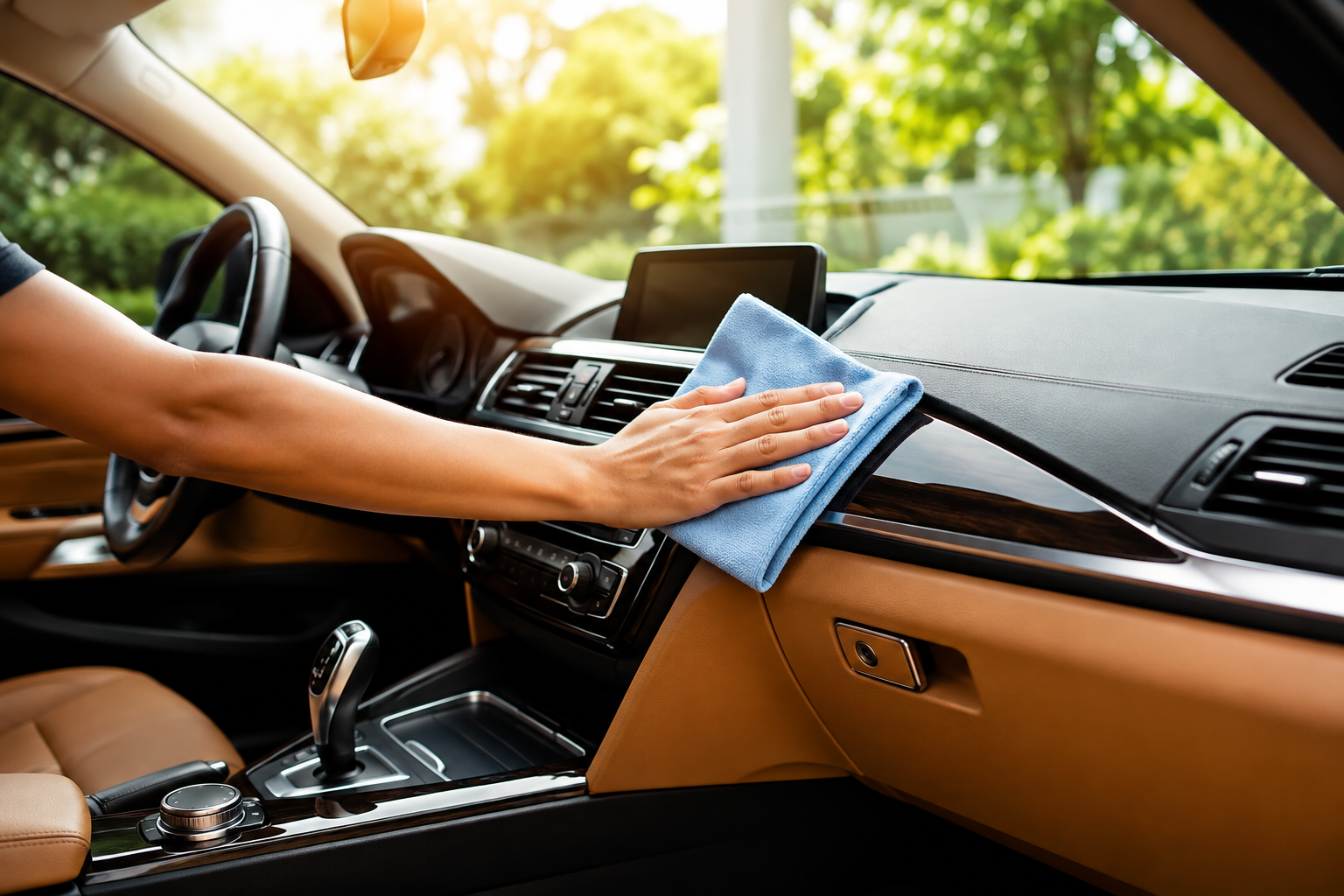
Once loose debris has been vacuumed away, the next step involves wiping down every hard surface inside the cabin, including the dashboard, door panels, center console, steering wheel, and gear shifter. Dust and grime accumulate on these surfaces daily, and over time they can develop a slightly stale smell of their own, particularly in vehicles that spend a lot of time in direct sunlight, since heat tends to intensify existing odors trapped in plastic and vinyl surfaces.
A mild all-purpose interior cleaner, applied with a microfiber cloth, is generally sufficient for most hard surfaces without risking damage to sensitive electronics or trim finishes. Avoid oversaturating these areas with liquid, particularly near buttons, screens, and air vents, since moisture can work its way into components and cause long-term issues. This step alone often makes a noticeable difference in how fresh a car feels, since hard surfaces are typically the first things passengers touch and smell up close.
Identify and Eliminate the Source of Bad Odors
Common Culprits Behind Persistent Car Smells
Before reaching for any air freshener, it is worth taking a few minutes to actually investigate where a persistent smell might be coming from. Common sources include spilled drinks that have soaked into carpet fibers, forgotten food wrappers or containers tucked into door pockets, damp gym bags or sports equipment left in the trunk, and pet-related odors that have settled into fabric seats over time. Identifying the actual source is essential, because masking a problem with fragrance without addressing its cause almost always results in the smell returning within days.
It also helps to think about less obvious sources, such as a spare tire compartment that has trapped moisture, an air conditioning system that has developed mold growth, or a cabin air filter that has not been replaced in years and is now circulating stale, dusty air throughout the cabin every time the fan runs. Taking a systematic approach, checking under seats, inside storage compartments, and around the trunk area, often reveals the true culprit far more effectively than guessing based on smell alone.
Dealing With Mold, Mildew, and Moisture
Moisture is one of the most common and most stubborn causes of bad car smells, particularly in climates with high humidity or frequent rain. Wet floor mats left in the car after a rainy commute, a leaking window seal, or condensation buildup from air conditioning use can all create the damp environment mold and mildew need to thrive. Once mold takes hold in carpet padding or seat foam, it can be genuinely difficult to eliminate completely without professional-grade cleaning equipment.
If you suspect moisture is contributing to your car’s odor problem, start by removing and thoroughly drying floor mats, then check for any obvious water pooling under seats or in the trunk area. Running the air conditioning on a dry setting for a few minutes before turning off the car can help reduce moisture buildup within the AC system itself, which is a common but often overlooked contributor to musty smells. For persistent mold issues, a specialized enzyme-based cleaner designed specifically for fabric and carpet is often more effective than generic surface cleaners, since it breaks down organic matter rather than simply masking it.
Natural Ways to Freshen Car Interior Without Chemicals
For those who prefer to avoid heavily fragranced commercial products, several natural methods can help freshen car interior air without introducing strong artificial scents. Baking soda is one of the most widely used natural odor absorbers, and it works particularly well on fabric seats and carpets. Sprinkling a light layer over the affected area, letting it sit for several hours or overnight, and then vacuuning it up thoroughly can noticeably reduce lingering odors, since baking soda absorbs odor molecules rather than simply covering them with fragrance.
Activated charcoal bags are another effective natural option, often sold specifically for car use and placed under seats or in door pockets. Unlike scented products, activated charcoal works through absorption rather than masking, making it a good long-term solution for ongoing odor control rather than a one-time fix. Simply parking with windows cracked on a mild, dry day and allowing fresh air to circulate through the cabin for fifteen to twenty minutes can also make a meaningful difference, particularly after the car has been closed up for an extended period.
Using Air Fresheners and Odor Eliminators Effectively
Once the underlying causes of bad odors have been addressed through cleaning, air fresheners can play a useful role in maintaining a pleasant scent rather than trying to cover up unresolved problems. Hanging air fresheners, vent clips, and gel-based options each offer different intensity levels and longevity, so choosing the right type often comes down to personal preference and how strong a scent you want inside the cabin. It is worth avoiding extremely strong or artificial-smelling products, since overly intense fragrances can actually become unpleasant during longer drives, particularly for passengers sensitive to strong smells.
Odor-eliminating sprays, which are chemically formulated to neutralize odor molecules rather than simply adding fragrance on top of them, tend to produce more lasting results than traditional air fresheners alone. These products are especially useful after dealing with specific incidents like spilled milk, pet accidents, or smoke exposure, where the underlying odor compounds need to be broken down rather than masked. Using odor eliminators in combination with a light, pleasant air freshener often produces the best overall result, addressing both the root odor and the desired final scent.
Deep Cleaning Fabric Seats, Carpets, and Floor Mats
Fabric seats and carpets are often the biggest long-term contributors to a stale-smelling car interior, since fabric fibers absorb and hold onto odors far more readily than hard plastic or vinyl surfaces. A proper deep clean typically involves using a fabric-safe upholstery cleaner along with a soft brush to work the product into the fibers, followed by thorough extraction of moisture using either a wet-dry vacuum or clean towels pressed firmly against the treated area. Rushing this process or leaving fabric overly damp can actually make odor problems worse by encouraging mildew growth.
Floor mats deserve particular attention since they absorb the majority of dirt, moisture, and debris tracked into the car from shoes. Removing mats entirely for cleaning, whether through machine washing for fabric mats or thorough scrubbing and rinsing for rubber mats, allows for a much more effective clean than attempting to clean them while still installed. Allowing mats to dry completely before placing them back into the car is essential, since reinstalling damp mats simply reintroduces the moisture problem you were trying to solve in the first place.
Refreshing Leather Seats and Interior Trim
Leather seats require a different approach compared to fabric, since harsh cleaning products or excessive moisture can damage leather over time and shorten its lifespan. A dedicated leather cleaner, applied according to the product’s instructions and followed by a quality leather conditioner, helps remove built-up oils, dirt, and odor-causing residue while keeping the material supple and preventing cracking. Regular conditioning, done every few months depending on climate and usage, also helps leather resist absorbing new odors as effectively going forward.
Beyond the seats themselves, interior trim pieces such as door panels, armrests, and center console surfaces benefit from the same careful, non-abrasive cleaning approach. Many all-purpose interior cleaners work well across multiple trim materials, but it is worth checking product labels for compatibility with your specific interior finish, particularly for vehicles with softer touch materials or specialty coatings that can be damaged by overly harsh chemicals. Taking this extra care ensures that your efforts to freshen the cabin do not inadvertently create new problems with wear or discoloration.
Improving Air Quality With Cabin Air Filters and Ventilation
One of the most overlooked steps in learning how to freshen car interior air involves the cabin air filter, a component many drivers are not even aware exists. This filter is responsible for cleaning the air that passes through your car’s ventilation system, and over time it accumulates dust, pollen, and other debris that can significantly affect both air quality and smell. A clogged or old cabin air filter can cause musty odors every time the air conditioning or heater runs, regardless of how clean the rest of the interior is.
Most manufacturers recommend replacing the cabin air filter roughly once or twice a year, though this can vary depending on driving conditions and local air quality. Replacing this filter is often a straightforward task that many drivers can complete themselves with basic tools, and it tends to produce a noticeable improvement in air freshness almost immediately. Beyond filter maintenance, simply running the air conditioning system periodically, even during cooler months, helps prevent moisture buildup that can otherwise lead to mold growth within the ventilation system itself.
Preventing Future Odors: Daily and Weekly Habits
Freshening a car interior is only half the battle; maintaining that freshness requires consistent daily habits rather than a single deep clean session. Making a habit of removing trash, food wrappers, and empty containers after every drive prevents the gradual buildup that leads to stale smells over time. Similarly, avoiding eating in the car whenever possible, or at least being diligent about cleaning up crumbs and spills immediately, significantly reduces the likelihood of new odor sources developing.
On a weekly or biweekly basis, a quick vacuum session and wipe-down of hard surfaces can prevent the kind of buildup that eventually requires a full deep clean to address. Keeping a small trash bag or container in the car, along with a pack of cleaning wipes for quick spill response, makes it far easier to maintain a fresh interior consistently rather than letting problems accumulate until they become difficult to reverse. These small, consistent habits ultimately matter more than any single cleaning product when it comes to long-term freshness.
Special Situations: Smoke, Pet, and Food Odors
Certain odor problems require more targeted approaches than general cleaning alone can address. Smoke odor, whether from cigarettes or accidental fire exposure, tends to penetrate deeply into fabric, carpet padding, and even air vents, making it one of the most stubborn smells to fully eliminate. A thorough deep clean combined with specialized smoke-odor-eliminating products, along with cabin air filter replacement, typically offers the best results, though severe cases may require professional detailing or ozone treatment to fully resolve.
Pet odors present a similar challenge, particularly from pet dander, saliva, or accidents that have soaked into fabric seats or carpet. Enzyme-based cleaners designed specifically for pet odors tend to outperform general-purpose products, since they break down the organic compounds responsible for the smell rather than simply masking them. Food odors, meanwhile, are usually more straightforward to address through prompt cleanup and thorough vacuuming, though strong-smelling spills like dairy products or seafood may require an odor-neutralizing spray in addition to standard cleaning to fully eliminate lingering smells.
Frequently Asked Questions
How often should I clean my car interior to keep it smelling fresh?
A light cleaning every one to two weeks, combined with a more thorough deep clean every one to three months, generally keeps most car interiors smelling fresh and prevents odor buildup from becoming a bigger problem later.
What is the fastest way to freshen car interior smell before a trip?
Vacuuming visible debris, wiping down hard surfaces, cracking the windows for fresh air circulation, and using an odor-eliminating spray on fabric seats can noticeably improve smell within a short amount of time, even if a full deep clean is not possible.
Does baking soda actually work for car odors?
Yes, baking soda is genuinely effective at absorbing odors from fabric and carpet when applied generously, left to sit for several hours, and then vacuumed up thoroughly, making it a reliable and inexpensive natural odor solution.
How do I know if my car smell is from mold rather than general dirtiness?
Mold-related smells tend to have a distinctly musty, damp quality and are often accompanied by visible moisture, water stains, or discoloration on carpets and fabric, whereas general dirtiness usually produces a more generic stale odor without these visual signs.
How often should I replace my cabin air filter?
Most manufacturers recommend replacing the cabin air filter approximately once or twice per year, though drivers in dusty or high-pollen environments may need to replace it more frequently to maintain good air quality.
Can I use household cleaning products on my car’s interior?
Some household cleaners can be used cautiously, but it is generally safer to use products specifically formulated for automotive interiors, since certain household chemicals can damage leather, vinyl, or specialty trim finishes over time.
Is it safe to leave air fresheners in a hot car?
Most gel and hanging air fresheners are designed to withstand normal temperature fluctuations, but extreme heat can cause some products to degrade faster or leak, so it is worth checking manufacturer guidance for heat sensitivity, particularly during summer months.
What is the best way to remove smoke smell from a car?
A combination of thorough deep cleaning, specialized smoke-odor-eliminating products, cabin air filter replacement, and extended ventilation typically produces the best results, though severe or long-term smoke odor may require professional detailing to fully resolve.
Conclusion
Learning how to freshen car interior spaces effectively comes down to understanding that lasting results require addressing the actual source of odors, not simply covering them up with fragrance. From thorough vacuuming and surface cleaning to tackling specific problem areas like fabric seats, leather trim, and cabin air filters, a systematic approach produces far better and longer-lasting results than reaching for an air freshener alone. Combining a proper deep clean with consistent daily habits and, when needed, targeted solutions for smoke, pet, or food odors ensures your car stays genuinely fresh rather than just temporarily masked. With the strategies covered in this guide, you now have a complete, practical roadmap for keeping your car’s interior clean, comfortable, and pleasant to spend time in, no matter what challenges your daily driving throws your way.